
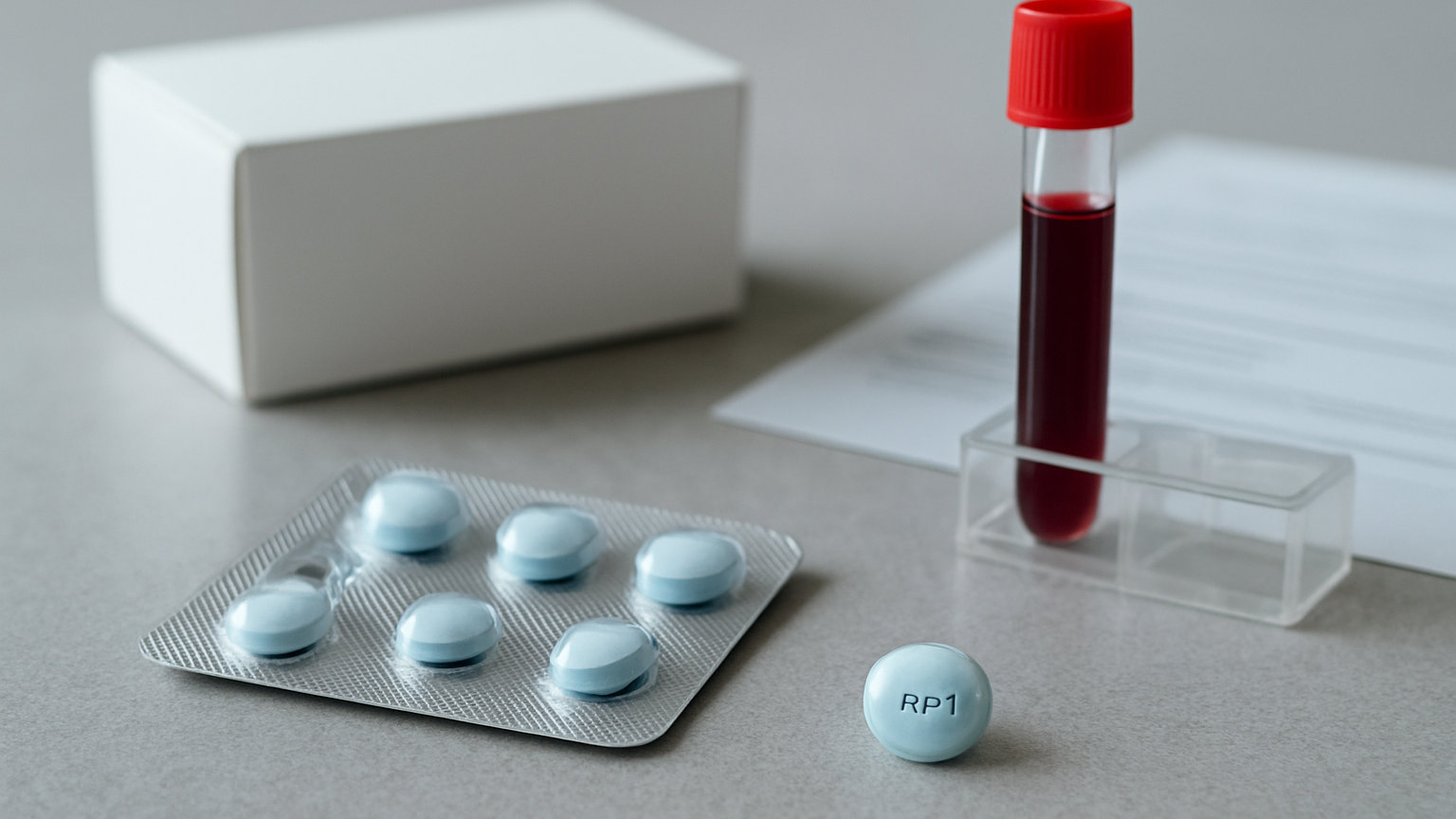
Ezetimibe blocks a transporter protein in the lining of the small intestine that absorbs cholesterol from food and from bile. Statins reduce the cholesterol your liver makes; ezetimibe reduces the cholesterol you absorb. Because they act on different halves of the same problem, combining them works better than pushing either one harder - which is why adding ezetimibe is now the usual next step when a statin alone has not reached target.
Follow the instructions on your label. This guide contains no doses.
Why adding beats doubling
Statins show diminishing returns. Doubling the dose produces only a modest further fall in LDL - around six per cent - while dose-related side effects increase.
Adding ezetimibe produces a considerably larger additional reduction, typically in the region of fifteen to twenty per cent, without adding the muscle symptoms associated with higher statin doses.
Trial evidence also showed that adding ezetimibe to a statin after a heart attack reduced cardiovascular events further - so the benefit is not just a better number on a blood test.
See cholesterol numbers for what the targets mean, and atorvastatin.
If you cannot tolerate a statin
Ezetimibe alone lowers LDL by roughly fifteen to twenty per cent - less than a statin, but useful, and it does not cause the muscle symptoms that lead people to abandon statins.
It is therefore a reasonable option for genuine statin intolerance.
Before concluding you are statin-intolerant, though, it is worth establishing it properly. Blinded trials found muscle symptoms at similar rates on statin and placebo, which suggests expectation plays a large part - and a supervised trial off and back on often shows the statin was not responsible, which means you keep the greater benefit. See statins and muscle pain.
It is well tolerated
Ezetimibe is one of the better-tolerated lipid medicines. In trials its side effect rate was close to placebo.
Reported effects include diarrhoea, abdominal pain, fatigue and muscle aches - the last usually when taken with a statin rather than alone.
Seek advice for severe unexplained muscle pain or weakness, particularly with dark urine.
Liver enzyme rises occur, mostly when combined with a statin, and liver function is usually checked.
Taking it
Once daily, with or without food, at any time of day. Unlike some statins, timing does not matter.
It is available as a separate tablet and combined with simvastatin, atorvastatin or rosuvastatin in a single tablet - which reduces the number of tablets and tends to improve adherence.
Separate it from bile acid sequestrants such as colestyramine, which bind it and prevent absorption - usually a couple of hours before or several hours after.
Interactions
Ezetimibe has relatively few, which is part of its appeal.
Ciclosporin raises ezetimibe levels substantially and is affected in turn - the combination needs monitoring. See ciclosporin.
Fibrates such as fenofibrate increase the risk of gallstones when combined with ezetimibe.
It does not interact with grapefruit in the way simvastatin and atorvastatin do, and it is not affected by the enzyme inhibitors that complicate those - which makes it useful for people on complicated medicines lists.
Pregnancy
Ezetimibe is not recommended in pregnancy or breastfeeding, and is stopped before conception along with any statin.
If you could become pregnant, raise it - see rosuvastatin.
What comes after
If a statin plus ezetimibe still does not reach target - which happens particularly in familial hypercholesterolaemia - the next options are injectable.
PCSK9 inhibitors such as evolocumab are given by injection every few weeks and produce very large further reductions. Inclisiran works on the same pathway and is given twice a year after loading.
These are prescribed within defined NHS criteria, usually based on LDL level and cardiovascular history. If you are on maximum tolerated treatment and still above target, it is worth asking whether you meet them.
What to expect from the blood test
Ezetimibe lowers LDL within about two weeks, with the full effect by around four to six - so a repeat lipid profile is usually arranged a few weeks to three months after starting or adding it.
Ask what your result was and what the target was. Cholesterol treatment produces no sensation whatever, so the blood test is the only feedback you get, and being told simply that it is "fine" is not enough to know whether the target was reached.
Diet still matters
Because ezetimibe acts on absorbed cholesterol, dietary cholesterol has more relevance here than it does with statins - though dietary saturated fat affects blood cholesterol more than dietary cholesterol does.
Plant stanols and sterols work by a similar absorption-blocking mechanism and add a modest further reduction, which is why fortified spreads and drinks exist.
If this was useful, Fenofibrate: Treating High Triglycerides is worth reading next, and Medicines collects the rest.


