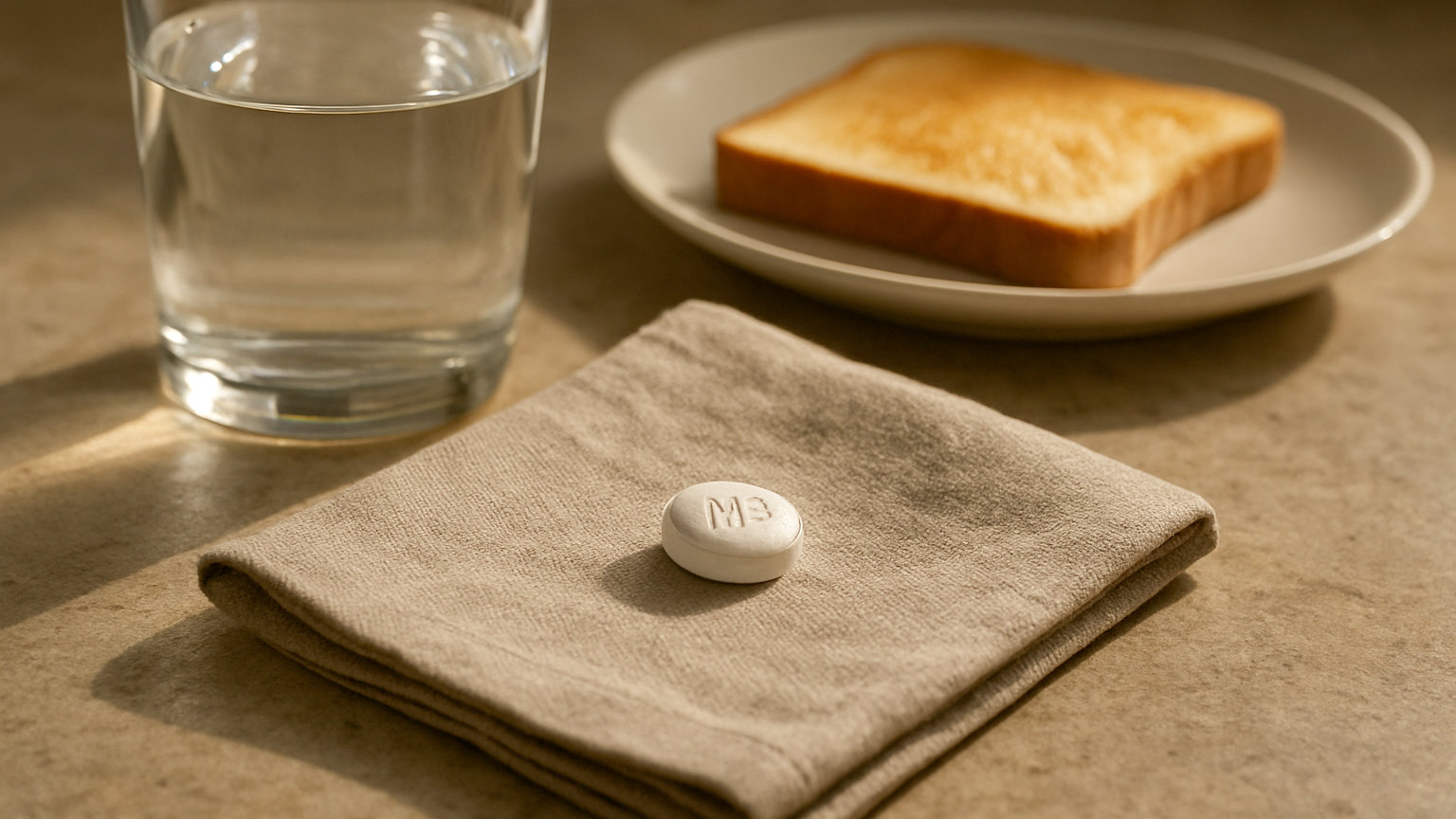
"Take with food" usually means take it during a meal or shortly after. "On an empty stomach" generally means at least an hour before eating or two hours after. The instructions exist for two quite different reasons - either to spare your stomach, or to control how much of the drug gets absorbed - and only the second kind changes how well the medicine works. Knowing which one you are dealing with tells you how strictly to follow it.
If you are not sure which applies to yours, ask your pharmacist. It takes a minute, needs no appointment, and the answer is specific to the medicine.
The two reasons behind the instruction
To reduce irritation or nausea. Anti-inflammatory painkillers, steroid tablets, some antibiotics and iron tablets are all easier on the stomach taken with something. Here food is about comfort and tolerability. Taking one on an empty stomach occasionally will not stop it working - it may just make you feel queasy.
To control absorption. This is the one that matters. Food can substantially increase or decrease how much of a drug reaches your bloodstream. Some medicines - certain HIV treatments, some antifungals, and others - are absorbed far better with a meal, particularly a fatty one. Others bind to components of food and are absorbed much less. With these, the instruction is part of the dose.
Does a biscuit count?
For the comfort category, more or less - a snack, a piece of toast, a yoghurt or a glass of milk is usually enough to take the edge off. For the absorption category, it depends on the specific medicine, and some genuinely need a proper meal with some fat in it.
This is exactly the sort of question pharmacists are asked constantly and are happy to answer. It is not a trivial question and you will not be wasting their time.
Before food, after food, empty stomach
"Before food" usually means around 30 to 60 minutes before eating - common for medicines meant to act ahead of a meal, such as some diabetes drugs and some indigestion treatments.
"On an empty stomach" typically means an hour before or two hours after eating. It appears on medicines whose absorption is significantly reduced by food, and it is worth taking seriously.
Thyroid replacement is the classic example: it is normally taken well before breakfast, separated from calcium, iron and indigestion remedies, all of which can bind it and cut absorption substantially. Some antibiotics behave similarly with dairy, antacids and iron - not because milk is harmful, but because minerals in it form a complex the gut cannot absorb.
Grapefruit is not a myth
Grapefruit and grapefruit juice inhibit an enzyme in the gut wall that breaks down a long list of medicines before they reach the bloodstream. Block it and more of the drug gets through than intended - effectively an unplanned increase in dose. Affected medicines include some statins, some calcium channel blockers, and various others.
The effect can last a day or more, so timing it away from the tablet does not solve the problem. Seville oranges and pomelo behave similarly; ordinary oranges do not. Check the leaflet for your medicine, and see our guide to other things that interfere with medicines.
Other food and drink worth knowing about
Dairy, calcium, iron and indigestion remedies bind several antibiotics and thyroid medicines. Separating them by a couple of hours usually solves it - ask which gap applies.
Green leafy vegetables contain vitamin K, which affects warfarin. The advice is not to avoid them but to keep intake steady, since it is sudden change rather than quantity that unsettles control.
Caffeine adds to the jitteriness of some medicines and its own breakdown is slowed by others, so a usual coffee intake can hit harder than expected.
Alcohol deserves its own conversation. With some medicines it is a hard stop; with many others the issue is compounded drowsiness. Ask about yours specifically rather than generalising.
Cranberry juice, liquorice and high-dose vitamin supplements all interact with particular drugs. Mention anything you take regularly.
Swallowing tablets, and what not to do
Take tablets with a full glass of water, sitting or standing upright, and stay upright for a while afterwards with anything known to irritate the gullet - certain osteoporosis and antibiotic tablets in particular.
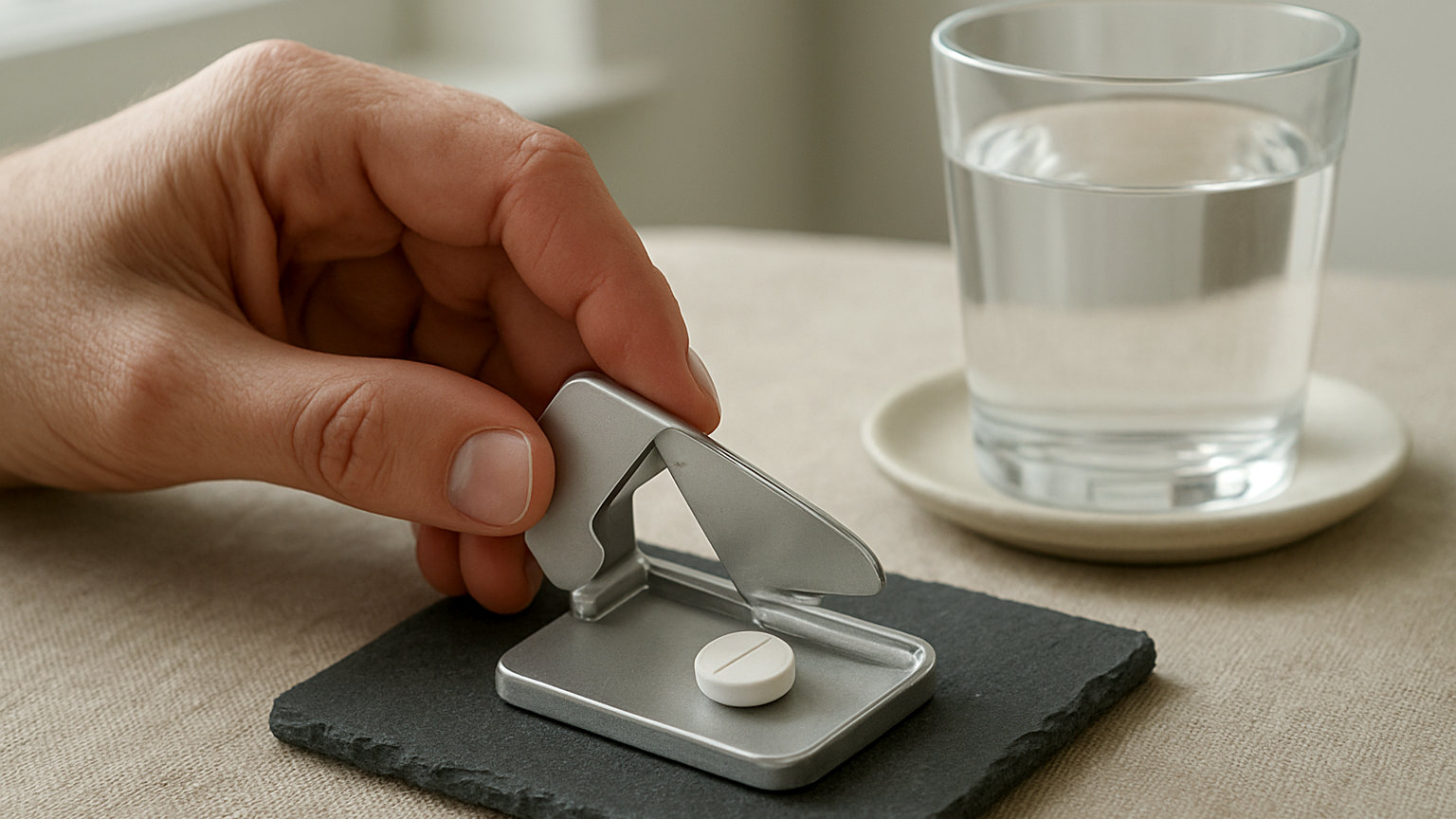
Do not crush, split or open capsules unless you have checked it is safe. Many tablets have coatings that release the drug slowly or protect it from stomach acid; crushing a modified-release tablet can deliver the whole of it at once. If swallowing is difficult, say so - liquids, dispersible forms and patches often exist, and your pharmacist can advise on alternatives rather than leaving you to improvise.
Fitting it around real life
The best schedule is the one you will actually keep to. If a medicine must be taken before breakfast and you never eat breakfast, say so - the timing can usually be anchored to something else. If you are on several medicines with conflicting instructions, ask for a medicines review; pharmacists are good at untangling a schedule into something workable, and a plan you can follow beats a theoretically perfect one you cannot.
If you do get it wrong occasionally, do not double up to compensate. Our guide to missed doses explains why, and where to check what to do for your particular medicine.
The Usage section covers more on taking medicines day to day - Grapefruit and Medicines: Which Ones Matter is closely related to this one.