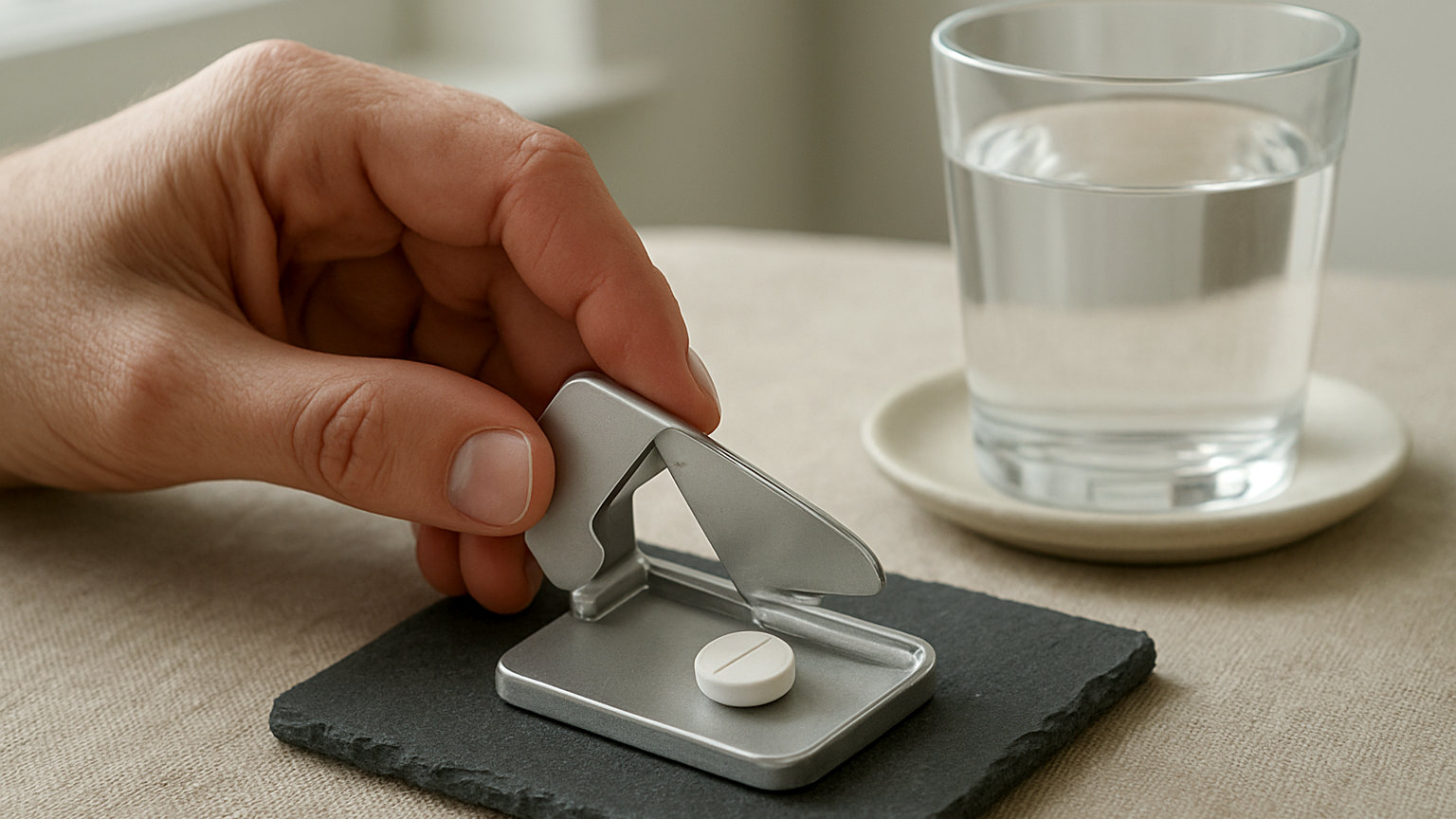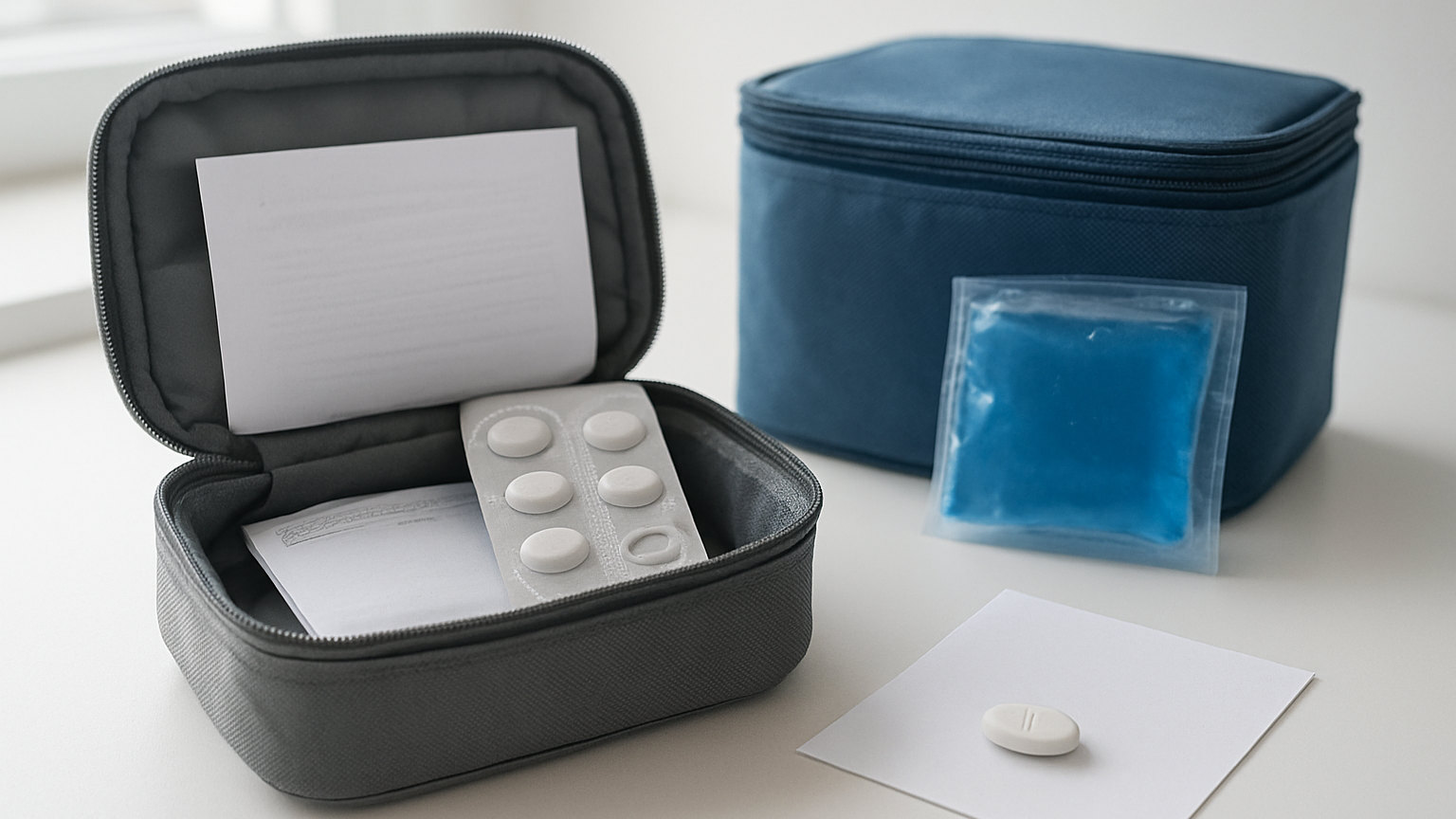
Carry your medicines in your hand luggage, in the original labelled packaging, with a copy of your prescription or a printed repeat list. Take more than the trip requires. Check well in advance whether anything you take is restricted at your destination, because several ordinary UK prescriptions are controlled or outright banned in some countries and the consequences can be severe.
Almost every travel medicines problem comes from leaving it to the last week. A fortnight is usually enough for everything below.
Hand luggage, always
Hold baggage gets delayed, misrouted and lost, and the hold is cold enough to damage some medicines - a real issue for insulin and other biological products. Anything you cannot manage without belongs in the cabin.
Essential medicines are exempt from the usual liquid restrictions, but you should declare them at security and carry supporting documentation. Keep them in the original pharmacy-labelled boxes so the name on the label matches your boarding pass and prescription. Loose tablets in a pill organiser are the version most likely to cause questions.
Needles, syringes, pens and pumps are permitted with documentation. If you use a pump or continuous glucose monitor, check the manufacturer's advice on scanners before you fly, as guidance varies by device.
Documentation worth carrying
A copy of your repeat prescription list from your GP practice or the NHS App is usually sufficient, and free. It should show your name, each medicine's generic name, and the strength.
For controlled drugs, for injectable medicines, or for travel to countries with strict rules, a signed letter from your prescriber is safer. It should state your name, travel dates, each medicine's generic name, the amount you are carrying, and that it is for your personal use. Practices commonly charge for this and may take a couple of weeks, so ask early.
Carry generic names rather than brands. A brand familiar here may be unknown abroad, whereas the generic name is internationally recognised - useful if you need a replacement or medical help.
The part people miss: legality at the destination
Medicines legal on prescription in the UK are controlled or prohibited elsewhere, and enforcement can be severe. Categories that most often cause difficulty include strong painkillers, sleeping tablets and sedatives, ADHD medicines, and some cold and allergy remedies containing pseudoephedrine or codeine. Cannabis-based products prescribed in the UK are illegal in many countries.
Some Gulf states, parts of Asia and Japan have particularly strict rules, and a few require an import permit applied for in advance. Check with the embassy or consulate of every country you are entering - including places you only transit through, since a stopover can still mean clearing customs.
If you are carrying controlled drugs out of the UK, there are also UK-side rules on quantities and on when a Home Office licence is needed. Your pharmacist can point you to the current guidance.
How much to take
Take enough for the whole trip plus a healthy margin for delays - a common suggestion is a week or two extra. Split the supply between two bags where practical, so a lost or stolen bag does not leave you with nothing.
Practices will often issue a holiday supply for a longer trip, but they need notice and there are limits on how far ahead they can prescribe. Ask a few weeks before you go rather than days.
Keeping medicines in good condition
Most medicines want to be kept below 25°C and out of direct sunlight - a parked car, a beach bag or a sunny windowsill will exceed that easily. A glovebox is one of the worst places available.
Insulin and other refrigerated medicines need a cool bag or a specialist wallet. Do not let them freeze, which is as damaging as overheating. Ask your pharmacist how long yours can safely be out of the fridge, as it varies.
Humidity matters too, which is why bathroom cabinets are a poor choice at home and hotel bathrooms are no better.
Time zones
For most once-daily medicines, the practical approach is to keep taking them at the same clock time and shift gradually to local time over a couple of days, or simply switch on arrival - a few hours either way rarely matters.
It matters more for insulin, contraceptives, epilepsy medicines, transplant medicines and anything where timing is tightly controlled. For these, ask your pharmacist or specialist team to help you plan the crossing before you travel - they do this routinely.
Set alarms on your phone for the first couple of days. Routine is what usually keeps doses on track, and travel dismantles routine.
Before you book, and while you are away
Declare all pre-existing conditions and all medicines to your travel insurer. Non-disclosure is the most common reason medical claims are refused, and the extra premium is almost always less than the cost of a single overseas admission.
Check what reciprocal healthcare arrangements apply to your destination, and take whatever card is current - it supplements insurance rather than replacing it. Note the location of a pharmacy near where you are staying; in much of Europe, pharmacists have broader scope than in the UK and are a sensible first stop.
If you take medicines that increase sun sensitivity - some antibiotics, some diuretics and others - be more careful than usual with sun protection. And if you are prescribed antimalarials or travel vaccines, book that appointment early, since some regimes must start well before departure. Our guide to interactions is worth a look if you plan to add travel medicines to an existing list.
The Usage section covers more on taking medicines day to day - Taking Medicines Across Time Zones is closely related to this one.