There is no single answer, because it depends on the medicine and on how much time has passed. There is, however, one rule that holds almost everywhere: do not take a double dose to make up for a missed one unless the leaflet for that specific medicine tells you to. The general approach is to take it as soon as you remember, unless it is nearly time for the next one, in which case skip the missed dose and carry on as normal.
The authoritative source for your medicine is the patient information leaflet in the pack, which has a section headed "If you forget to take". If you no longer have it, your pharmacist can tell you in under a minute, and every pack has one - so it is worth keeping.
Why doubling up is the thing to avoid
Dose intervals are designed so the amount in your bloodstream stays within a useful range - high enough to work, low enough to avoid harm. Taking two doses close together produces a spike, and for many medicines the side effects are dose-related. With blood pressure tablets that can mean a sharp drop and a faint; with diabetes medicines, dangerously low blood sugar; with sedatives, excessive drowsiness.
Missing one dose of most long-term medicines is a minor event. Taking two at once is often the bigger risk, which is the opposite of most people's instinct.
How late is too late?
A rough guide many leaflets use: if you are less than halfway to the next dose, take it. If more than halfway, skip it. A once-daily tablet remembered at lunchtime is usually fine to take; the same tablet remembered at bedtime is usually better skipped.
Medicines taken several times a day have shorter windows, but also matter less individually - the next dose comes round soon. Once-weekly and once-monthly medicines have their own specific instructions and are worth checking rather than guessing.
Where a missed dose matters more
Some medicines are less forgiving, and for these it is worth checking rather than assuming:
- Contraceptives. Instructions differ by type and by where you are in the cycle, and additional precautions may be needed. Every pack has specific guidance and pharmacists advise on this routinely.
- Anticoagulants. Blood thinners have a narrow window - too little raises clot risk, too much raises bleeding risk. Follow the leaflet and ring your anticoagulant clinic or GP if unsure.
- Epilepsy medicines. Missed doses can trigger seizures. Check the leaflet and contact your prescriber if you have missed more than one.
- Insulin and diabetes medicines. Timing is tied to meals and blood sugar. Follow your agreed plan, and contact your diabetes team if you are unsure.
- Parkinson's medicines. Timing is unusually important and lateness has quick, noticeable effects.
- Antibiotics. Take the missed dose as soon as you remember, then space the rest out - and finish the course as directed.
- Immunosuppressants and transplant medicines. Contact your specialist team; these have their own rules and the stakes are high.
If you have missed several days of a regular medicine, do not simply restart at your usual dose without asking. With a few drugs, tolerance falls quickly and resuming at the previous dose is genuinely dangerous.
When to actually ring someone
Contact your pharmacy, GP practice or 111 if you have missed more than one dose of a medicine on the list above, if you are unwell and cannot keep tablets down, if you have accidentally taken a double dose and feel unwell, or if you simply cannot find the answer for your medicine.
If too much has been taken, get help immediately even if the person feels completely well. Call 111, or 999 if they are drowsy, confused or having difficulty breathing, and have the packaging to hand. Some overdoses cause no symptoms at all until serious damage is under way, and treatment works far better early. This is particularly true of paracetamol.
Being ill, and keeping things down
Vomiting shortly after taking a tablet may mean little was absorbed, but taking another risks a double dose if it was. The leaflet often addresses this; if not, ring your pharmacy.
Sickness and diarrhoea also matter for certain medicines in their own right. Some practices issue "sick day rules" - a short list of tablets to pause during an illness with dehydration, typically including some blood pressure and diabetes medicines - and resume afterwards. If you take those, ask whether you have such a plan.
Missing doses regularly is a fixable problem
Occasional forgetfulness is universal. A pattern is worth addressing, and it is usually a system problem rather than a memory one.
- Anchor doses to something you already do without thinking - the kettle, brushing your teeth, feeding the cat.
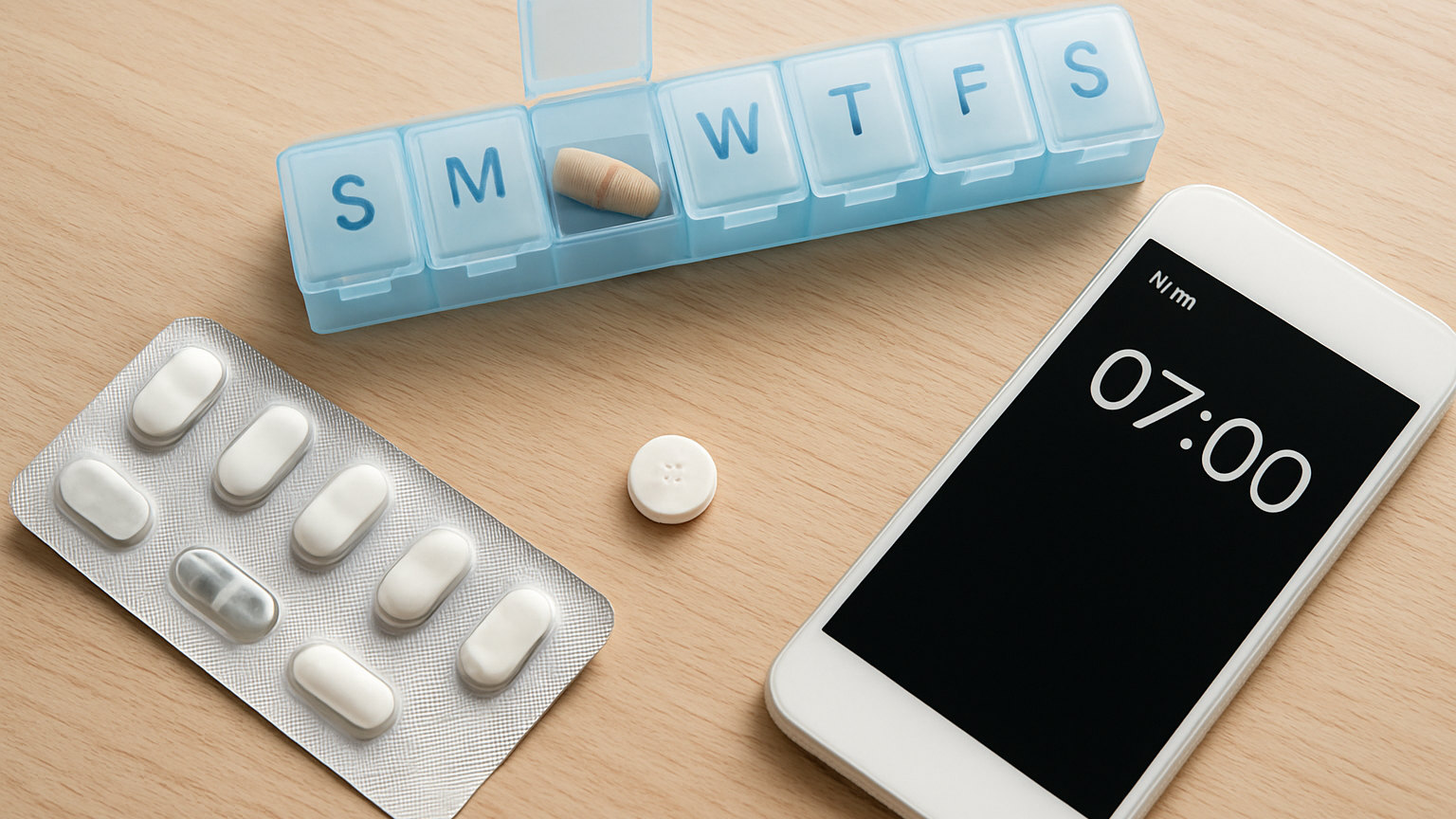
- Ask your pharmacy about a weekly pill organiser, or a blister pack made up for you.
- Use a phone alarm labelled with the medicine name rather than a generic reminder.
- Keep a spare few days' supply where you might need them - a bag, a desk, a partner's house.
- Ask for a medicines review. Doses can often be simplified, combined or moved to a time that suits you, and some medicines may no longer be needed at all.
Tell your prescriber honestly how often you miss doses. Under-reporting leads to doses being increased for a problem that was never about the drug, and pharmacists and GPs have heard it all before. See our guide to repeat prescriptions for keeping supply from running out in the first place - running out is a far more common cause of missed doses than forgetting.
More on taking medicines day to day in the Usage section, including Sick Day Rules: Which Medicines to Pause.