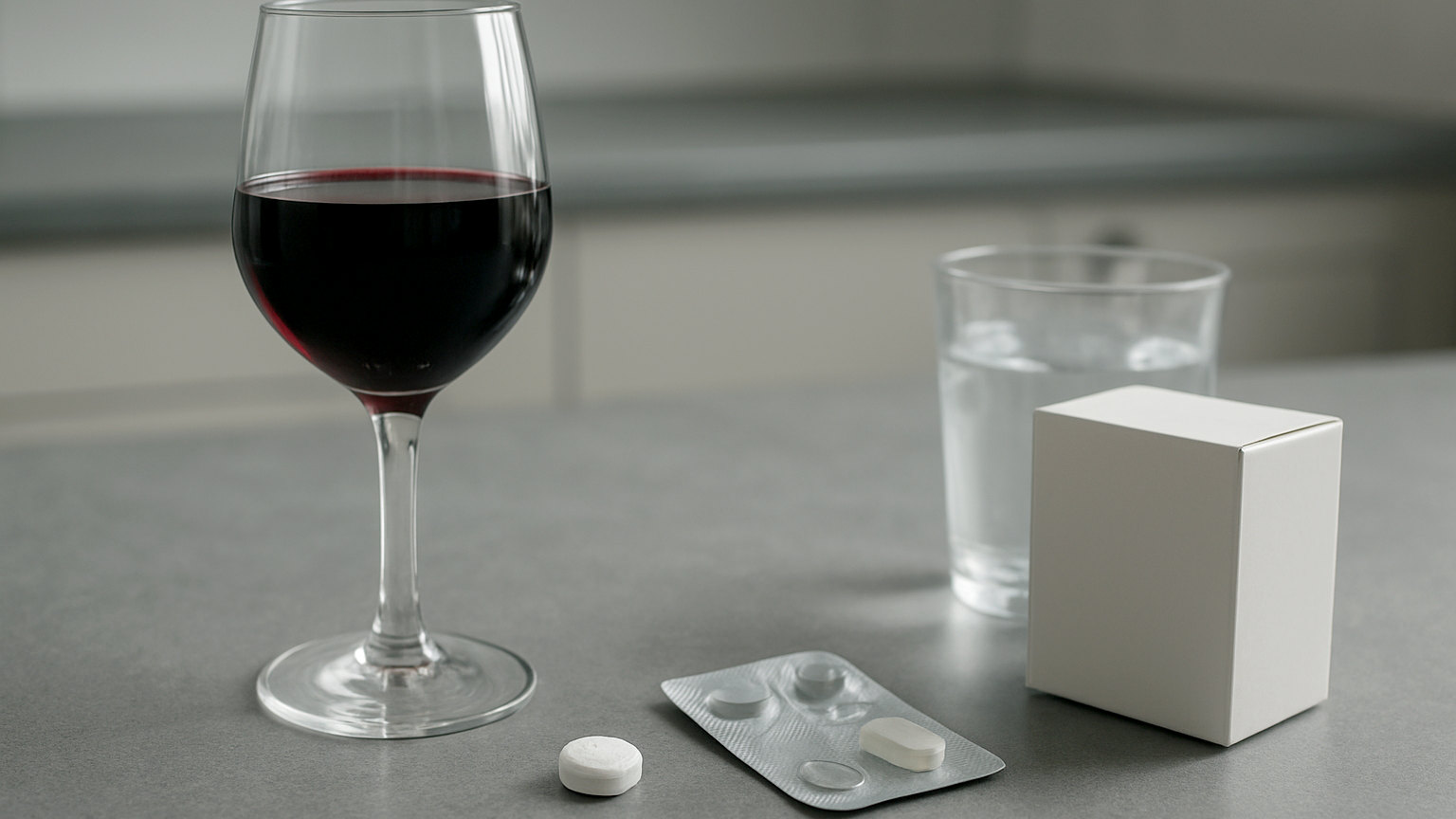
The three main painkiller families each carry a different risk with alcohol, and lumping them together as "don't drink on painkillers" hides which one actually matters. With paracetamol the concern is the liver, and it is about regular heavy drinking rather than a single glass. With anti-inflammatories it is the stomach lining. With opioids it is breathing, and that combination is the genuinely dangerous one - it should be treated as a stop rather than a caution.
Ask your pharmacist about your specific medicine and your specific drinking. An honest figure changes the advice in ways a vague one cannot.
Opioids: the one to treat as a hard stop
Codeine, dihydrocodeine, tramadol, morphine and oxycodone all depress breathing. So does alcohol, by a different route. Together the effect is more than additive, and this combination is a leading cause of accidental death involving prescribed medicines.
It also compounds sedation, so you may be far more impaired than you feel - which matters for stairs, for looking after children, and for driving. The risk is highest when starting, after any increase, and after a break in treatment when tolerance has fallen.
Remember that co-codamol and co-dydramol are opioids, despite being available from a pharmacy counter. So are many prescription-strength cold remedies. Our guide to codeine and co-codamol covers what else those contain.
If someone has taken an opioid with alcohol and is very drowsy, difficult to rouse, or breathing slowly or noisily, call 999.
Paracetamol: a liver question, not an immediate one
Paracetamol at the recommended dose is generally considered acceptable with moderate drinking. The risk is not an immediate reaction on the night.
The concern is that regular heavy drinking alters how the liver processes paracetamol and depletes the substance the body uses to neutralise its toxic breakdown product - so the margin between a normal dose and a harmful one narrows. Long-term heavy drinkers, and anyone with liver disease, should ask specifically about what is safe for them.
The bigger practical danger is accidental double-dosing. Paracetamol is hidden inside cold and flu remedies, night-time preparations, and prescription painkillers such as co-codamol - so it is entirely possible to exceed the daily limit without seeing the word twice. Our guide to over-the-counter interactions covers that trap.
Paracetamol overdose typically causes no symptoms at all for a day or more while serious liver damage is under way. If too much has been taken, get help immediately even if the person feels completely well - call 111, or 999 if they are unwell, and take the packaging.
Anti-inflammatories: the stomach
Ibuprofen, naproxen, diclofenac and aspirin irritate the stomach lining and reduce the protective mechanisms there. Alcohol does something similar. Together the risk of gastritis, ulceration and bleeding rises.
The risk is higher with regular use of both, in people over 65, in anyone with a history of ulcers or indigestion, and in anyone also taking a blood thinner, a steroid or an SSRI antidepressant.
Get urgent help for vomiting blood or material like coffee grounds, or for black tarry stools. Those indicate bleeding in the upper gut.
NSAIDs also strain the kidneys, and alcohol contributes to dehydration - a combination that matters during any illness, as our guide to sick day rules explains.
The hangover question
Reaching for a painkiller the morning after is common, and the choice matters.
An anti-inflammatory on a stomach already irritated by a heavy night is the least sensible option. Paracetamol at the normal dose is generally the better choice for most people, though not for anyone with liver problems or who drinks heavily and regularly.
Do not take anything preventively before or during drinking. It offers no protection, and it means the medicine and the alcohol are at peak levels together - precisely the situation to avoid.
Most hangover symptoms are dehydration and disrupted sleep, which water and time address better than tablets do.
Nerve pain medicines
Gabapentin and pregabalin are commonly used for pain and are strongly sedating. Combined with alcohol, and particularly with an opioid as well, they add meaningfully to the risk of respiratory depression. Our guide to nerve pain medicines covers them, and this is a combination to avoid rather than moderate.
How to get a useful answer
Ask a specific question. "I'm on naproxen and I usually have three or four pints at the weekend - is that a problem?" gets a genuinely useful reply. "Can I drink on this?" gets a cautious generic one.
Pharmacists have heard everything, there is a private consultation room, and nobody is going to lecture you - see our guide to what your pharmacist can do. If you have found you cannot cut down when you intend to, that is worth raising too; local alcohol services accept self-referral, and Drinkline is on 0300 123 1110.
The Usage section covers more on taking medicines day to day - Which Medicines Should You Not Drink With? is closely related to this one.