Warfarin blocks vitamin K recycling in the liver, which is needed to produce several clotting factors. It has been in use for decades and, for most indications, has been displaced by the direct oral anticoagulants. It remains essential for mechanical heart valves and some other situations. It requires regular blood testing, it interacts with an extraordinary number of things, and it is the anticoagulant where what you eat genuinely matters - though not in the way most people assume.
Follow the instructions from your anticoagulant clinic. This guide contains no doses.
What the INR means
The INR measures how long your blood takes to clot compared with normal. An INR of 1 is normal; higher numbers mean thinner blood.
Most people have a target range, commonly 2 to 3, with a higher range for mechanical valves. Below range you are inadequately protected; above it you bleed more easily.
Testing is frequent at first and then, once stable, less often - though never stopped. Doses change in response to results, which is why warfarin doses vary between people and change over time.
Our guide to warfarin or a newer blood thinner compares it with the alternatives.
Vitamin K: consistency, not avoidance
This is the most misunderstood part. People are told warfarin interacts with vitamin K and conclude they must avoid green vegetables.
The advice is consistency. Your warfarin dose is set against your usual vitamin K intake. A steady amount of broccoli, spinach, kale and green leaves is entirely fine - the dose adjusts to it.
What destabilises the INR is change: a sudden salad phase, a week of no vegetables, or a crash diet.
Avoiding green vegetables is both unnecessary and unhelpful, since it makes you more sensitive to any that you do eat.
Cranberry juice and large quantities of alcohol both affect control - and binge drinking is considerably more destabilising than a regular modest amount.
The interaction list
Warfarin interacts with more medicines than almost any other drug, in both directions.
Antibiotics are the commonest culprit - most raise the INR, by killing gut bacteria that produce vitamin K and by enzyme effects. Metronidazole, clarithromycin, ciprofloxacin and co-trimoxazole are all significant. See metronidazole and clarithromycin.
Anti-inflammatory painkillers and aspirin raise bleeding risk independently of the INR. Paracetamol is the usual alternative, though regular high use also raises INR - see paracetamol and ibuprofen.
Amiodarone, some antifungals and some antidepressants raise the INR.
Enzyme inducers - carbamazepine, rifampicin and St John's wort - lower it, reducing protection.
Tell every prescriber, dentist and pharmacist that you take warfarin, and check anything bought over the counter or herbal. An extra INR check after starting any new medicine is routine and sensible - see supplements that interfere with your medicines.
Your yellow book
The anticoagulant record book holds your results, doses and target range. Carry it, take it to every appointment, and show it to any dentist or clinician.
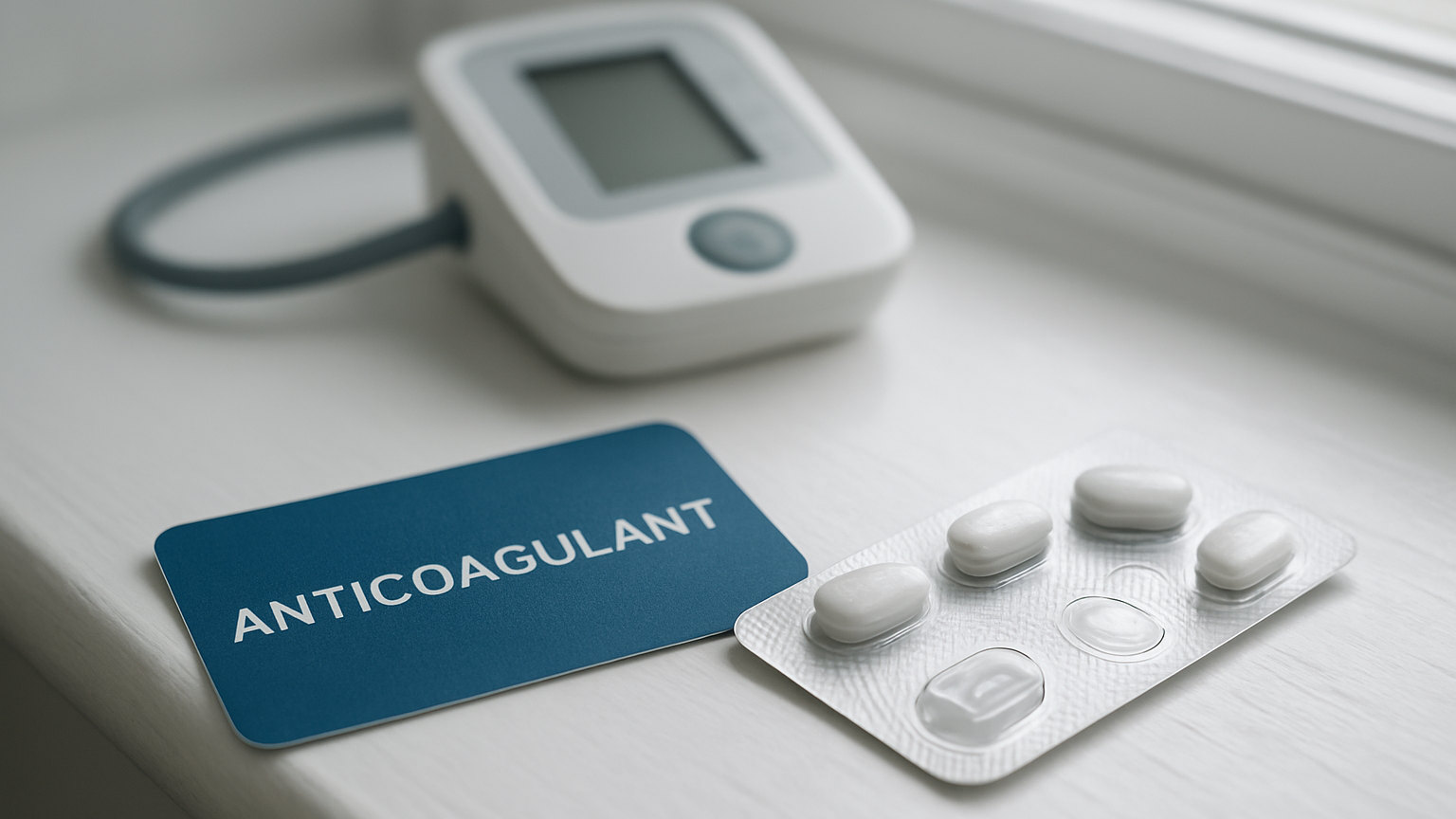
Carry an anticoagulant alert card too, particularly for emergencies.
Missed doses
Warfarin's effect persists for days, so a single missed dose matters far less than with a direct oral anticoagulant.
Take it as soon as you remember on the same day. If you only remember the next day, skip it - do not double up - and tell the clinic, since it affects interpretation of your next result.
Take it at the same time each day, usually early evening, which allows a dose change on the day of a test.
Bleeding
Bruising, nosebleeds and bleeding gums are expected.
Seek urgent help for a significant blow to the head - even if you feel fine, since bleeding inside the skull can be delayed - bleeding that will not stop, vomiting blood or material like coffee grounds, black tarry stools, blood in urine, or sudden severe headache, weakness or confusion.
Warfarin has a well-established reversal: vitamin K, and clotting factor concentrates in emergencies. That is one of its remaining advantages.
Surgery and dental work
Most dental treatment including extractions can be done with an INR in range, using local measures - stopping is usually more dangerous than bleeding.
For surgery, warfarin is stopped in advance and sometimes bridged with injections. Never stop it on your own initiative, and get written instructions.
Pregnancy
Warfarin crosses the placenta and causes birth defects. It is avoided in pregnancy, with injected heparin used instead.
If you could become pregnant, this should be discussed in advance - and raise it early if your plans change, since the switch is planned rather than sudden.
Related reading: Isosorbide: Nitrates and the Nitrate-Free Gap, with more on what medicines are prescribed for in Conditions.