Supplements and herbal remedies are medicines in every sense that matters pharmacologically - they contain active compounds, and several change how prescription drugs behave. St John's wort can render some prescriptions ineffective. High-dose fish oil, turmeric and garlic add to the effect of blood thinners. Calcium and iron block the absorption of several antibiotics and thyroid medicines. Because supplements are bought rather than prescribed, most people never mention them, which is exactly why they cause problems.
Tell your pharmacist everything you take, including vitamins, herbal products, protein powders and anything bought online. They are not going to lecture you, and this is what the question is for.
How interactions actually happen
Most work by one of three routes.
Changing how fast a drug is broken down. The liver uses a family of enzymes, chiefly cytochrome P450, to clear medicines. Some substances speed those enzymes up, clearing the drug faster and reducing its effect; others slow them down, so levels climb. This is the mechanism behind the two best-known examples - St John's wort as an inducer, grapefruit as an inhibitor.
Adding to the same effect. Two things that both thin the blood, or both cause drowsiness, or both raise serotonin, produce a larger combined effect than either alone.
Blocking absorption. Minerals bind certain drugs in the gut, forming complexes that cannot be absorbed. Nothing is broken - the drug simply never gets in.
St John's wort: the one to know
Sold freely for low mood, St John's wort is a potent enzyme inducer and interacts with a long list of medicines - reducing the effectiveness of hormonal contraceptives, some anticoagulants, some HIV and transplant medicines, and others. It also raises serotonin, so combined with an antidepressant it can contribute to serotonin syndrome, which is potentially serious.
The consequences here are not subtle. An unplanned pregnancy or a transplant rejection is a different order of problem from a mild side effect. If you are on any regular prescription, check before taking it - and see our guide to how antidepressants work if low mood is the reason you were considering it.
Things that add to bleeding risk
If you take warfarin, apixaban, rivaroxaban, clopidogrel or aspirin, several supplements increase bleeding risk: high-dose fish oil and omega-3, high-dose vitamin E, garlic supplements, ginkgo biloba, ginger and turmeric or curcumin in concentrated form.
Culinary amounts are not the issue. Concentrated extracts are, and turmeric capsules in particular have become common enough to matter. Mention them, especially before any surgery or dental procedure.
Warfarin has an additional relationship with vitamin K, found in green leafy vegetables. The advice is not to avoid them but to keep intake consistent, because sudden change is what unsettles control.
Minerals that block absorption
Calcium, iron, magnesium and zinc bind several medicines in the gut. Affected drugs include some antibiotics, thyroid replacement, and certain osteoporosis treatments - and the reduction in absorption can be substantial enough to make treatment fail.
The fix is usually timing rather than avoidance: separate them by a few hours. Ask your pharmacist what gap applies to yours. Indigestion remedies and antacids do the same thing and are frequently overlooked because they are not thought of as supplements at all.
Grapefruit, and other foods
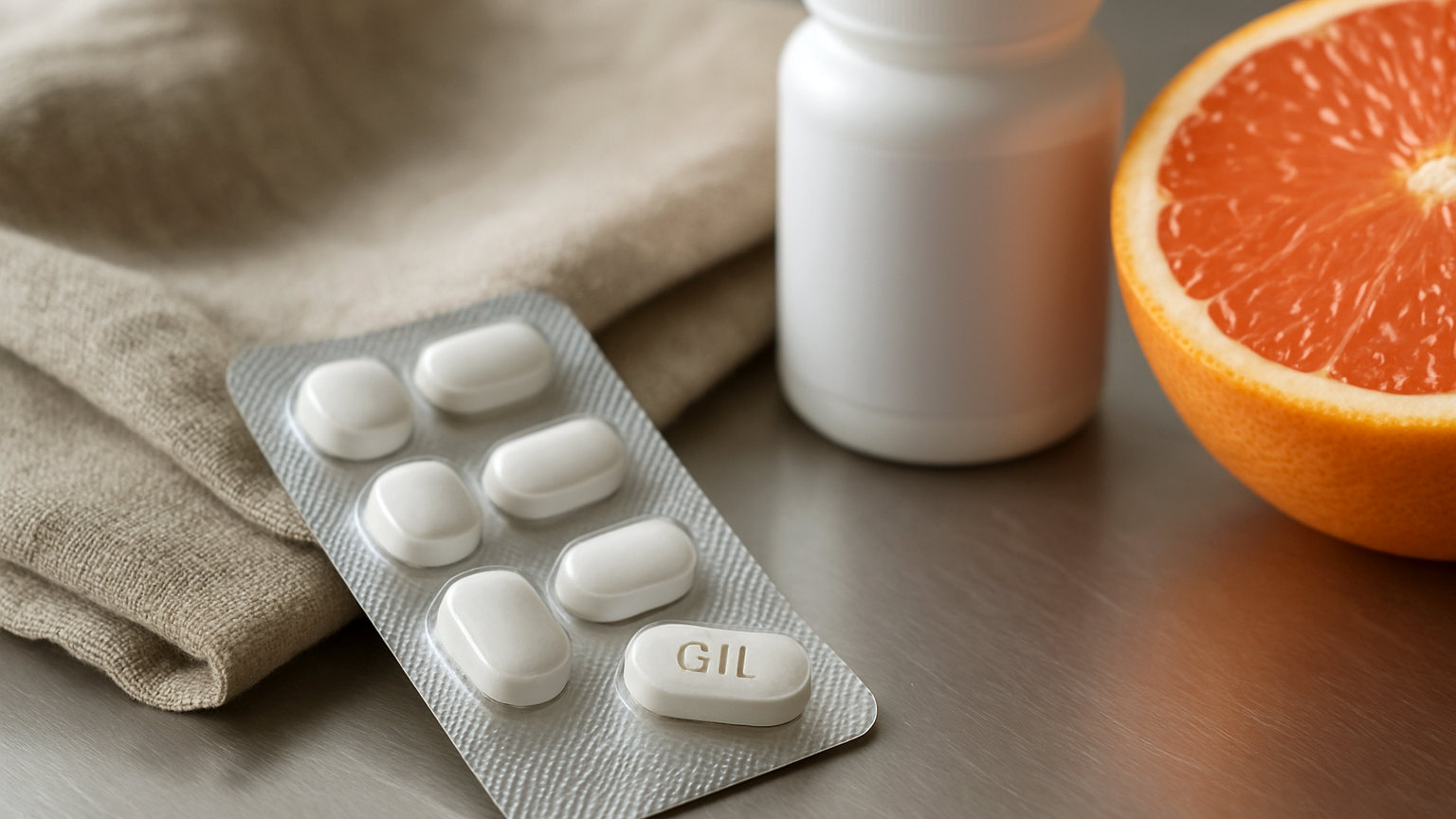
Grapefruit inhibits an enzyme in the gut wall that normally breaks down a range of medicines before they reach the bloodstream - so more of the drug gets through than intended. Affected medicines include some statins and some calcium channel blockers. The effect lasts a day or more, so separating it from the tablet does not help. Seville oranges and pomelo behave similarly; ordinary oranges do not.
Our guide to medicines, food and drink covers the rest, including dairy, caffeine and alcohol.
Why supplements are less controlled than you might assume
Supplements are regulated as food rather than as medicines. They do not go through the licensing process that establishes a medicine's dose, purity and safety, and the amount of active compound can vary between brands and between batches of the same brand.
Products bought from unregulated overseas sellers are a particular concern. Testing has repeatedly found supplements - especially in the sports, weight loss and sexual performance categories - contaminated with undeclared prescription drugs. Those interact with your medicines exactly as the prescription version would, without you knowing they are there. Traditional herbal remedies registered under the THR scheme carry a logo indicating they have at least met standards for quality and safe use.
How to make this easy
Keep one list of everything you take - prescribed, over the counter, herbal, vitamin - on your phone. Bring it to appointments and to the pharmacy. Use one pharmacy where you can, so a single system sees the whole picture and can flag problems automatically.
Ask before starting anything new, including something recommended by a friend or a trainer. Mention supplements before surgery or dental work, and be specific about dose and brand rather than saying "a fish oil".
If you want to take something for a symptom, it is worth asking whether the symptom is being caused by one of your medicines in the first place. That conversation quite often ends with a prescription being changed rather than a supplement being added.
The Side Effects section covers more on side effects and safety - Over-the-Counter Medicines That Interact is closely related to this one.