
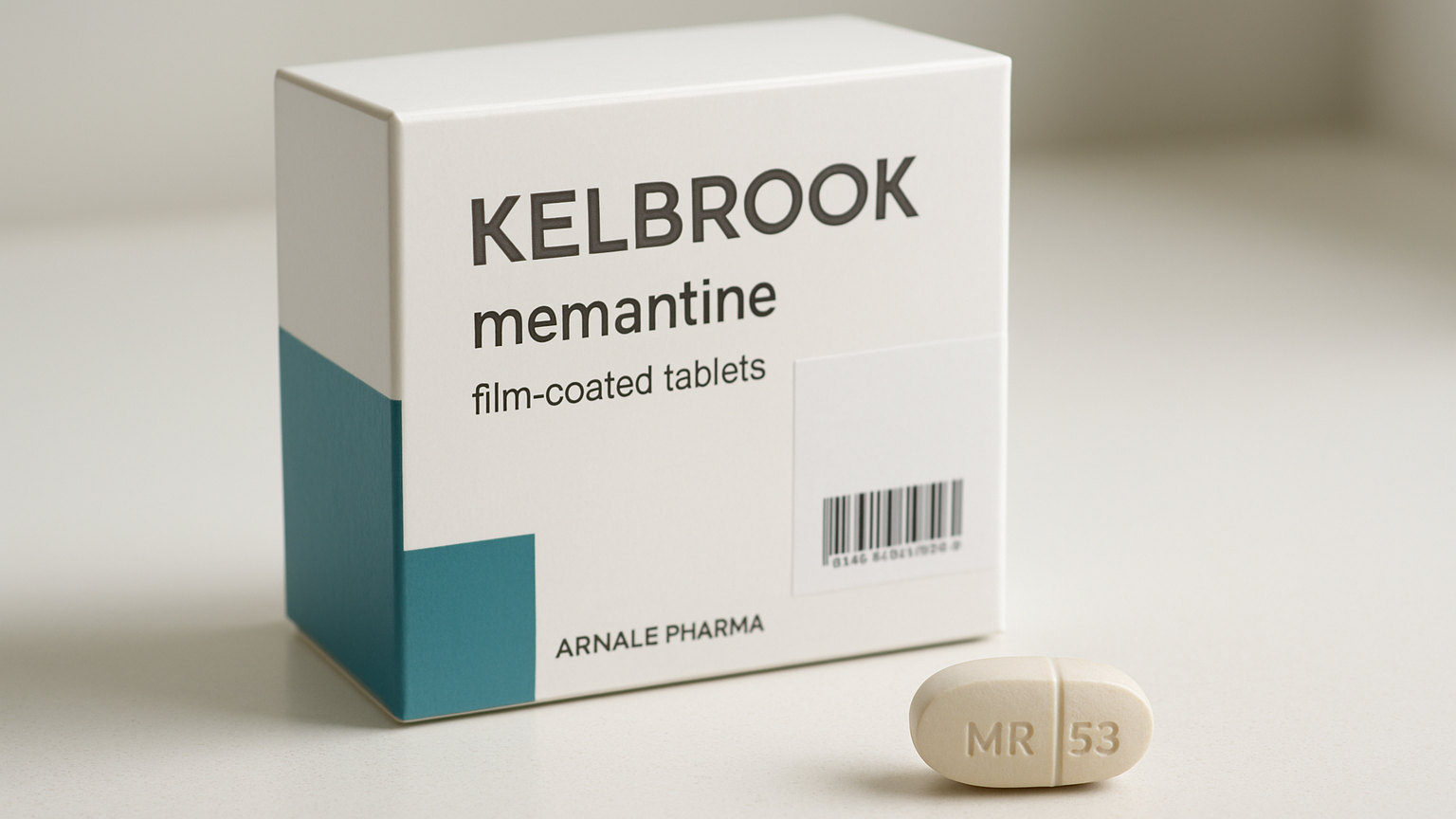
Memantine is used in moderate to severe Alzheimer's disease. It is frequently assumed to be a stronger version of donepezil, and it is not - it works on an entirely different system. Donepezil raises acetylcholine; memantine acts on glutamate signalling. Because the mechanisms do not overlap, the two can be taken together, and in more advanced disease they often are.
Follow the plan your prescriber gave you. This guide contains no doses.
How it works
Glutamate is the brain's main excitatory neurotransmitter. In Alzheimer's disease, excessive glutamate activity at NMDA receptors is thought to contribute to nerve cell damage - a process called excitotoxicity - and to interfere with the signal-to-noise ratio that makes learning possible.
Memantine blocks those receptors partially, damping down the background noise without shutting down normal signalling. That partial, voltage-dependent block is what distinguishes it from older NMDA blockers, which were unusable because they blocked everything.
Where it is used
Memantine is licensed for moderate to severe Alzheimer's disease. Donepezil and the other cholinesterase inhibitors are used from mild disease onwards.
So the usual pattern is a cholinesterase inhibitor first, with memantine added or substituted as the disease advances. It is also an option for people who cannot tolerate a cholinesterase inhibitor - which is a genuinely useful alternative, since the side effect profiles are quite different.
It is not generally recommended in vascular dementia or frontotemporal dementia, and the evidence in dementia with Lewy bodies is weaker than for cholinesterase inhibitors, which tend to work well there.
What to expect
The same honest framing as with donepezil applies: memantine can produce modest improvements in cognition, daily function and behaviour, and may reduce agitation in some people. It does not slow the underlying disease.
Benefits are measurable in trials but often subtle in an individual. Families who expect improvement are usually disappointed; families told to expect a period of steadier function often see it.
Our guide to donepezil covers the same expectation gap.
Side effects
Memantine is generally better tolerated than the cholinesterase inhibitors, and that is one of its practical advantages.
The common effects are dizziness, headache, constipation, drowsiness and raised blood pressure. Confusion and hallucinations occur in some people, which is unhelpful given the context and worth reporting rather than attributing to the dementia.
Crucially, it does not cause the nausea, diarrhoea, appetite loss and slow heart rate that limit donepezil. Someone who could not tolerate a cholinesterase inhibitor for those reasons may manage memantine well.
The dose is built up over several weeks to reduce dizziness.
Kidney function
Memantine is cleared by the kidneys, so the dose is reduced in moderate impairment and it is avoided in severe impairment.
Kidney function declines with age and with illness, so a dose set some years ago may no longer be right. Anything that alkalinises the urine - some antacids, certain conditions - can raise memantine levels, which is an unusual interaction worth mentioning.
See medicines that affect your kidneys.
Combining the two
Because the mechanisms differ, memantine and a cholinesterase inhibitor can be prescribed together, and guidance supports this in moderate to severe disease.
The benefit of combination over one alone is modest and has been debated, but it is a reasonable option and it does not create dangerous interactions between the two.
Medicines that work against dementia treatment
This applies whichever drug you are on. Anticholinergic medicines directly oppose cholinesterase inhibitors, and their cumulative burden worsens cognition in its own right.
The group includes some bladder medicines - notably oxybutynin - older sedating antihistamines, tricyclic antidepressants and some anti-sickness medicines. Our guides to oxybutynin and medicines and your memory cover this, and it is one of the highest-value things to review when dementia is diagnosed.
Sedatives, opioids and antipsychotics all add to confusion too. A structured medication review at diagnosis is worth asking for - see deprescribing.
Antipsychotics in dementia
Where agitation or distress is the problem, memantine is sometimes helpful and is a considerably safer option than an antipsychotic, which raises the risk of stroke and death in dementia.
Our guide to antipsychotics covers those risks. If a relative with dementia has been on one for months without review, that is worth questioning.
Practical points
Memantine comes as tablets, orodispersible tablets and an oral solution, which matters as swallowing becomes difficult later in the illness.
For someone who may forget doses, see blister packs and dosette boxes and managing someone else's medicines.
When to stop
The same considered decision as with any dementia treatment: no benefit after an adequate trial, intolerable side effects, or disease advanced to the point where tablets no longer serve a purpose.
Towards the end of life, stopping is part of good care rather than withdrawal of it.
Valproate: The Pregnancy Rules and Why They Exist covers a related point, and the Conditions section has the rest of these guides.


