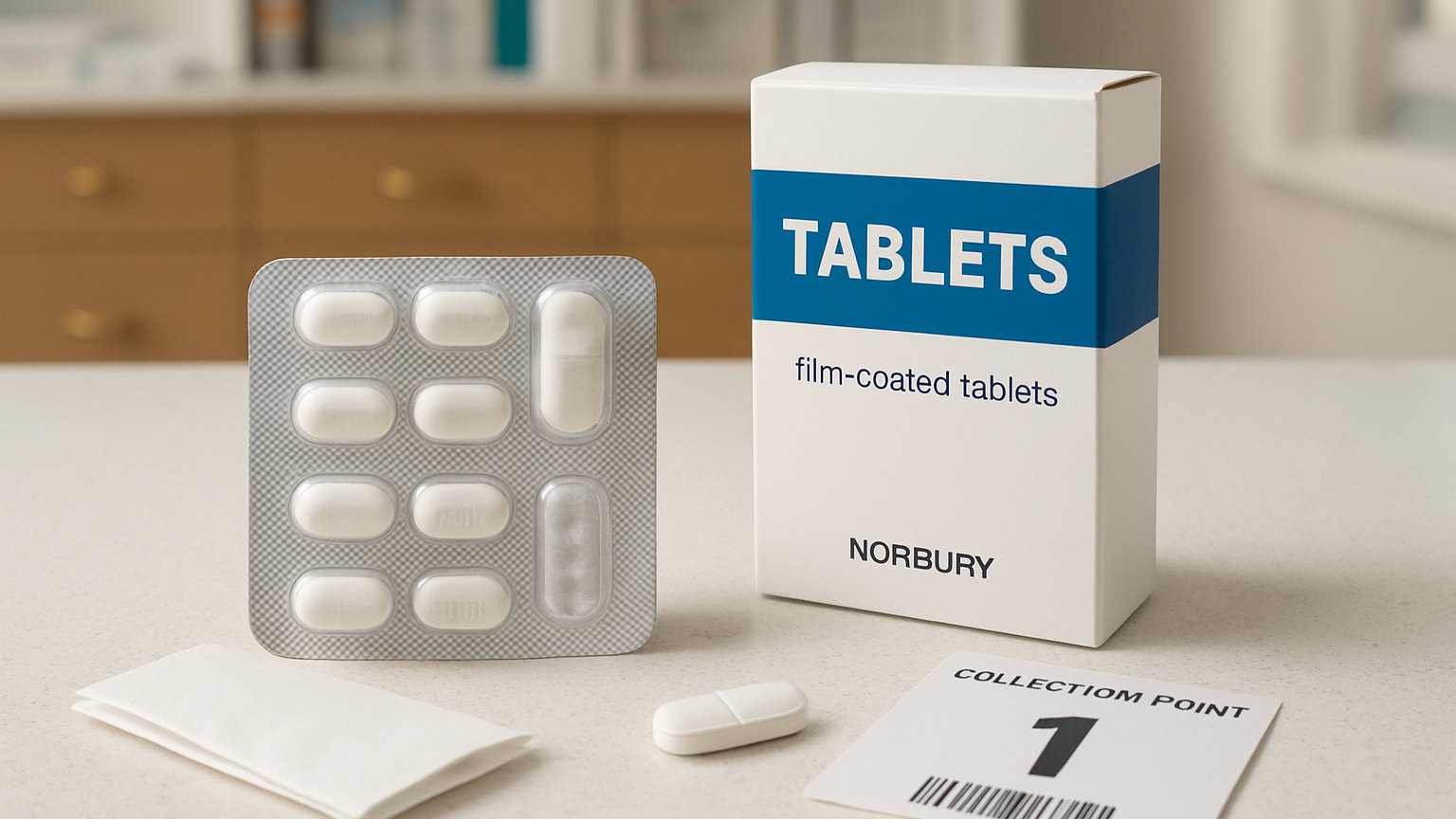
A monitored dosage system - a blister pack or dosette box - is a tray with compartments for each day and time, filled and sealed by a pharmacy. It looks like the obvious answer to a complicated routine, and it is genuinely transformative for some people. But it suits fewer people than you would expect, it carries real drawbacks, and pharmacies assess rather than simply provide, which frustrates people who ask and are turned down.
What they are
Your tablets are removed from their original packaging and sealed into compartments labelled by day and time. You press each one out when it is due, and an empty compartment shows you have taken it.
They are usually supplied weekly or fortnightly, which means collecting more often. Not all medicines can go in one.
Who genuinely benefits
The evidence is better for people with a specific difficulty than for people who simply find their routine complicated:
- memory problems or dementia, where the visual check of an empty compartment is the point
- physical difficulty opening bottles and blisters, such as marked arthritis
- visual impairment making labels hard to read
- carers administering medicines for someone else
- learning disability, where the structure helps
Our guide to managing someone else's medicines covers the carer situation, which is where they most often earn their place.
The drawbacks nobody mentions
Not everything fits. Medicines that must be taken separately from others, ones that need refrigerating, dispersible tablets, anything moisture-sensitive, inhalers, liquids, patches and injections all stay outside the pack. So you end up with a pack plus a separate routine, which is more complicated rather than less.
Stability. Removing tablets from foil designed to protect them and sealing them in plastic for a fortnight affects some medicines. Manufacturers often do not support it, and the pharmacy takes on responsibility for that judgement.
Changes are harder. If a dose changes mid-cycle, the whole pack may need remaking. Packs are frequently prepared days ahead, so a change after a hospital appointment can be slow to take effect - and in the worst case someone keeps taking the old dose because it is sealed in front of them.
You lose the information. The name, strength and warnings on the original box are gone. So is the leaflet. Many people in packs cannot say what any of their tablets are, which matters in an emergency - our guide to reading a medicine label covers what you would otherwise have.
It does not fix motivation. If the problem is that someone has decided not to take a medicine, a pack does not change that - it just makes it visible.
Why you may be assessed and declined
Pharmacies are expected to assess need rather than supply on request, and to consider simpler adjustments first. That is not obstruction - filling packs is time-consuming, unfunded in many cases, and carries the stability responsibility above.
The usual approach is to try simpler things first, and a good proportion of people find those work.
What often works better
- Simplifying the regimen. Ask whether anything can move to once daily, or whether anything can come off the list entirely - see deprescribing.
- Aligning timings so everything falls at two points in the day rather than five.
- A pill organiser you fill yourself, which keeps the original packaging and leaflets and costs a few pounds.
- Alarms or an app, which prompt rather than just record - our guide to remembering to take your medicine covers anchoring doses to daily habits.
- Large-print labels, easy-open caps and reminder charts, all of which a pharmacy can provide.
- Repeat dispensing, which removes the ordering step - see repeat dispensing.
If you do use one
Ask for a printed list of what is in it, with names, strengths and what each is for, and keep it with the pack. Ask for the leaflets.
Tell the pharmacy immediately about any dose change from a hospital or GP appointment, and check whether the current pack needs remaking rather than assuming.
Take the pack and the list to every appointment and any hospital admission. And keep anything that lives outside the pack somewhere you will see it, because that is what gets missed.
Asking
Speak to your pharmacist and explain the specific difficulty rather than asking for a pack by name. "I keep forgetting the lunchtime one" or "I cannot get the tablets out of the foil" points at a solution; "can I have a dosette box" points at one answer that may not be the right one.
See also Pharmacy Health Checks: What Is Available, and the Prescriptions section for more on prescriptions and pharmacy services.