Emollients are moisturisers that repair and maintain the skin barrier, and in conditions like eczema they are the foundation of treatment rather than an optional extra. The commonest reason they appear not to work is that people use far too little - the quantities prescribed for regular use are considerably larger than most people apply. They should be used every day, including when the skin looks fine, and used as a soap substitute rather than alongside ordinary soap.
There is also a fire risk with paraffin-based products that is not widely known and has caused deaths. It is covered below.
How much, and how often
Apply liberally and frequently - several times a day for active eczema, and at least daily as maintenance. The prescribed quantities for someone with widespread eczema run to several hundred grams a week, which surprises people who have been making a small tube last a month.
If your emollient is not lasting anything like that long, you are probably not using enough. Ask for a larger pump dispenser rather than tubes, and ask what quantity you should be getting through.
Keep using it when the skin is clear. Emollients maintain the barrier and reduce how often flares happen; stopping the moment things look better is why the cycle repeats.
How to apply it
Smooth it on downwards, in the direction of hair growth, rather than rubbing it in vigorously. Rubbing upwards or in circles can block hair follicles and cause folliculitis - small painful spots that then get mistaken for the eczema worsening.
Apply after a bath or shower while the skin is still slightly damp, which traps moisture. Do not use hot water, which strips the skin further.
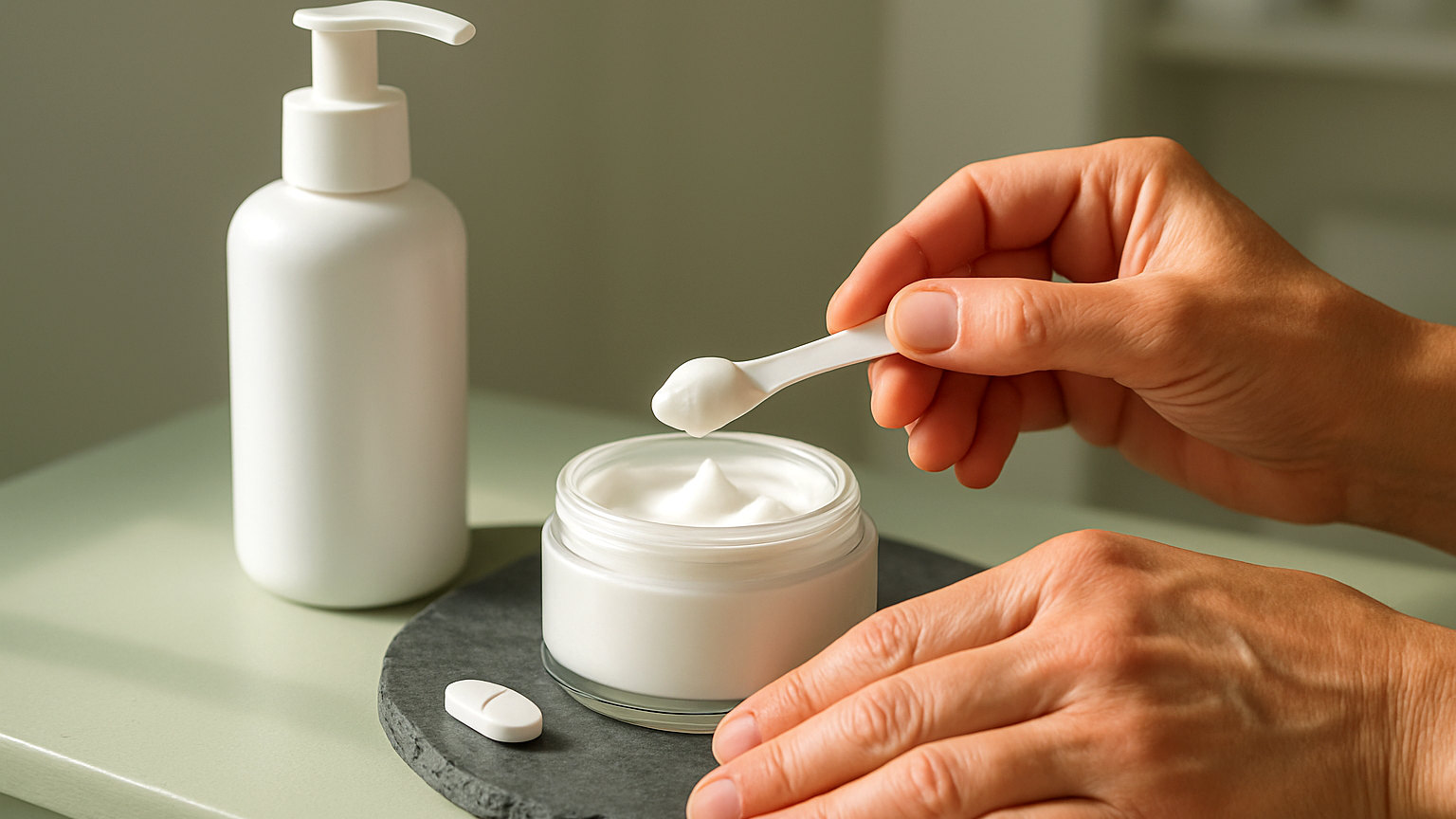
Use clean hands or a spoon to take product from a tub rather than dipping fingers in repeatedly, which contaminates it.
Emollients and steroid creams together
Both are used, and the order matters less than the gap. Leave around twenty to thirty minutes between them so one does not dilute or spread the other, and apply the steroid only to the inflamed patches while the emollient goes on everywhere.
Using emollients properly usually means needing less steroid, not more. Our guide to steroid creams and potency covers the other half of the treatment, including why under-treating is the more common mistake.
Ointments, creams and lotions
Ointments are greasiest, contain little or no water and no preservative, and are most effective for very dry skin - but they are unpleasant to wear under clothes and many people will not use them during the day.
Creams are lighter, absorb faster and are more acceptable for daytime, but contain preservatives that occasionally cause irritation.
Lotions are lightest, best for hairy areas, and least moisturising.
Many people do best with a cream by day and an ointment at night. The best emollient is genuinely the one you will actually apply, so if you hate the texture of what you have been given, ask to try another - there are many, and they are not interchangeable in how they feel.
The fire risk
This is the part most people have never been told. Emollients containing paraffin - and, on current MHRA advice, emollients generally - soak into fabric. Clothing, bedding, bandages and upholstery become far more flammable, and the residue builds up over time and is not fully removed by washing.
Do not smoke, use a naked flame, or go near anything that could ignite while wearing emollient-soaked clothing or bedding. Deaths have occurred from cigarettes igniting nightwear.
Change and wash clothing and bedding frequently, and be aware that washing reduces but does not eliminate the residue. If you or someone in the household smokes, this is worth taking seriously rather than filing as a routine warning.
Soap substitutes
Ordinary soap, bubble bath and shower gel strip the skin's natural oils and worsen eczema. Emollients can be used as a soap substitute - applied before rinsing rather than lathering.
Note that emollients make baths and showers slippery. Use a mat, and take care getting in and out, particularly for older people and children.
When to go back
See your GP or pharmacist if the eczema is not improving despite proper emollient use, if the skin becomes weepy, crusted or golden-crusted, which suggests bacterial infection, if there are clusters of painful blisters, which can indicate a herpes infection needing urgent treatment, or if it is disturbing sleep.
Also go back if a particular product stings or irritates - that is not something to persevere with, and it may be a reaction to a preservative rather than the condition worsening.
Getting enough of it
Emollients are inexpensive individually but people often under-order them because the quantities feel excessive. Ask for a repeat that reflects what you should be using, and order in good time - our guide to ordering repeats covers keeping supply steady.
Some emollients cost less bought over the counter than the prescription charge in England, which is worth asking your pharmacist about - see our guide to when buying over the counter costs less.
The Conditions section covers more on what medicines are prescribed for - Psoriasis Treatments: Creams to Tablets is closely related to this one.