
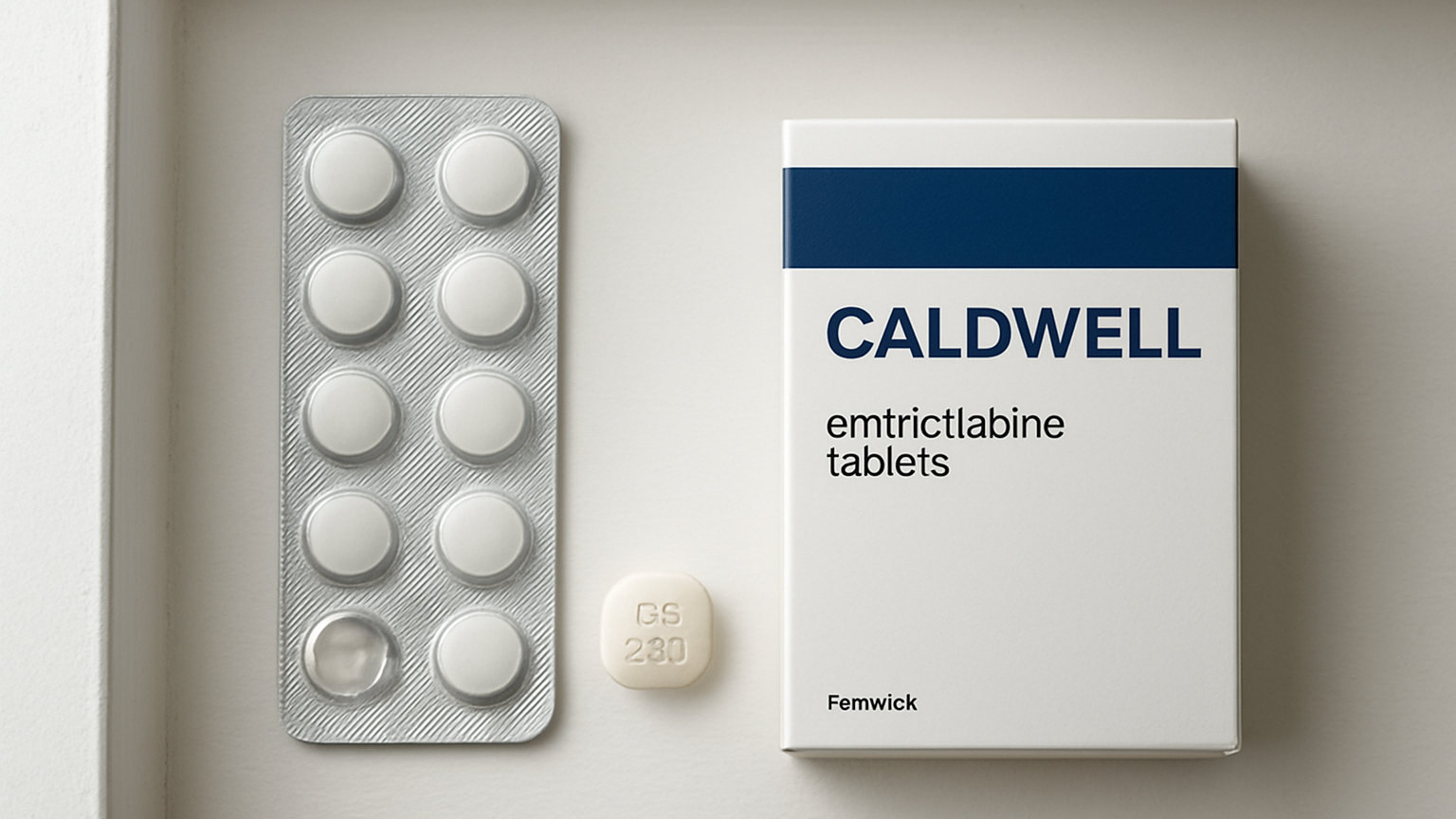
Emtricitabine and tenofovir are nucleoside and nucleotide reverse transcriptase inhibitors, blocking the enzyme HIV uses to copy its genetic material. Combined in a single daily tablet they form the backbone of many HIV treatment regimens. The same combination, taken by someone who does not have HIV, is pre-exposure prophylaxis - PrEP - which prevents infection with very high effectiveness and is available free on the NHS.
Follow the plan your clinic gave you. This guide contains no doses.
How PrEP works
Taken consistently, the drugs reach concentrations in the tissues most exposed to HIV sufficient to stop the virus establishing infection.
In trials and in real-world use, adherent PrEP reduces the risk of sexual HIV acquisition by well over ninety per cent - in practice, close to complete protection when taken properly. Failures are overwhelmingly failures of adherence rather than of the drug.
PrEP is available through sexual health clinics in the UK at no cost. You do not need a GP referral in most areas.
Daily and event-based dosing
Daily PrEP - one tablet every day - is suitable for everyone and is the only recommended approach for people having vaginal sex, where protective levels in vaginal tissue take longer to establish.
Event-based dosing, sometimes called 2-1-1, involves a double dose before sex followed by single doses on the two following days. It is an option for men having anal sex, and it is not appropriate for vaginal sex or for people with hepatitis B.
Which applies to you is a decision to make with the clinic rather than from an article - the distinction matters and getting it wrong removes the protection.
PrEP does not prevent anything else
It protects against HIV only. It does nothing about gonorrhoea, chlamydia, syphilis, herpes or hepatitis C, and it is not contraception.
Regular sexual health screening is part of PrEP care for that reason, and is one of the incidental benefits - people on PrEP are tested more often and treated sooner.
The testing requirement
You must be HIV negative before starting, and you are tested regularly while taking it.
This is not a formality. Taking two drugs alone in someone who already has HIV is inadequate treatment and drives resistance, narrowing future options permanently.
If you develop a flu-like illness with fever, rash and swollen glands shortly after a possible exposure, tell the clinic - that can be seroconversion, and testing needs repeating.
Kidneys and bone
Tenofovir disoproxil, the older form, can affect kidney function and reduce bone mineral density.
Kidney function is checked before starting and periodically afterwards. It is used with caution, or avoided, where kidney function is already reduced, and anti-inflammatory painkillers add to the risk - paracetamol is usually the better choice. See medicines that affect your kidneys and naproxen and ibuprofen.
Tenofovir alafenamide is a newer form that reaches the same tissue concentrations at a much lower dose in the bloodstream, with less effect on kidneys and bone. It is used in several treatment combinations, though it is associated with more weight gain - see dolutegravir.
The hepatitis B warning
This is the one most likely to cause harm and the least well known.
Both emtricitabine and tenofovir are active against hepatitis B. Someone with chronic hepatitis B taking them has their hepatitis suppressed as a side effect.
Stopping suddenly can cause a severe flare of hepatitis, which can be dangerous.
That is why hepatitis B status is checked before starting PrEP, and why event-based dosing is not suitable for people with hepatitis B - the on-off pattern is exactly the problem. If you have hepatitis B, do not stop these drugs without specialist advice.
Side effects
Nausea, headache, diarrhoea, tiredness and abdominal discomfort are common in the first weeks and usually settle - sometimes described as start-up syndrome.
Taking it with food helps. If it persists beyond a month, go back rather than stopping.
Seek advice for persistent nausea with abdominal pain, or jaundice - see medicines and your liver.
Interactions
Fewer than with some other HIV drugs, but they exist. Anti-inflammatories and other nephrotoxic medicines add to kidney risk.
Always mention HIV medication or PrEP to any prescriber, dentist or pharmacist, including for anything bought over the counter - see over-the-counter interactions.
Stopping PrEP
If you stop, continue for a period after the last exposure rather than ceasing immediately - the clinic will tell you how long.
PrEP is not a permanent commitment. People start and stop as their circumstances change, and that is an entirely normal way to use it.
If this was useful, Etonogestrel: The Contraceptive Implant is worth reading next, and Medicines collects the rest.


