
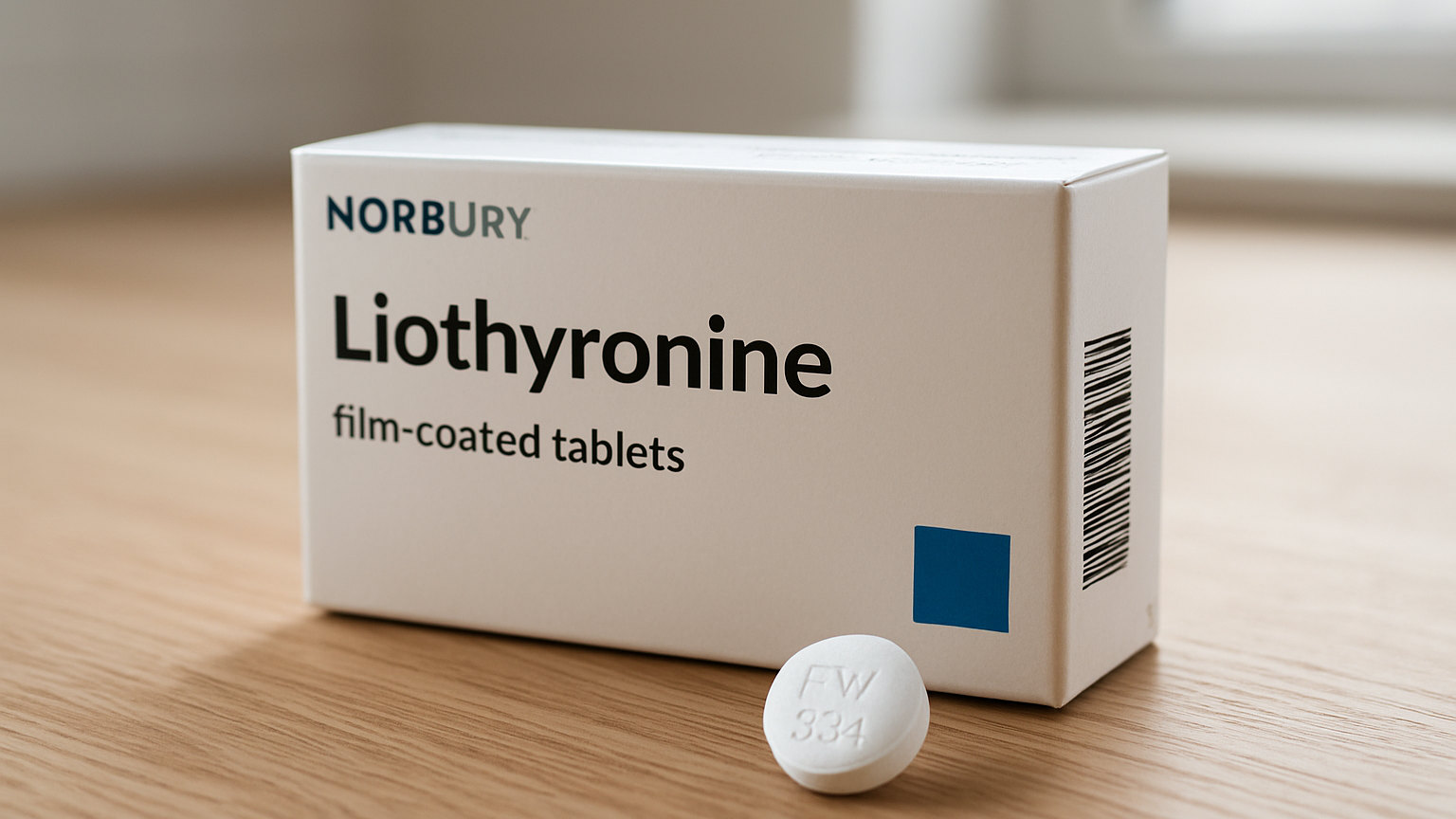
Liothyronine is T3, the active thyroid hormone. Levothyroxine is T4, which the body converts into T3 as it needs it. The logic for giving T3 directly seems obvious, and a great many people who remain unwell on levothyroxine want to try it. NHS access is tightly restricted, and the reasons are partly about evidence and partly about a history of extraordinary pricing that still shapes how it is handled.
Follow the plan your prescriber gave you. This guide contains no doses.
What the evidence shows
Most people on levothyroxine convert enough T4 into T3 and feel well. Trials comparing combination T4 and T3 therapy with levothyroxine alone have, taken together, not shown a consistent benefit - most found no significant difference in symptoms, mood or quality of life.
That is not the same as saying nobody benefits. The trials have limitations: they often used fixed ratios rather than individualised dosing, and there is genuine interest in whether a subgroup - perhaps people with particular variants in the deiodinase enzymes that do the conversion - responds differently. Guidance acknowledges the uncertainty rather than dismissing it.
But the current position is that combination therapy is not recommended routinely, because the evidence does not support it for most people.
The pricing history
The cost of liothyronine in the UK rose by an extraordinary multiple over about a decade, and the Competition and Markets Authority subsequently took enforcement action over excessive pricing.
During that period many people had established prescriptions withdrawn on cost grounds, which caused considerable distress and a good deal of mistrust. Prices have since fallen substantially, and guidance has softened - but the restrictions and the wariness both persist.
If your liothyronine was stopped during that period and you felt worse, that is a reasonable thing to raise again now.
How access works
NHS England guidance is that liothyronine should not be routinely initiated in primary care, and that it should be considered only after specialist endocrinology assessment - typically where symptoms persist despite adequate levothyroxine treatment and other causes have been excluded.
Many people obtain it privately instead, or buy it online without a prescription. That carries real problems: no monitoring, uncertain product quality, and a GP who cannot interpret your thyroid results because they do not know what you are taking.
If you are taking T3 from any source, tell your GP. It changes what your blood tests mean.
Why the blood tests look odd on it
Liothyronine has a short half-life - hours rather than the days of levothyroxine - so levels peak and fall through the day.
That means a blood test result depends heavily on when you last took a dose, and TSH is frequently suppressed on combination therapy. Interpreting results requires knowing the timing, so tell whoever takes the sample when you last took it.
Our guide to levothyroxine covers standard monitoring.
The risks of too much
Excess thyroid hormone is not benign. It causes palpitations, tremor, sweating, anxiety, weight loss and insomnia, and over time raises the risk of atrial fibrillation and of bone thinning.
Those risks are greater with T3 than with T4 because of the peaks, and greater again in older people and in anyone with heart disease.
Report palpitations, tremor, unexplained weight loss or chest pain. See atrial fibrillation and medicines and bone health.
Natural desiccated thyroid
Products derived from pig thyroid, containing both T4 and T3, are promoted heavily online. They are not licensed as medicines in the UK and are not recommended in UK guidance.
The hormone ratio in pig thyroid differs from human physiology, batch consistency has historically been variable, and the same monitoring problems apply. It is not a regulated alternative to a regulated medicine.
If you still feel unwell
Before concluding that T3 is the answer, it is worth working through the alternatives systematically, because several are common and treatable:
- Is the levothyroxine actually being absorbed? Timing relative to food, coffee, calcium, iron and PPIs makes a large difference - see medicines, milk and dairy.
- Anaemia, low B12, low vitamin D, coeliac disease - all common alongside autoimmune thyroid disease. See cyanocobalamin.
- Sleep apnoea, which causes exactly these symptoms and is frequently missed.
- Depression, which overlaps almost completely.
- Other medicines causing fatigue - see why your medicine makes you tired.
Being told your results are normal while you still feel unwell is genuinely frustrating, and the frustration is legitimate. Asking for those causes to be excluded properly is a more productive route than pursuing T3 first.
If this was useful, Prochlorperazine: For Vertigo, Nausea and Migraine is worth reading next, and Medicines collects the rest.


