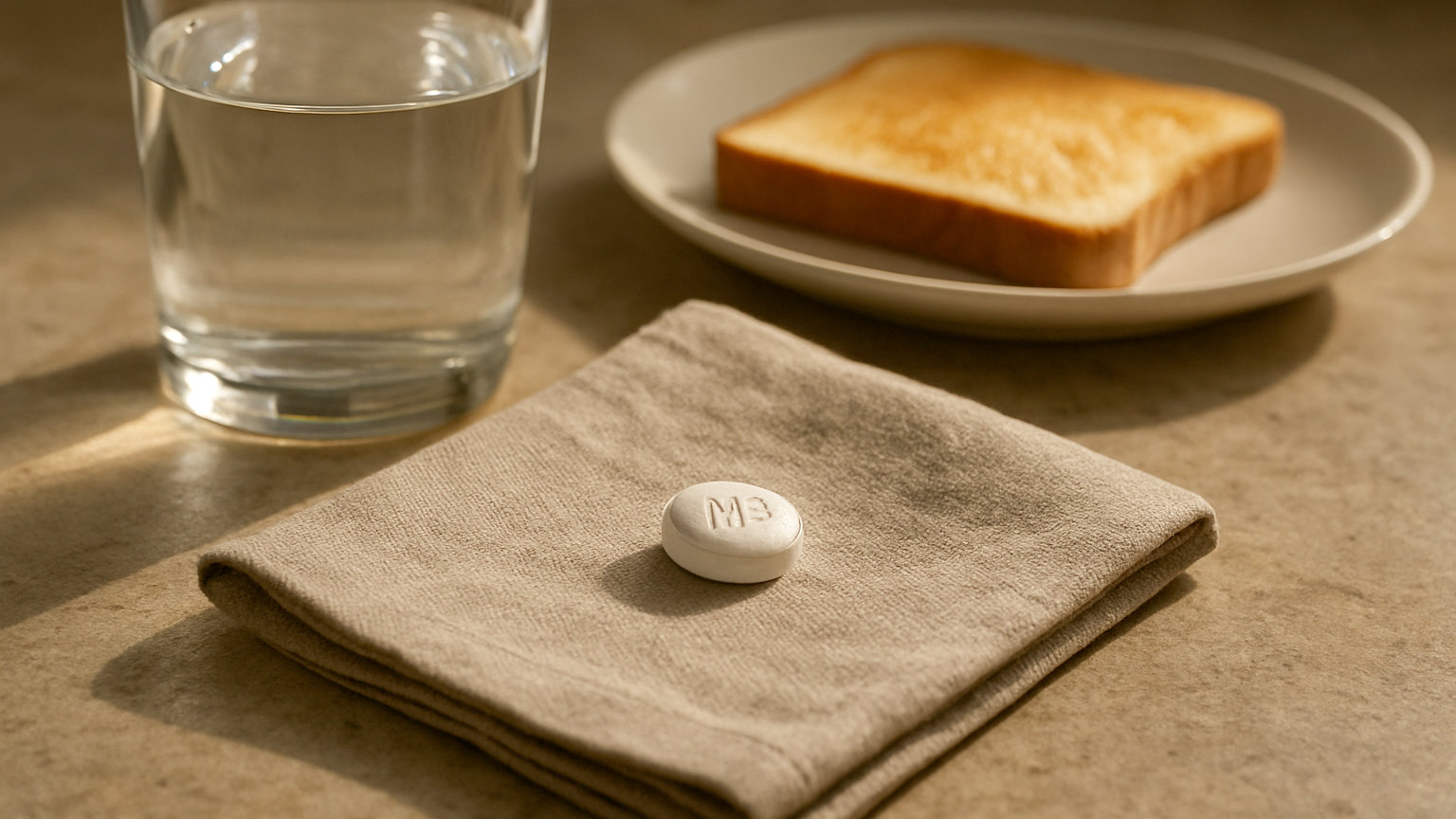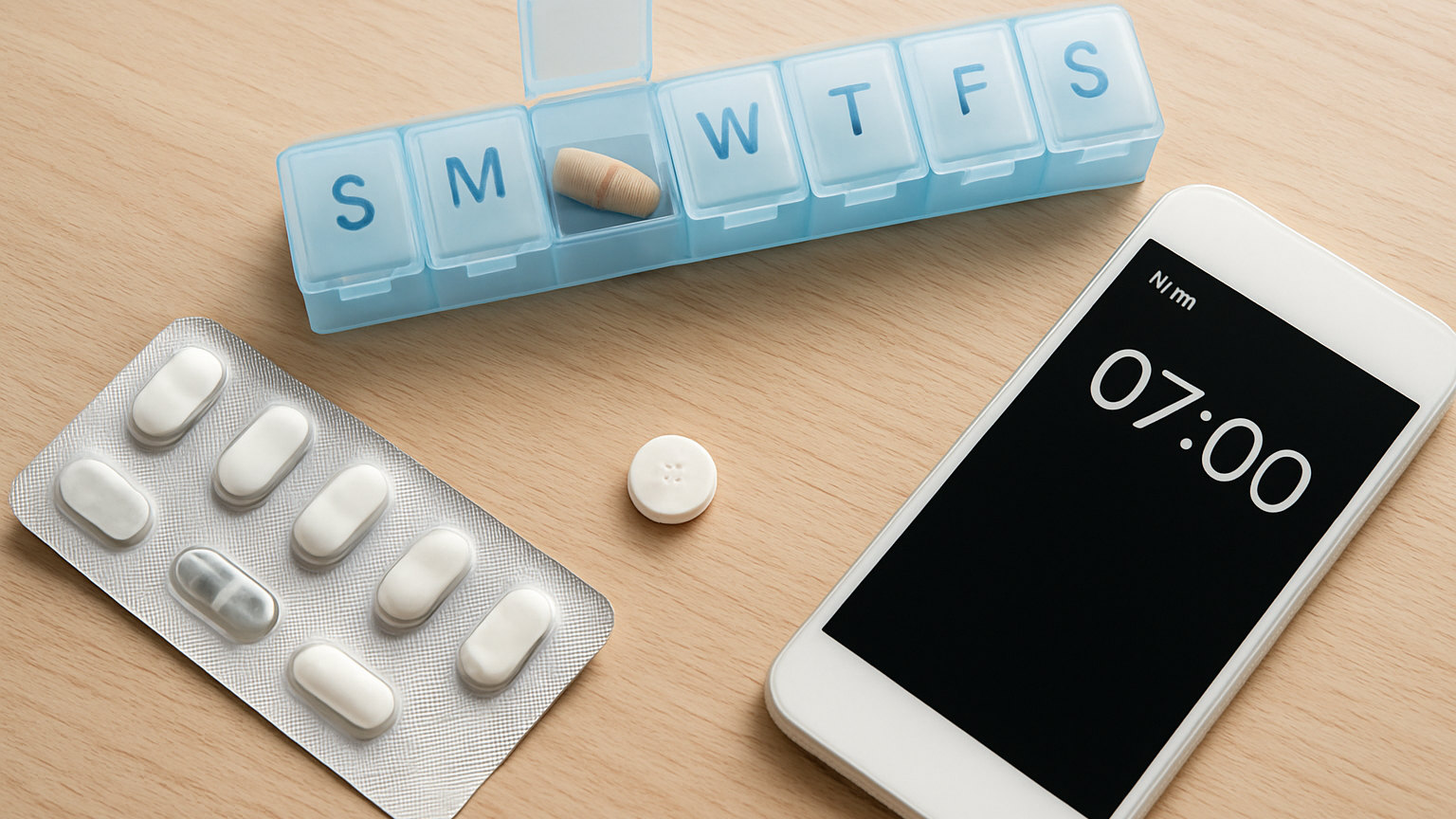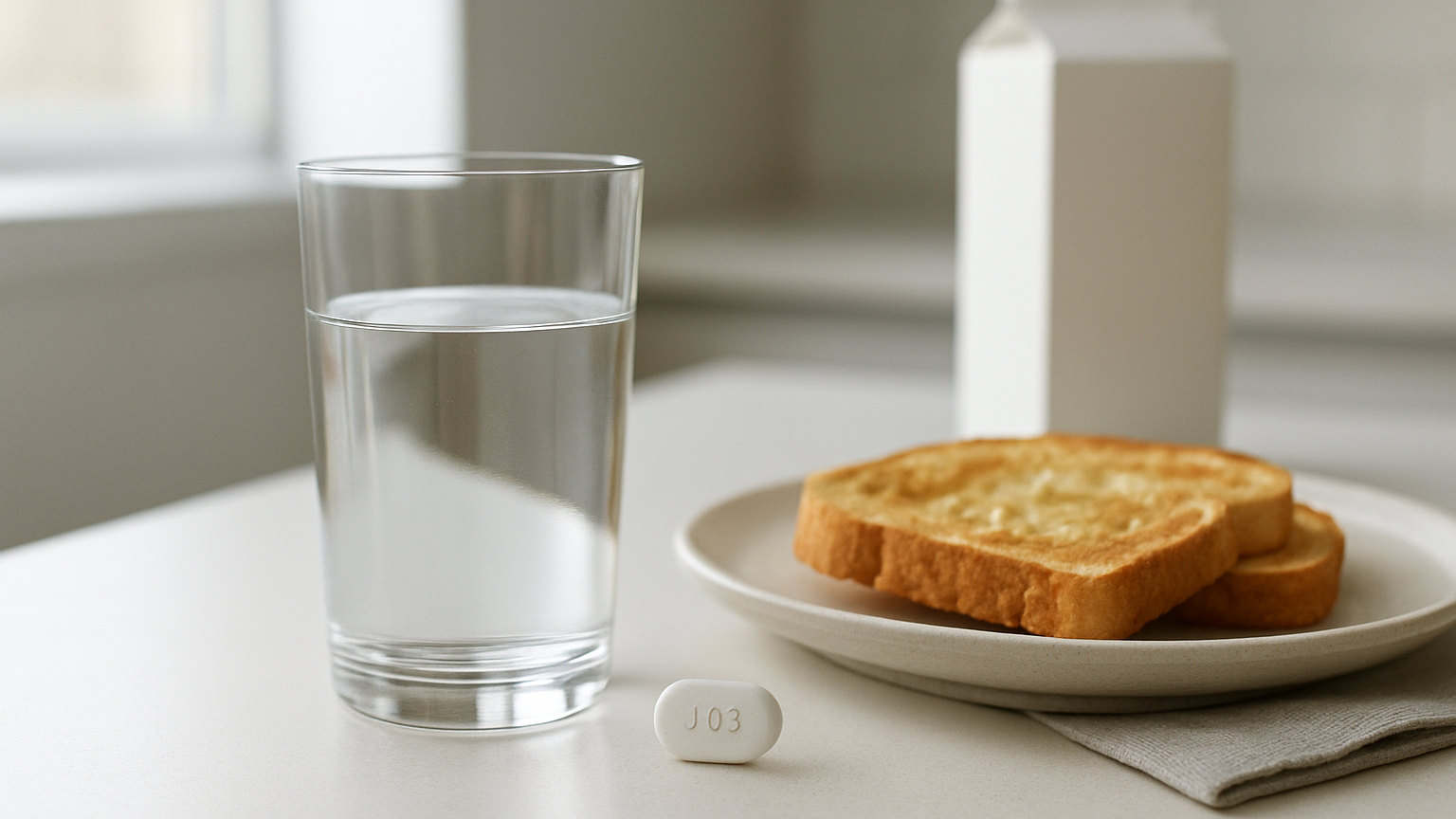
Calcium, and to a lesser extent magnesium, iron and zinc, binds several medicines in the gut to form complexes the body cannot absorb. Nothing is damaged and nothing reacts dangerously - the drug simply never gets in. Because there are no symptoms, the treatment quietly fails and the usual conclusion is that the medicine did not work. The fix is almost always timing rather than avoidance: separate them by a few hours.
Check the leaflet for your specific medicine or ask your pharmacist, since the required gap varies.
Which medicines are affected
Tetracycline antibiotics - doxycycline, lymecycline, oxytetracycline. These bind readily to calcium, and absorption can be reduced substantially. Relevant for acne treatment, chest infections and malaria prevention, as our guides to acne treatments and travel vaccines and malaria tablets cover.
Quinolone antibiotics such as ciprofloxacin, which behave similarly.
Levothyroxine for an underactive thyroid. This is the one people most often get wrong, because it is usually taken first thing and a cup of tea with milk follows immediately. It should be separated from calcium, iron and indigestion remedies, and taken on an empty stomach.
Bisphosphonates for bone protection. These are poorly absorbed at the best of times, and calcium blocks them almost completely - which is why the instructions specify plain water and nothing else for a period afterwards. Our guide to medicines and bone health covers how to take them.
Iron supplements, whose absorption is reduced by calcium - and which in turn reduce the absorption of several other medicines.
Some HIV medicines and some thyroid and osteoporosis treatments are affected similarly.
What counts as a source of calcium
More than milk. Yoghurt, cheese, calcium-fortified plant milks and juices, calcium supplements, multivitamins containing calcium, and antacids and indigestion remedies containing calcium, magnesium or aluminium.
Antacids are the most overlooked, because people do not think of them as medicines at all. A dose of indigestion remedy taken with an antibiotic can prevent the antibiotic working - our guide to over-the-counter medicines that interact covers this and the other shelf categories.
How long to leave
The usual advice is a gap of around two hours either side, but it differs by medicine - some require longer, and some specify taking the drug well before food entirely.
Ask what applies to yours rather than assuming a general rule. A pharmacist can tell you in under a minute and it is exactly the sort of question they expect.
Building it into a routine
The practical problem is that the medicines needing separation are often the ones taken first thing, and breakfast is the natural anchor for a morning dose.
Solutions that work: swallow it on waking with plain water and delay breakfast; or move the medicine to bedtime if that is permitted, well after the evening meal. Which is appropriate depends on the drug, so check first.
Our guide to remembering to take your medicine covers anchoring doses to habits, and a medicine that must be separated from food needs a different anchor from the kettle.
Where milk is actively helpful
The interaction runs one way, and dairy is not a general problem. For medicines that irritate the stomach - some anti-inflammatories, steroids, iron in some people - taking them with food including dairy reduces nausea.
Some medicines are absorbed better with fat, and a few specifically recommend a meal. Our guide to what "take with food" actually means covers the distinction between instructions that protect your stomach and instructions that control absorption. Only the second kind changes whether the medicine works.
Consistency matters as much as timing
For a few medicines, notably warfarin, the issue is not a single interaction but sudden change - which is why the advice is to keep intake of vitamin K-rich foods steady rather than to avoid them. Our guide to warfarin and the newer blood thinners explains.
The same principle applies to a sudden change in diet generally - starting a supplement, switching to fortified plant milk, or beginning a calcium-rich regime for bone health. Any of those is worth mentioning, because it may change how well an existing medicine is absorbed.
If a medicine seems not to be working
Before concluding the dose is too low, it is worth checking how you are taking it. Thyroid replacement and antibiotics are the two where poor absorption most often masquerades as an inadequate dose, and a dose increase for a timing problem is a poor outcome.
Mention how and when you take it at your review. It is a quick check and occasionally it is the whole answer.
See also Caffeine and Your Medicines, and the Usage section for more on taking medicines day to day.