
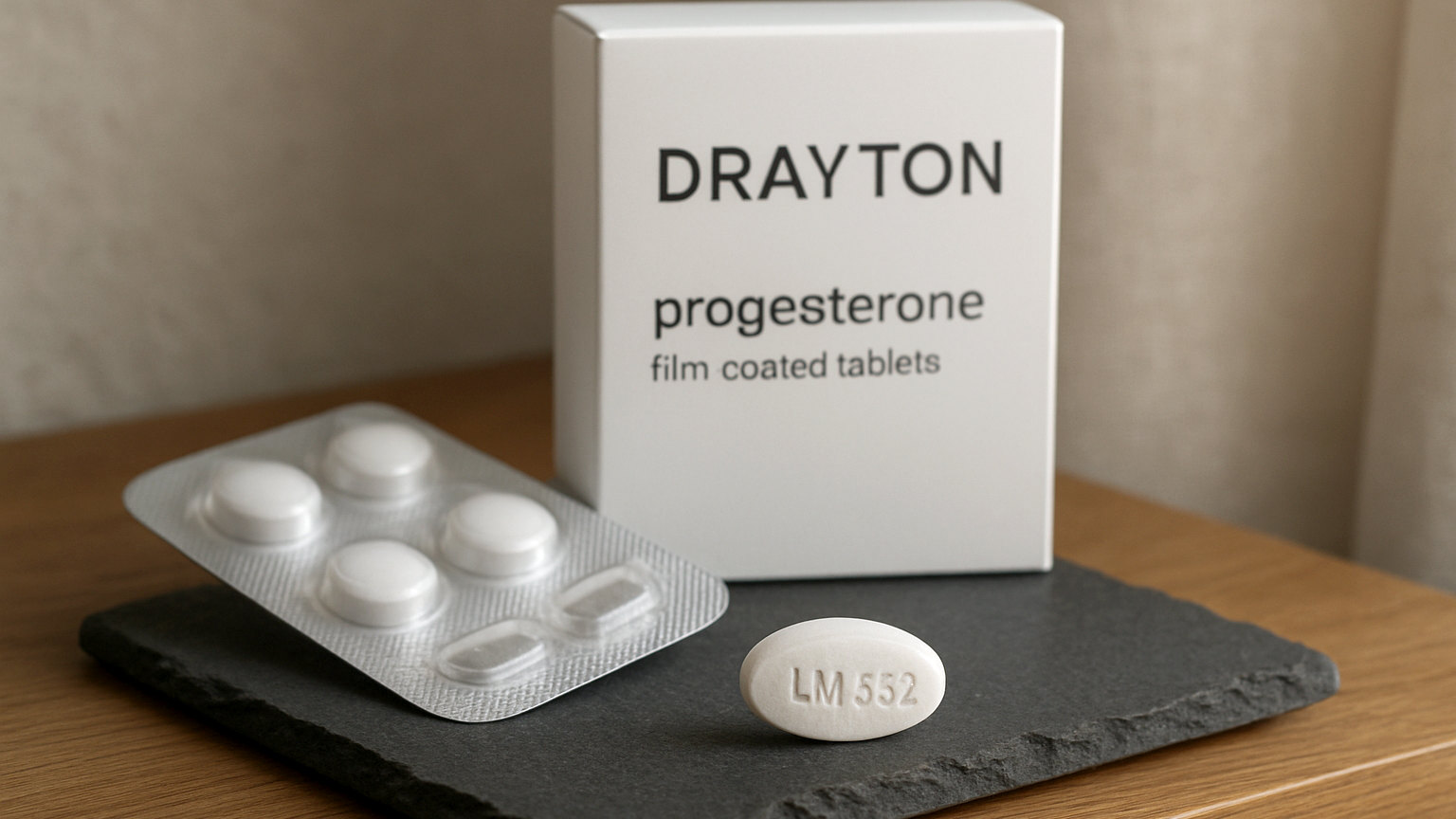
Micronised progesterone is body-identical progesterone, prescribed alongside oestrogen in hormone replacement therapy for anyone who still has a womb. Its job is to protect the womb lining: oestrogen alone thickens it and raises the risk of endometrial cancer. It is the half of HRT nobody asks about, and the choice between it and an older synthetic progestogen is more consequential than most people are told.
Follow the plan your prescriber gave you. This guide contains no doses.
Why it is needed
Oestrogen stimulates the endometrium to grow. Unopposed over time, that stimulation leads to hyperplasia and can progress to cancer.
Progesterone opposes it, causing the lining to shed or keeping it thin. Anyone with a uterus taking systemic oestrogen needs it. People who have had a hysterectomy generally do not.
Our guide to estradiol covers the oestrogen half, including why patches and gels differ from tablets on clot risk.
Body-identical versus synthetic
Micronised progesterone is molecularly identical to what the ovaries produce. Older progestogens - medroxyprogesterone acetate, norethisterone, levonorgestrel - are synthetic compounds with progesterone-like effects but different properties.
The difference that matters is breast cancer. Observational data has consistently suggested that micronised progesterone carries a lower breast cancer signal than synthetic progestogens, at least over the first few years of use.
It also appears more neutral on blood pressure and lipids, and many women tolerate it better in terms of mood and bloating.
The trade-off is that it is somewhat less effective at controlling irregular bleeding, and endometrial protection depends more on taking it correctly.
Sequential and continuous
Sequential - taken for part of each month, producing a monthly bleed. Used in perimenopause, when periods have not fully stopped.
Continuous - taken every day, with the aim of no bleeding. Used once you are postmenopausal, usually after a period on sequential treatment.
Continuous regimens often cause irregular spotting for the first three to six months before settling. That is expected, and persisting through it is usually worth it.
Report bleeding that starts after a settled period, is heavy, or persists beyond six months - it needs investigating rather than adjusting.
Take it at night
Micronised progesterone is sedating - it is metabolised into compounds that act on the same receptors as benzodiazepines.
That is why it is taken at bedtime, and why many women find it improves sleep, which is often one of the worst menopausal symptoms. Some feel groggy the following morning, particularly at first.
Do not take it in the morning unless specifically told to. And be aware it adds to the effect of alcohol and other sedatives - see medicines and alcohol.
The vaginal route
Capsules are sometimes used vaginally rather than swallowed - off-label in the UK for HRT, but well established in practice and in fertility treatment.
It delivers progesterone to the uterus more directly and avoids the sedation and some of the systemic effects. Women who cannot tolerate oral progesterone often manage this route well.
It is worth asking about rather than abandoning HRT because the progesterone makes you feel awful.
The hormonal coil as an alternative
A levonorgestrel intrauterine system provides endometrial protection directly, lasts years, usually reduces or stops bleeding, and doubles as contraception.
For many women it is the most practical way to take the progestogen half of HRT, and it removes the daily tablet entirely. Our guide to levonorgestrel covers that progestogen in its other roles.
Check the capsule contents
Micronised progesterone capsules contain oil-based excipients. Formulations vary and have included soya-derived ingredients, so anyone with a relevant allergy should check the current patient information leaflet for their specific product.
Our guide to hidden ingredients that cause reactions covers how to check and how to get a reaction recorded accurately.
Side effects
Drowsiness, dizziness, breast tenderness, bloating, headache and mood changes. Most settle over the first months.
Progesterone intolerance - marked low mood, irritability or physical symptoms - is real and is a common reason women give up on HRT altogether. The answers include switching route, switching to a coil, or adjusting the regimen. Say so rather than stopping.
Seek urgent help for calf pain or swelling, sudden breathlessness, chest pain, or signs of stroke.
When bleeding is expected and when it is not
On a sequential regimen a monthly bleed is intended, and it usually arrives towards the end of or just after the progesterone days. Its timing shifting slightly is not a problem.
On a continuous regimen the aim is no bleeding at all, and reaching that can take six months. What needs reporting is bleeding that starts after a settled period, bleeding that is heavy, or bleeding that persists beyond that settling-in window - because the endometrium needs assessing rather than the regimen simply being adjusted.
It is not contraception
Standard HRT progesterone does not prevent pregnancy. Contraception is still needed until the appropriate point after your last period - ask what applies to you.
Related reading: Desogestrel: The Progestogen-Only Pill Explained, with more on how the main families of medicine work in Medicines.


