
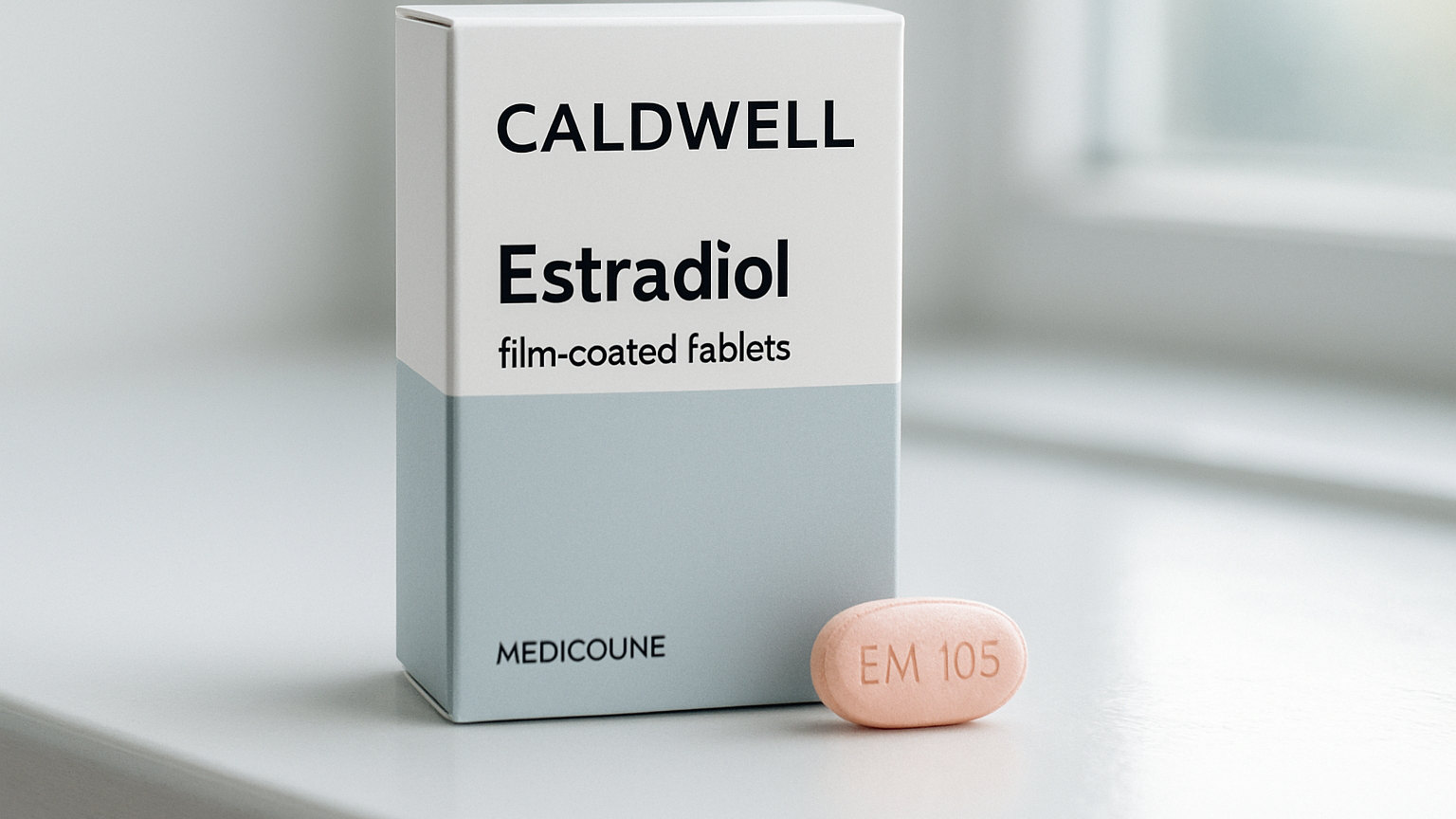
Estradiol is the main form of oestrogen used in hormone replacement therapy, replacing what the ovaries stop producing at the menopause. It treats hot flushes, night sweats, disturbed sleep, mood symptoms, vaginal dryness and joint aches, and it protects bone. The single most useful thing to understand about it is that how you take it changes the risk more than how much you take - patches and gels behave differently from tablets, and not marginally.
Follow the plan your prescriber gave you. This guide contains no doses.
Why the route matters
Estradiol swallowed as a tablet is absorbed from the gut and passes through the liver before reaching the rest of the body. That first pass through the liver changes the production of clotting factors, and oral HRT carries a raised risk of venous thromboembolism - blood clots in the leg or lung.
Estradiol absorbed through the skin, as a patch, gel or spray, bypasses the liver. Transdermal HRT has not been associated with an increased clot risk in the available evidence, which is why it is preferred for anyone with clot risk factors - higher BMI, previous clot, migraine with aura, or smoking.
If you are on tablets and have any of those, it is worth asking whether transdermal would suit you better. It is one of the more consequential choices in this area and it is often not discussed.
Why progestogen is usually added
Oestrogen alone thickens the lining of the womb, and unopposed it raises the risk of endometrial cancer.
So anyone with a uterus takes a progestogen alongside - as a separate tablet, a combined patch, or a hormonal coil, which delivers it directly to the womb lining and doubles as contraception. Micronised progesterone is often preferred because it appears to carry a lower breast cancer signal than older synthetic progestogens.
People who have had a hysterectomy take oestrogen on its own.
What the breast cancer data actually shows
This is where most of the fear sits, and the honest position is more measured than either the 2002 headlines or the subsequent backlash.
Combined oestrogen and progestogen HRT is associated with a small increase in breast cancer risk, which rises with duration of use and falls after stopping. Oestrogen-only HRT carries little or no increased risk, and some data suggests a reduction.
For context, the increase from combined HRT is of a similar order to other everyday factors such as being overweight or drinking regularly. It is a real risk to weigh rather than a reason to refuse treatment, and the balance differs for a woman with severe symptoms at 51 from one considering it at 65.
HRT started around the menopause also reduces fracture risk and, on current evidence, does not increase cardiovascular risk in that age group.
Forms
- Patches - changed once or twice weekly, rotated between sites. See how to use and rotate patches, particularly the warning about heat.
- Gel and spray - applied daily to the skin, allowed to dry, and kept away from others until it has.
- Tablets - convenient, but with the clot consideration above.
- Vaginal oestrogen - pessaries, cream or a ring, for vaginal dryness and urinary symptoms. Very little is absorbed into the bloodstream, it does not usually need a progestogen alongside, and it can be used by many women who cannot take systemic HRT.
What to expect
Hot flushes and sweats often improve within weeks. Mood, sleep and joint symptoms follow. Vaginal symptoms take longer, sometimes months.
Early side effects - breast tenderness, nausea, headache, bloating, and irregular bleeding in the first months - usually settle. It commonly takes three months and sometimes a change of preparation to get it right, which is worth knowing so you do not abandon it at week six.
Report unexpected or persistent vaginal bleeding, particularly if it starts after a settled period on HRT, since it needs investigating.
When to seek help urgently
Call 999 or go to A and E for pain, swelling or redness in one calf, sudden breathlessness or chest pain, coughing up blood, or signs of stroke - face dropped on one side, weakness, slurred speech.
Tell your prescriber about new severe headaches or migraine with aura, and mention HRT before any surgery or a long period of immobility.
HRT is not contraception
Standard HRT does not prevent pregnancy. Contraception is still needed for a period after the last period - commonly two years if under 50 and one year if over - so ask what applies to you.
The cheaper prescription route
In England there is a separate HRT prepayment certificate covering HRT items for a year at a much lower cost than the standard PPC, which is worth having if you collect several items.
Our guide to whether a prepayment certificate is worth it covers the arithmetic, and what to do if your medicine is out of stock is worth reading given how often HRT supply has been disrupted.
Related reading: What Is Omeprazole Used For?, with more on how the main families of medicine work in Medicines.


