
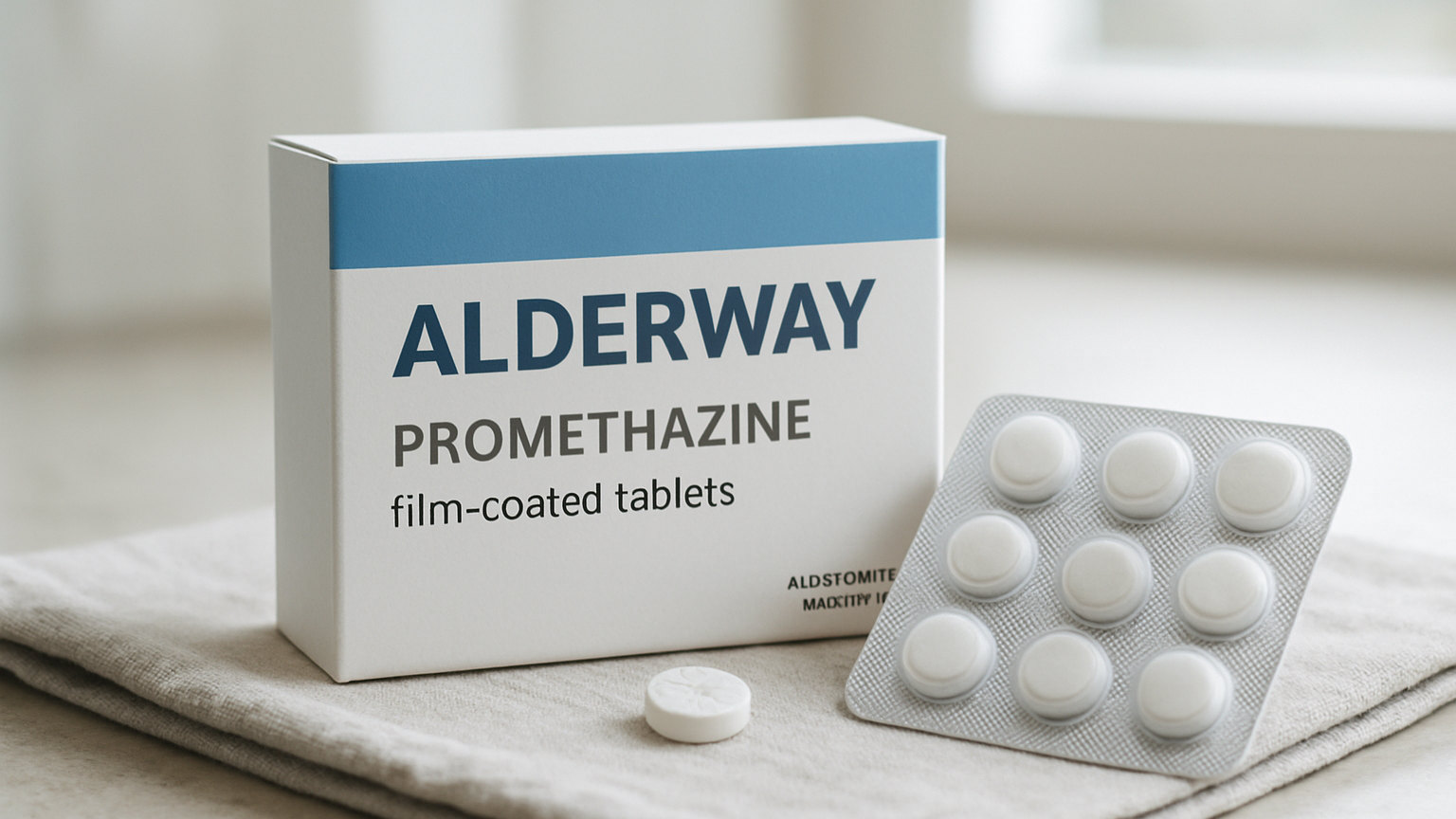
Promethazine is an older, sedating antihistamine. It blocks histamine receptors, which treats allergic symptoms, and it crosses readily into the brain, which is why it causes marked drowsiness. That sedation is the reason people reach for it as a sleep aid, the reason it works for travel sickness, and the reason it must never be given to a small child.
Follow the instructions on your label. This guide contains no doses.
What it is used for
- Allergic conditions - hay fever, urticaria, itching, allergic reactions.
- Nausea, vomiting and travel sickness, where it works on the inner ear pathway.
- Short-term insomnia in adults.
- Pregnancy sickness, where it is one of the first-line options in the UK.
- As a sedative before some procedures.
The age limits
This is the most important part of the page.
Promethazine must not be given to children under two years old. It has been associated with fatal respiratory depression in infants, and the risk is not dose-related in a predictable way.
Over-the-counter products containing sedating antihistamines for cough and cold are not recommended for children under six, and are used with pharmacist advice between six and twelve. Different products carry different age limits - check the label rather than assuming.
Using a sedating antihistamine to settle a child to sleep is not something to do on your own initiative. If a child is not sleeping, that is worth addressing rather than medicating.
Next-day sedation
Promethazine has a long duration of action, so drowsiness frequently persists into the following day - slowed reactions, poor concentration, a hungover feeling.
That matters for driving. Do not drive until you know how it affects you, and be particularly careful the morning after an evening dose. Our guide to medicines and driving covers the position.
Alcohol, opioids, benzodiazepines and other sedatives all add to it, and the combination with anything that depresses breathing deserves respect.
The anticholinergic problem
Promethazine has significant anticholinergic activity, causing dry mouth, blurred vision, constipation and urinary retention - and confusion in older people.
It contributes to cumulative anticholinergic burden, which is associated with cognitive impairment and falls. For that reason it is generally avoided in older adults and in anyone with dementia, where it directly opposes their treatment.
Our guides to medicines and your memory and dry mouth from medicines cover the wider group.
Tolerance and sleep
The sedative effect diminishes within days of regular use, so it stops working as a sleep aid quite quickly while the next-day grogginess persists.
That makes it a poor long-term answer for insomnia. Our guide to sleeping tablets covers why cognitive behavioural therapy for insomnia is first-line and why it works better in the long run than anything sedating.
Non-sedating alternatives
For allergy, cetirizine, loratadine and fexofenadine work as well without crossing into the brain to the same degree. For most hay fever and urticaria they are the better choice, and they are available over the counter.
Promethazine retains an advantage where the sedation is wanted - severe itching preventing sleep, for example.
Other cautions
Avoid in severe liver impairment, in people with narrow-angle glaucoma, and with caution in prostate enlargement, where urinary retention can be precipitated - see tamsulosin.
Caution in epilepsy, asthma and sleep apnoea. It can affect heart rhythm at higher doses - see medicines that affect your heart rhythm.
Seek urgent help for involuntary muscle spasms of the face or neck, which can occur with promethazine as with other drugs that block dopamine - see prochlorperazine.
It should not be injected into an artery or under the skin - it is severely irritant and can cause tissue damage.
Codeine linctus and combination products
Promethazine appears inside combination cough and cold products, sometimes alongside codeine or a decongestant. People taking one of those plus a separate antihistamine can end up with considerably more sedating antihistamine than they intended.
Read the ingredients panel rather than the brand name. Our guide to over-the-counter interactions covers why this is the commonest source of accidental doubling, and the same applies to paracetamol hidden in the same products.
Allergy testing
Antihistamines suppress the skin response used in allergy testing, and promethazine's long action means it needs stopping well in advance - commonly several days.
Ask how long before your appointment. Turning up still antihistamined produces a false negative and wastes the test.
Pregnancy sickness
Promethazine and cyclizine are among the first-line options for nausea and vomiting in pregnancy, and both have long records of use.
Severe sickness that stops you keeping fluids down needs medical assessment rather than persistence - see ondansetron, which is used when first-line treatments have not worked.
If this was useful, Naloxone: How It Reverses an Opioid Overdose is worth reading next, and Medicines collects the rest.


