
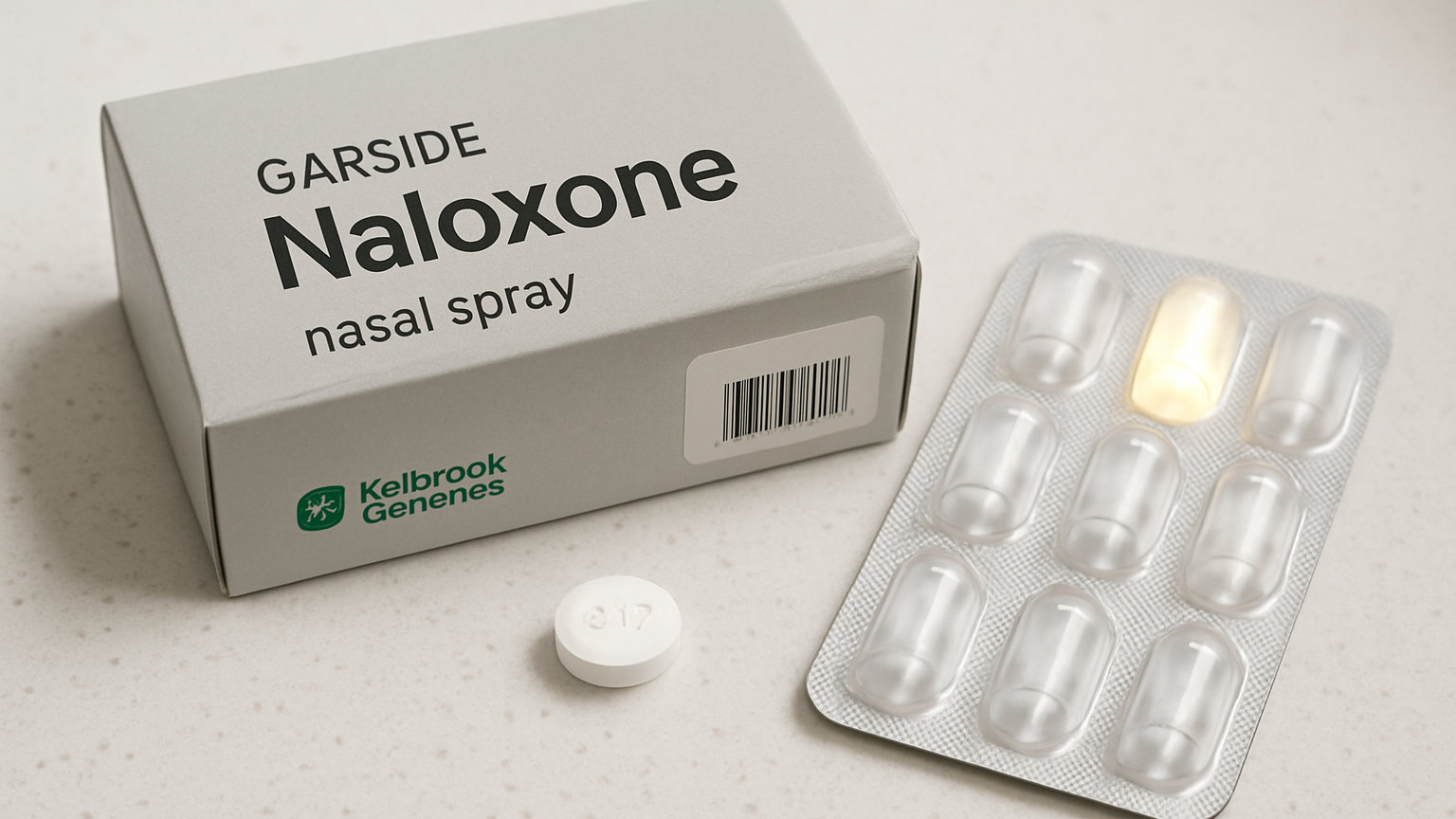
Naloxone blocks opioid receptors and displaces opioids already bound to them, reversing an overdose within minutes. Someone who is unresponsive and barely breathing can be awake and breathing normally before an ambulance arrives. In the UK it is available without a prescription through drug and alcohol services, along with training, and anyone at risk or likely to be around someone at risk can be supplied with it. The critical thing to understand is that it buys time rather than fixing the problem.
What it does
Opioids - heroin, morphine, oxycodone, fentanyl, methadone, tramadol, codeine - act on receptors that among other things control breathing. In overdose, breathing slows and eventually stops, and that is what kills.
Naloxone has a stronger affinity for those receptors than the opioid does, so it pushes the opioid off and occupies the site without activating it. Breathing restarts.
It does nothing at all if opioids are not involved. It will not reverse an overdose of benzodiazepines, alcohol, stimulants or anything else - though it does no harm if given to someone who turns out not to have taken opioids, which is why the advice is to give it if you are unsure.
Why you still call 999
This is the point that matters most. Naloxone wears off faster than most opioids.
Its effect lasts perhaps twenty minutes to an hour. Heroin lasts longer than that; methadone, modified-release oxycodone and fentanyl patches last very much longer. So the opioid is still in the body when the naloxone fades, and the person can slip back into overdose.
That is why the sequence is always: call 999 first or at the same time, give naloxone, stay with them. Never give naloxone and leave, and never assume that because someone has woken up the emergency is over. Repeat doses are often needed.
What to do
- Check for response and breathing. Signs of opioid overdose: unresponsive, breathing slowly or noisily or not at all, blue or grey lips and fingertips, very small pupils.
- Call 999. Say you think it is an opioid overdose.
- Give naloxone - nasal spray into one nostril, or intramuscular injection into the outer thigh or upper arm, through clothing if necessary.
- Put them in the recovery position if they are breathing, and start CPR if they are not and you are trained.
- Stay with them. Give another dose if there is no response after a few minutes, and be ready to give more.
- Tell the crew what was taken and that naloxone was given.
Expect them to be unwell afterwards
Naloxone precipitates immediate withdrawal in anyone dependent on opioids - agitation, sweating, nausea, vomiting, aching, and sometimes anger.
People often wake up distressed or hostile, and may want to leave or to take more opioids to stop feeling awful. Taking more at that point is dangerous, because the naloxone will wear off and both drugs will then be active.
Try to keep them there until the ambulance arrives. This reaction is unpleasant but it is not itself dangerous, and it is a sign the naloxone has worked.
Who should have it
- Anyone prescribed opioids at higher doses for long-term pain
- Anyone using opioids illicitly
- People recently released from prison or discharged from detox or hospital - tolerance falls sharply during any break, which is when most overdoses happen
- Family, friends, partners and housemates of anyone in those groups
- Staff in hostels, supported housing and similar settings
Our guide to coming off opioid painkillers covers why the period after reducing or stopping is the most dangerous, and prescribed medicines and recreational drugs covers the combinations that raise the risk - opioids with benzodiazepines or alcohol above all.
Getting hold of it
Local drug and alcohol services supply naloxone free, with brief training, and they accept self-referral. Some pharmacies and hospitals supply it, and some prescribers will issue it alongside opioid prescriptions.
UK regulations allow drug services to hand it out without a prescription specifically so that it reaches the people who need it. Asking for it is not an admission of anything.
Practical points
Check the expiry date periodically - see whether medicines really expire, since this is exactly the category where an out-of-date product matters.
Store it at room temperature, out of extremes of heat and cold, and keep it somewhere findable rather than locked away. Naloxone in a drawer nobody knows about saves nobody.
Tell the people around you that you have it and where it is.
You will not get in trouble
People sometimes hesitate to call an ambulance for fear of police involvement. Ambulance crews are there to treat, not to report, and delay is what kills.
Give the naloxone, make the call, and say honestly what was taken. That information changes the treatment given.
If this was useful, Folic Acid: Why It Matters Before Pregnancy is worth reading next, and Medicines collects the rest.


