Prescribing in the UK is no longer limited to doctors and dentists. Pharmacists, nurses, optometrists, physiotherapists, podiatrists and paramedics can all qualify as independent prescribers, and many now do. In practice this means a good number of the things people wait weeks to see a GP about can be dealt with the same day by somebody else who is fully qualified to handle them - and knowing who does what is one of the more useful things you can learn about the system.
Who can prescribe
Doctors and dentists prescribe by virtue of their registration, dentists within the scope of dental treatment.
Independent prescribers have completed an additional accredited qualification and can prescribe within their competence. This group includes many pharmacists, nurses, optometrists, physiotherapists, podiatrists, paramedics and therapeutic radiographers. "Within their competence" is the operative limit - a physiotherapist prescriber works in musculoskeletal problems rather than across all of medicine.
Supplementary prescribers work to an agreed plan drawn up with a doctor for a particular patient.
Community practitioner nurse prescribers, including many health visitors and district nurses, prescribe from a limited list of dressings, appliances and some medicines.
Controlled drugs carry additional restrictions, and some categories are limited to specific prescriber types.
Your pharmacy is usually the fastest route
Community pharmacists can advise on and supply a wide range of treatments without any prescription, and NHS schemes in each UK nation let them assess and treat a defined list of common conditions - things like uncomplicated urinary tract infections in women, sore throats, earache, impetigo, shingles and infected insect bites, with the exact list varying by nation and over time.
They can also supply an emergency supply of a regular medicine you have run out of, at their professional discretion, which is worth knowing before a bank holiday. Ask - do not assume you need to see a GP first. Our guide to what your pharmacy can do covers the full range.
How the prescription reaches the pharmacy
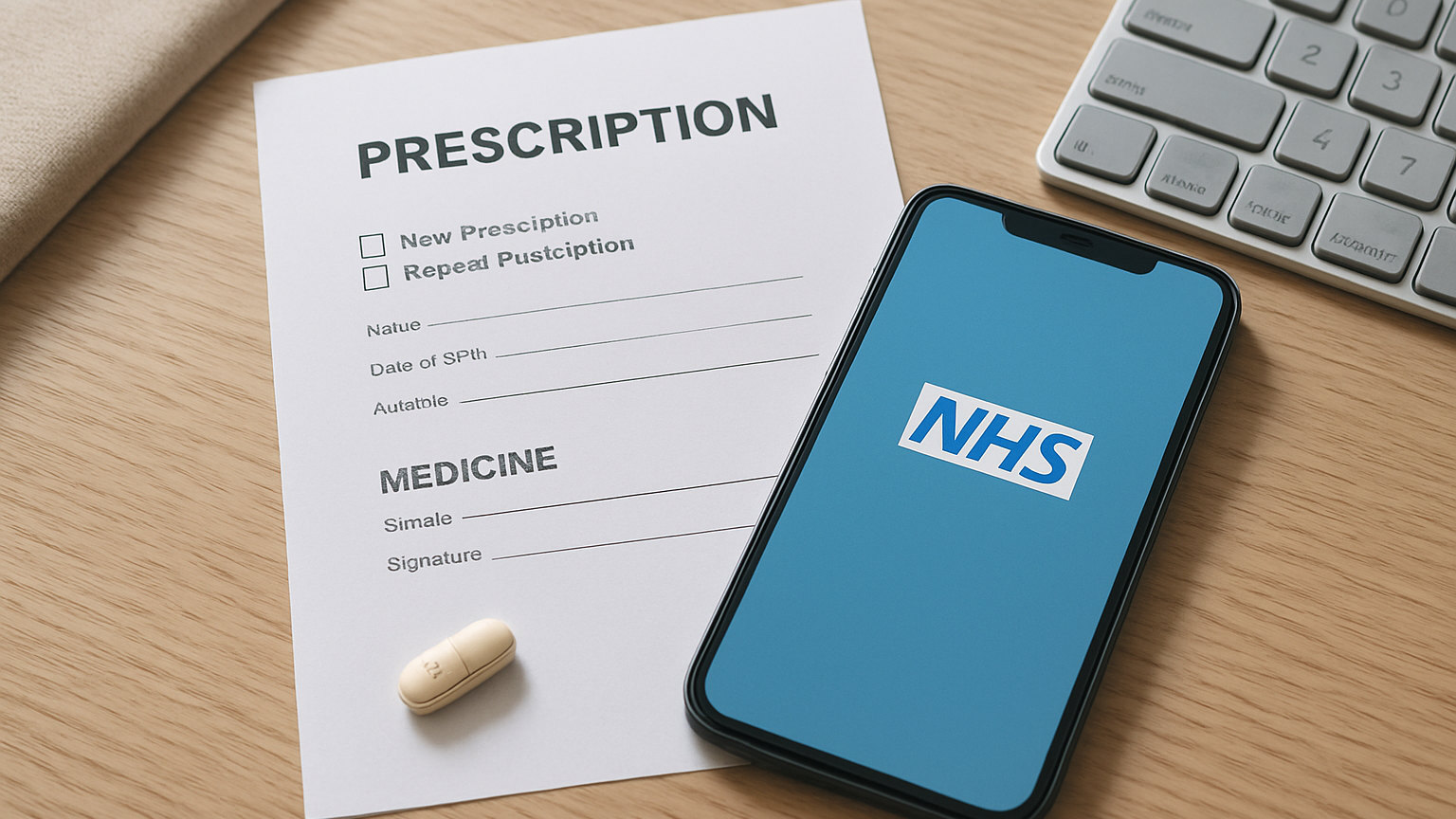
Most NHS prescriptions in England are now electronic. The prescription is signed digitally and sent straight to the pharmacy you have nominated, so there is no paper to collect or lose.
Nominating a pharmacy is worth doing and takes a minute - through the NHS App, at your GP practice, or at the pharmacy itself. You can change it whenever you like, and you are not tied to the one nearest your surgery. If you have not nominated one, you may be given a token to take to any pharmacy.
Paper prescriptions still exist for some situations, including some controlled drugs and some private prescriptions.
NHS and private prescriptions
An NHS prescription carries the standard charge per item in England, and is free in Scotland, Wales and Northern Ireland - see our guide to prescription charges and prepayment certificates.
A private prescription is not covered by the NHS, so you pay the actual cost of the medicine plus a dispensing fee. That can be considerably more or occasionally less than the NHS charge. Private prescriptions are used where a medicine is not available on the NHS for your situation, or where you have chosen to see a private clinician.
A prescription from a private online service is a genuine prescription if it comes from a registered prescriber - the thing to check is that the service is regulated, which our guide to checking an online pharmacy covers.
What a prescriber needs to know
Whoever is prescribing, the consultation goes better if you can give them:
- every medicine you take, including anything bought over the counter and any supplements
- allergies and past bad reactions, and what actually happened
- other conditions, particularly kidney, liver or heart problems
- whether you are pregnant, breastfeeding or trying to conceive
- what you have already tried and whether it helped
A prescriber who does not have your full GP record - a private service, an out-of-hours clinician, a pharmacist you have not used before - depends entirely on what you tell them. Consenting to have the outcome shared with your GP is worth doing so your record stays complete.
When a prescription is declined
A prescriber declining to issue something is not obstruction. Antibiotics for a viral illness, for example, will not help and carry real costs - our guide to why antibiotics do nothing for colds explains why.
If you disagree, ask what would change the decision, what to watch for, and when to come back. That conversation is more productive than looking for somebody who will say yes, and much safer than buying online from a site that asks no questions at all.
Using the NHS App for Prescriptions covers a related point, and the Prescriptions section has the rest of these guides.