The overwhelming majority of medicine side effects are a nuisance that settles. A short list is different, and recognising those quickly matters more than knowing which drug caused them. This guide groups them by what you would actually notice, with who to contact for each. It is not exhaustive, and if you are seriously worried about someone, act on that rather than checking it against a list.
Call 999 now
Swelling of the lips, tongue, mouth or throat; difficulty or noisy breathing; a tight throat or hoarse voice; sudden collapse. This may be anaphylaxis or angioedema. Use an adrenaline auto-injector immediately if one has been prescribed. It can happen with a medicine taken uneventfully many times before, and symptoms can return after appearing to settle, so call 999 even if things improve.
Chest pain that is heavy, tight or crushing; signs of stroke - face dropped on one side, unable to lift both arms, slurred speech. Symptoms that pass still need emergency assessment.
A seizure, or unresponsiveness.
If too much of a medicine has been taken - get help even if the person seems completely well. Call 999 if they are drowsy, confused or breathing slowly; otherwise 111. Take the packaging. Several overdoses, paracetamol especially, produce no symptoms for a day or more while serious damage is already under way, and treatment works far better early.
Go to A&E
A spreading rash with blistering or peeling skin, or sores in the mouth, eyes or genitals - particularly with fever and feeling generally very unwell. Severe skin reactions are rare but serious, often begin days to weeks into a new medicine, and are not something to watch overnight.
Severe muscle pain and weakness, especially with urine the colour of tea or cola. This can indicate muscle breakdown affecting the kidneys. Statins are the best-known cause, though not the only one - our guide to statins and muscle pain covers how to tell this from ordinary aching.
Vomiting blood, or black tarry stools. This suggests bleeding in the upper gut, a recognised risk with anti-inflammatory painkillers, steroids and anticoagulants.
Contact a doctor the same day
Yellowing of the skin or the whites of the eyes, dark urine, pale stools, or persistent severe abdominal pain. These point to liver injury, which a number of medicines can cause.
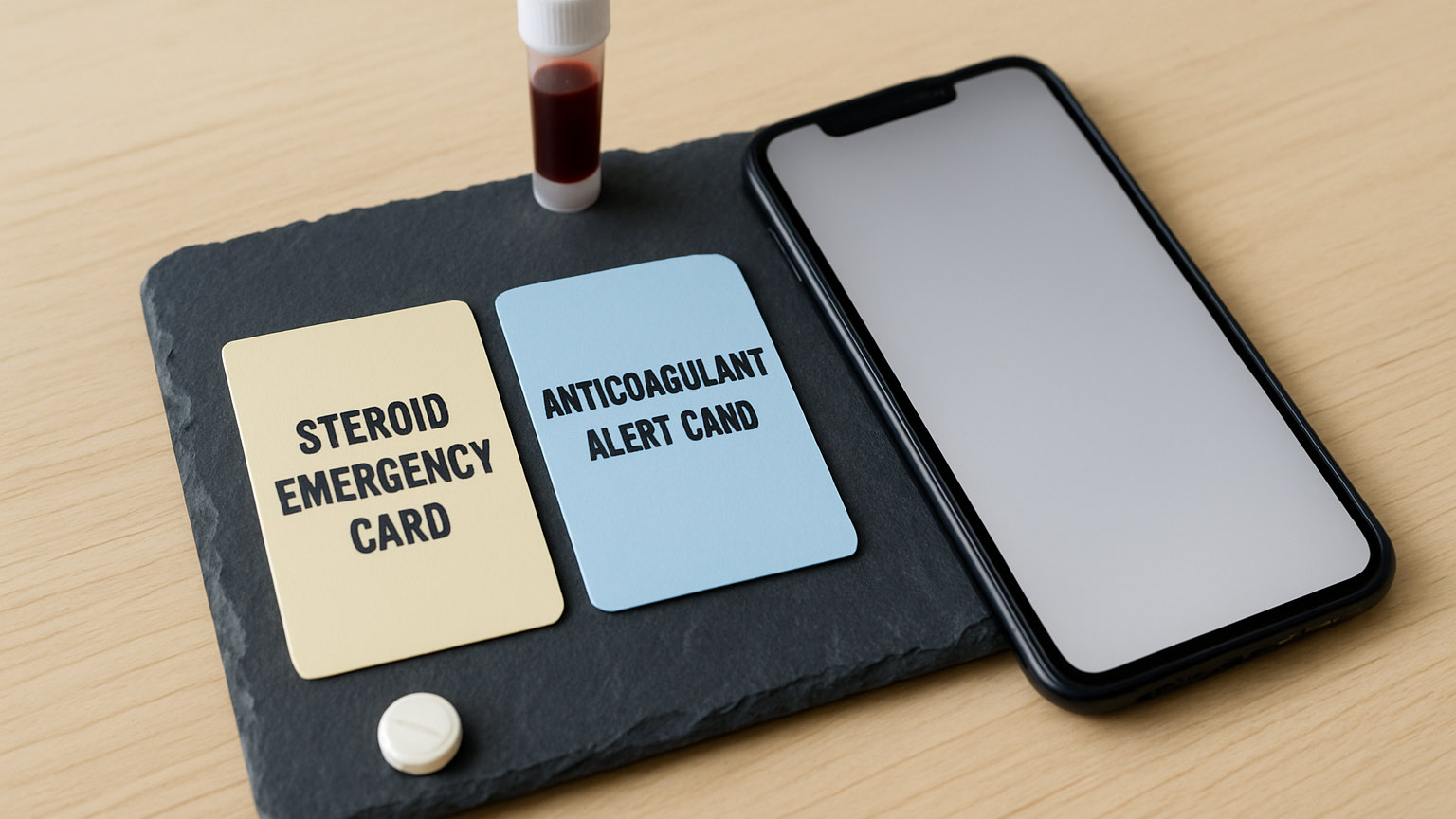
Fever, sore throat, mouth ulcers or unusual infection while taking a medicine that affects the immune system - including some drugs for rheumatoid arthritis, inflammatory bowel disease, chemotherapy and certain thyroid and epilepsy medicines. These can suppress white cell production, and an infection in that setting escalates quickly. If you carry an alert card for such a medicine, show it.
Unexplained bruising, nosebleeds that will not stop, or bleeding gums.
Passing much less urine than usual, or sudden swelling of the legs or face.
New confusion, hallucinations, or a marked change in behaviour, particularly in an older person after a new medicine. This is often mistaken for a decline that has nothing to do with treatment.
Sudden agitation, restlessness you cannot sit still through, or thoughts of harming yourself after starting or changing a medicine. Contact your GP urgently or call 111. Samaritans are on 116 123 at any hour, and you can text SHOUT to 85258. Do not stop the medicine abruptly on your own - tell someone so it can be managed properly.
Speak to a pharmacist within a few days
Side effects that are not dangerous but are not settling either - persistent nausea, a cough that started with a new tablet, dizziness, sleep disruption, ongoing sexual side effects, a rash without any of the features above. These usually have a straightforward solution, and our guide to how long side effects last covers which settle and which will not.
Two things worth knowing
Timing is the strongest clue. Symptoms starting within days of a new medicine or a dose change are far more likely to be related than something appearing months later with no change. Say when you started it - it saves a round of investigations.
New medicines are not the only culprits. A reaction can appear after years on the same drug, particularly if something else has changed: another medicine added, an illness, dehydration, or declining kidney function. Interactions are a common cause, including with things bought over the counter - see supplements and interactions.
Afterwards
Report the reaction through the MHRA Yellow Card scheme. Patients and carers can report directly, you do not need to be certain the medicine caused it, and this is how rare effects are detected after licensing.
Make sure it is recorded correctly on your GP and pharmacy records, and that the record distinguishes a true allergy from a side effect - the difference changes what you can be prescribed for the rest of your life, as our guide to allergy or side effect explains.
The Side Effects section covers more on side effects and safety - Anaphylaxis: What to Do in the First Minutes is closely related to this one.