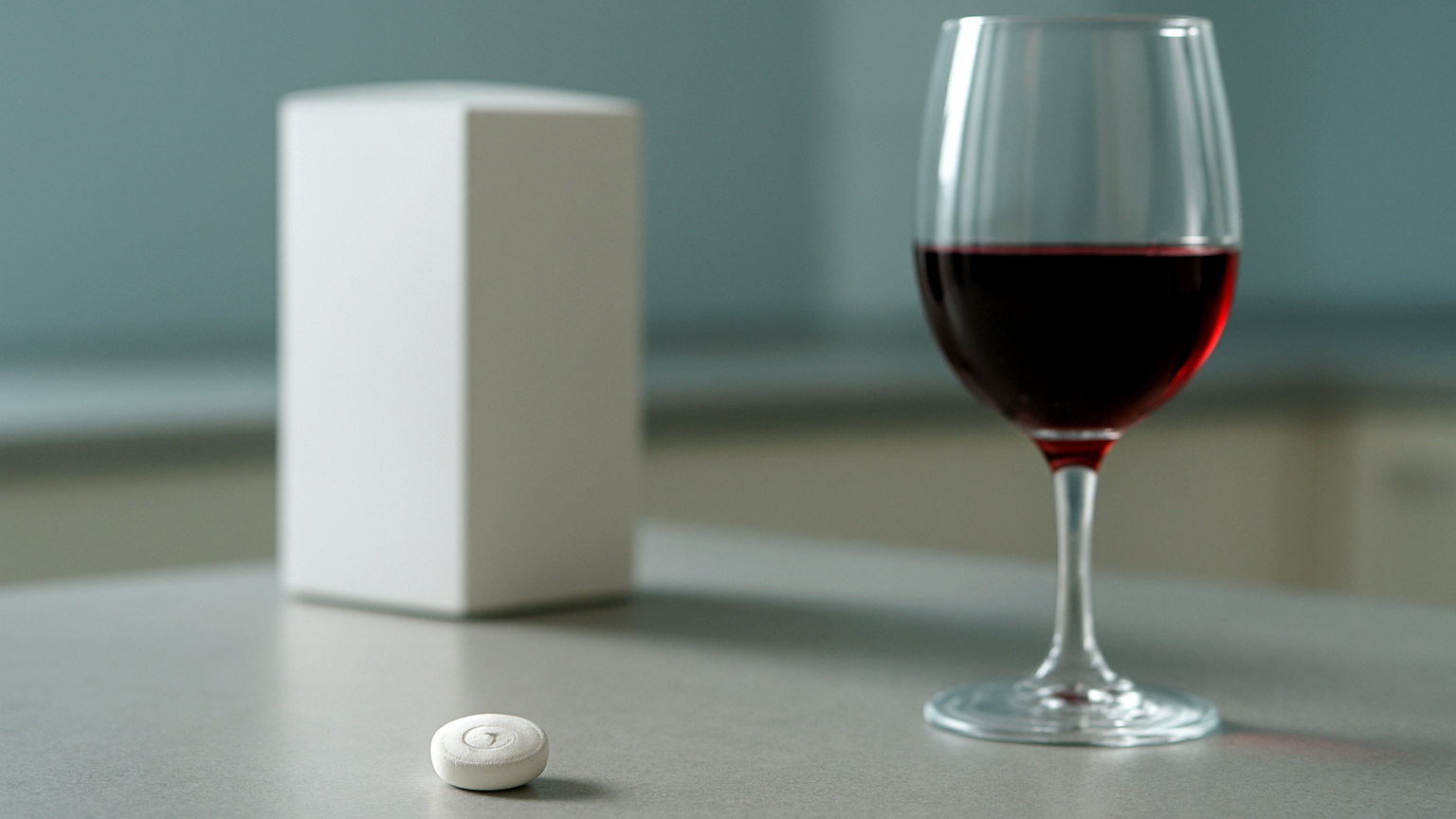
Alcohol has opposite effects on blood pressure over different timescales - it lowers it for a few hours after drinking and raises it with sustained use. That is why advice about alcohol and heart medicines can sound contradictory, and it explains the two quite different problems people run into: feeling faint on an evening out, and finding that treatment stops working over months.
The short-term drop
Alcohol dilates blood vessels, so blood pressure falls for several hours after drinking.
Added to medicines that lower it already, that produces postural hypotension - dizziness or greying vision on standing, and a real risk of falls.
It matters most with:
Alpha blockers such as doxazosin and tamsulosin, which are the worst offenders.
Nitrates, including GTN spray. Taking GTN after drinking can cause a pronounced drop - always sit down before using it.
Diuretics, compounded by the dehydration alcohol causes.
ACE inhibitors, ARBs and calcium channel blockers.
Get up slowly, eat while drinking, and keep fluids up.
See alpha blockers and glyceryl trinitrate.
The long-term rise
Regular drinking above modest levels raises blood pressure persistently, and it is one of the commonest reasons treatment appears not to work.
Someone on three antihypertensives whose readings remain high may be undertreated - or may be drinking considerably more than the record suggests.
Cutting down produces a measurable fall in blood pressure within weeks, which is worth knowing because it can mean fewer tablets rather than more.
Alcohol also contributes calories, weight gain and poor sleep, all of which push blood pressure up.
See medicines that raise your blood pressure.
Warfarin
The interaction people ask about most.
The principle is consistency rather than abstinence. A steady modest intake can be accommodated, because the dose is set around your usual pattern.
What destabilises the INR is variability. A binge acutely inhibits warfarin's metabolism and pushes the INR up, increasing bleeding risk. Sustained heavy drinking induces liver enzymes and can push it down. Liver disease affects clotting independently.
Add the fact that falls are more likely after drinking, and a head injury on an anticoagulant is a serious event.
Direct oral anticoagulants are less affected by alcohol directly, and the falls and bleeding risks remain.
Tell the anticoagulation clinic what you actually drink. They will work around it; they cannot work around a figure that is wrong.
See warfarin and medicines that make you bleed more easily.
Rhythm problems
Alcohol is a recognised trigger for atrial fibrillation, and a binge can provoke an episode in someone with no previous history - a pattern common enough around holidays to have acquired the name "holiday heart".
Reducing alcohol measurably reduces recurrence in people with AF, which makes it one of the few genuinely effective lifestyle interventions in that condition.
Alcohol also lowers potassium and magnesium, which increases the risk of rhythm disturbance - relevant to anyone on medicines that lengthen the QT interval.
Seek help for palpitations with breathlessness, chest pain or fainting.
See medicines and dangerous heart rhythms.
Heart failure and cardiomyopathy
Alcohol is a direct cause of cardiomyopathy - weakening of the heart muscle - and it is one of the few causes that improves substantially with abstinence.
Anyone with alcohol-related heart muscle disease is advised to stop entirely, and the benefit of doing so is considerable.
In other forms of heart failure, alcohol adds fluid, affects rhythm and interacts with diuretics.
See medicines and your heart over time.
Statins and other medicines
Statins are not contraindicated by moderate drinking, and heavy drinking complicates liver monitoring and adds to muscle risk.
Amiodarone affects the liver and thyroid, and alcohol adds to the liver burden.
Beta blockers add to alcohol's sedating effect.
See alcohol and medicines that affect your liver.
The evening itself
A few things make a difference on the night rather than in principle.
Eat while drinking, alternate with water, and get up slowly. Take your medicines at the usual time rather than skipping them, unless you have been told otherwise - people frequently omit a dose to "be safe", which leaves them unprotected and does not reduce the alcohol. And if you use GTN, carry it and sit down before using it.
A practical position
Most people with treated heart conditions can drink modestly. The specific cautions are: sit down before GTN, get up slowly, keep intake steady if you take warfarin, and treat a binge as a genuine risk rather than a one-off indulgence.
If readings are not improving, alcohol is worth examining before another tablet is added - and that requires an honest figure.
Do not stop drinking abruptly if you are dependent - withdrawal can cause seizures and needs support.
More on taking medicines day to day in the Usage section, including Alcohol and Diabetes Medicines.