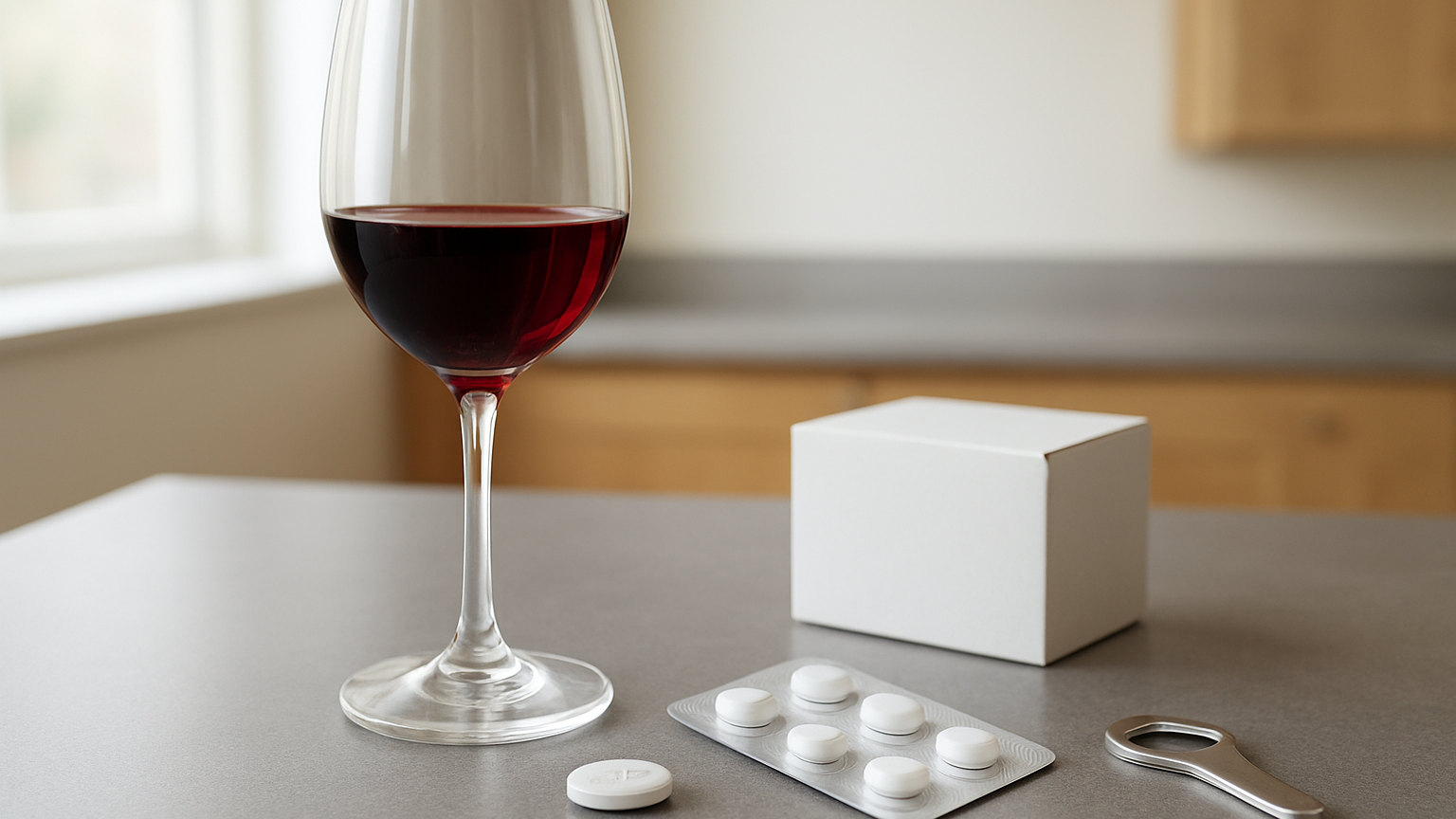
"Don't drink on antibiotics" is one of the most widely repeated pieces of medical advice, and for most antibiotics it is not true. The blanket version probably survives because it is simple, and possibly because it once served other purposes. There are two antibiotics where alcohol causes a genuine and unpleasant reaction, a handful where it is worth avoiding, and a majority where a drink makes no pharmacological difference at all.
The two that matter
Metronidazole and tinidazole interfere with the enzyme that breaks down acetaldehyde, the toxic intermediate produced when the body metabolises alcohol.
Acetaldehyde accumulates, producing a disulfiram-like reaction: flushing, throbbing headache, nausea and vomiting, palpitations, sweating and a fall in blood pressure. It comes on within minutes and is genuinely distressing.
Avoid alcohol during the course and for at least 48 hours afterwards - and for 72 hours after tinidazole, which lasts longer.
That includes things people do not think of as drinks: some mouthwashes, some cough and cold preparations, and liquid medicines containing alcohol.
It is fair to say the evidence has been questioned - some reviews found the reaction less consistent than the warning implies. But reports exist, it is severe when it happens, and abstaining for a week costs little.
See metronidazole.
A few others worth avoiding it with
Linezolid is a weak monoamine oxidase inhibitor, so it interacts with tyramine - found in significant amounts in tap beers, real ales and some wines, along with aged cheese, cured meats and yeast extract. The combination can raise blood pressure sharply.
Doxycycline - regular heavy drinking speeds its clearance and can reduce its effectiveness. An occasional drink is not the issue; sustained heavy use is.
Co-amoxiclav and flucloxacillin carry a risk of liver injury, and heavy alcohol use adds to the load on the liver. Moderate drinking is not contraindicated, but it is a sensible thing to limit.
Isoniazid, used in tuberculosis, carries a real risk of liver injury that alcohol increases substantially.
See doxycycline and medicines and your liver.
The ones where it makes no difference
Penicillins, cephalosporins, macrolides, tetracyclines in general, nitrofurantoin, trimethoprim, ciprofloxacin - alcohol does not stop these working and does not cause a reaction with them.
A drink with a course of amoxicillin for a chest infection is not undoing the treatment.
See amoxicillin and nitrofurantoin.
Why it is still not a great idea
Pharmacology is not the only consideration.
Alcohol disturbs sleep, and sleep is when you recover from infection. It is dehydrating, which matters if you have a fever or diarrhoea. It worsens nausea, which several antibiotics cause anyway. And it impairs some aspects of immune function.
Someone unwell enough to need antibiotics is usually unwell enough that a heavy night will set them back - not because of the tablets, but because they are ill.
So the honest version is: for most antibiotics, a drink is not dangerous, and not drinking while you are unwell is still sensible.
Where the myth may have come from
Several explanations circulate. One is that during the Second World War, when penicillin was scarce and recovered from the urine of treated patients, beer-drinking diluted the yield. Another is that clinics treating sexually transmitted infections discouraged drinking to reduce the chance of further transmission during treatment.
Neither is well documented, and both may be folklore. What is clear is that the advice has outlived whatever produced it.
What to do
Check the label and the leaflet, which will say if alcohol must be avoided.
Ask the pharmacist when you collect it - a ten-second question that gives you an accurate answer rather than a general one.
If you are told to avoid alcohol, ask how long for afterwards, since that varies.
See medicines and alcohol for the wider picture, which includes medicines where alcohol matters considerably more than it does with antibiotics.
If you have already had a drink
If you have taken metronidazole or tinidazole and drunk alcohol, the reaction usually settles by itself within a few hours - unpleasant rather than dangerous in most cases.
Sip water, rest, and seek medical help if you have chest pain, severe vomiting, fainting or a very fast heartbeat. With any other antibiotic, a drink is not a reason to stop the course or to seek advice.
Finish the course as directed
Whatever you decide about a drink, take the antibiotic as prescribed.
Stopping early because you feel better is a far bigger problem than a glass of wine - see finishing a course.
Seek advice urgently for severe or bloody diarrhoea during or after a course, a widespread rash with fever or blistering, or swelling of the face or throat.
Related reading: Alcohol and Mental Health Medicines, with more on taking medicines day to day in Usage.