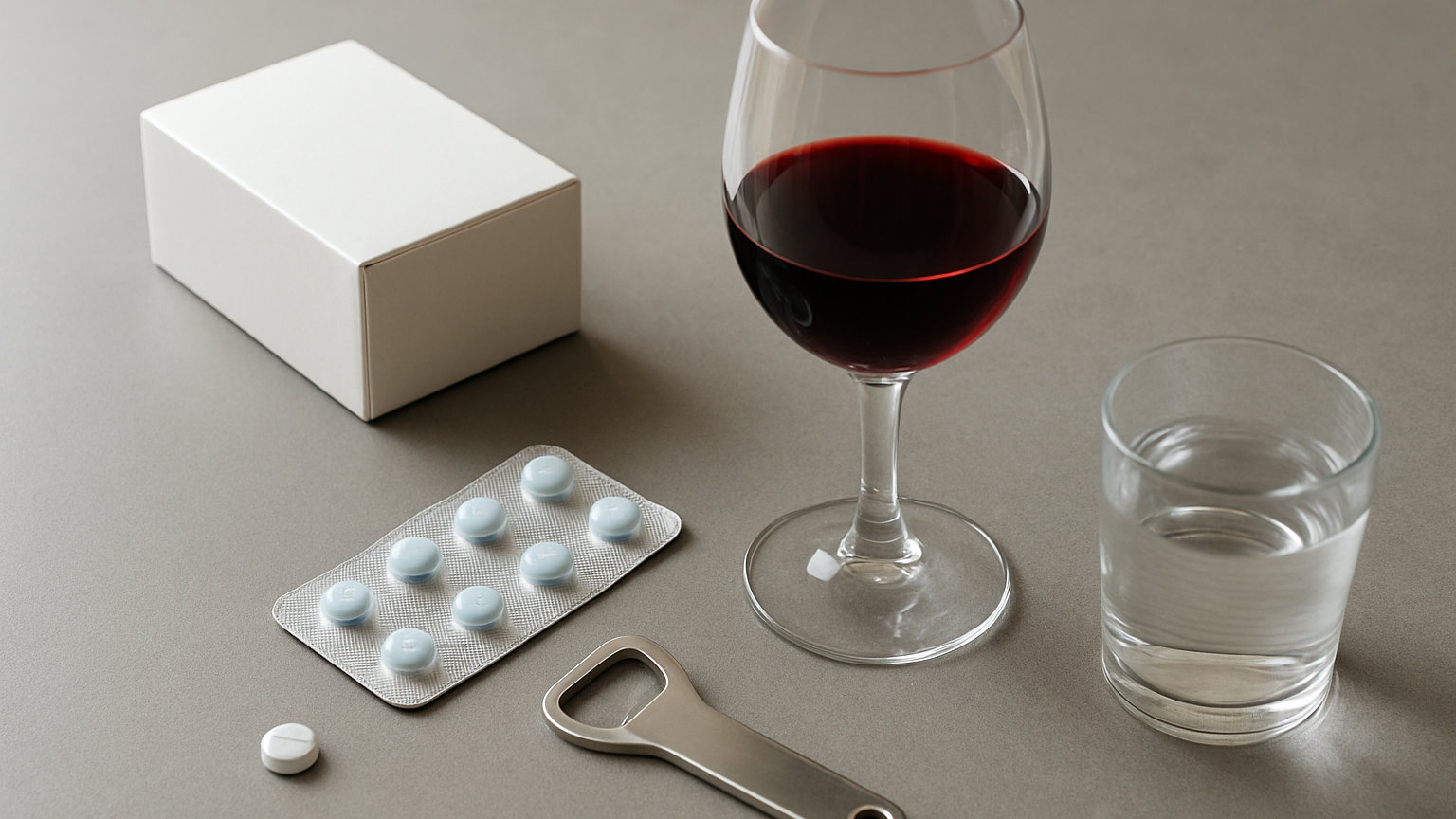
Questions about drinking on mental health medicines are extremely common and rarely answered well. The blanket advice to avoid alcohol entirely is unrealistic for many people and is frequently ignored, which means nobody gets a useful conversation. The honest picture has two parts: specific pharmacological interactions, which vary a great deal between medicines, and the effect of alcohol itself on the condition being treated, which is consistent and works against the treatment.
The part that is true for all of them
Alcohol is a depressant. It reliably worsens low mood, and rebound anxiety the following day is a real and under-recognised phenomenon.
It fragments sleep - it shortens the time to fall asleep and then disrupts the second half of the night, reducing restorative sleep. Poor sleep worsens mood and anxiety, which is how the cycle sustains itself.
It impairs the emotional processing that psychological therapy depends on, and it makes impulsive behaviour more likely.
So even where there is no pharmacological interaction at all, regular drinking makes the treatment work less well. That is worth knowing separately from any question about safety.
Antidepressants
SSRIs and SNRIs do not interact dangerously with alcohol in the way people fear. Occasional moderate drinking is generally considered acceptable, and leaflets advising complete avoidance are cautious rather than absolute.
What does happen: increased sedation and impaired coordination, more than either alone would cause - which matters for driving.
Some people find alcohol affects them considerably more than before starting.
Mirtazapine and trazodone are markedly sedating, and alcohol adds substantially to that.
Tricyclics such as amitriptyline and nortriptyline combine badly - more sedation, and greater danger in overdose.
Monoamine oxidase inhibitors are the exception that matters: tyramine in tap beers, real ales and some wines can cause a dangerous rise in blood pressure.
See mirtazapine and trazodone.
Benzodiazepines and Z-drugs
This is the genuinely dangerous combination.
Both suppress breathing, and together the effect is greater than the sum - the same mechanism that makes benzodiazepines with opioids so lethal.
Add an opioid and you have the pattern present in a large share of drug-related deaths.
Alcohol also worsens the memory impairment and the falls risk, and it makes paradoxical disinhibition more likely.
Do not drink on a benzodiazepine or a sleeping tablet, and this one is not negotiable in the way the antidepressant advice is.
Lithium
Lithium has a specific problem: dehydration raises lithium levels, and alcohol is dehydrating.
A heavy night, particularly in hot weather or alongside vomiting, can push levels towards toxicity.
Alcohol also makes it harder to maintain the consistent fluid and salt intake that stable lithium levels depend on.
Seek urgent help for coarse tremor, unsteadiness, slurred speech, vomiting, drowsiness or confusion.
See lithium.
Antipsychotics
Sedation adds, particularly with olanzapine, quetiapine and clozapine.
Postural hypotension worsens, which means falls.
With clozapine there is a further issue: heavy drinking complicates the mandatory monitoring, worsens the metabolic effects, and liver problems from alcohol interact with clozapine's own effects.
Alcohol also lowers the seizure threshold, which matters on clozapine and bupropion.
See clozapine and olanzapine.
Gabapentin and pregabalin
Both add to alcohol's sedation and respiratory depression, and both are frequently taken alongside opioids - which makes the three-way combination a recognised cause of death.
See gabapentin.
Medicines for alcohol dependence
Disulfiram causes a deliberate and severe reaction with alcohol - flushing, vomiting, palpitations and a fall in blood pressure - which is the point of it. That includes alcohol in mouthwashes, some medicines and some foods.
Naltrexone and acamprosate do not cause a reaction; they reduce craving and reward.
See naltrexone.
Having the conversation
Prescribers assume people drink more than they say, and people say less than they drink. That produces poor advice.
Be accurate about how much you actually drink, including on the heaviest days. It changes which medicine is suitable, and it changes the withdrawal risk if you are admitted to hospital.
Nobody is going to withhold treatment because you drink.
Stimulants and ADHD medicines
Alcohol blunts the perceived effect of stimulants, and stimulants blunt the perceived effect of alcohol - so people drink considerably more than they otherwise would without feeling it.
That combination raises the risk of alcohol poisoning and of cardiovascular strain, and it is common in students and young adults. See lisdexamfetamine.
If drinking is the problem
Alcohol and mental illness frequently travel together, and treating one while the other continues rarely works well.
Local alcohol services accept self-referral, are free and confidential, and do not require you to have decided to stop.
If you are struggling, Samaritans are free on 116 123 at any hour, or you can text SHOUT to 85258.
See also Antibiotics and Alcohol: Which Ones Matter, and the Usage section for more on taking medicines day to day.