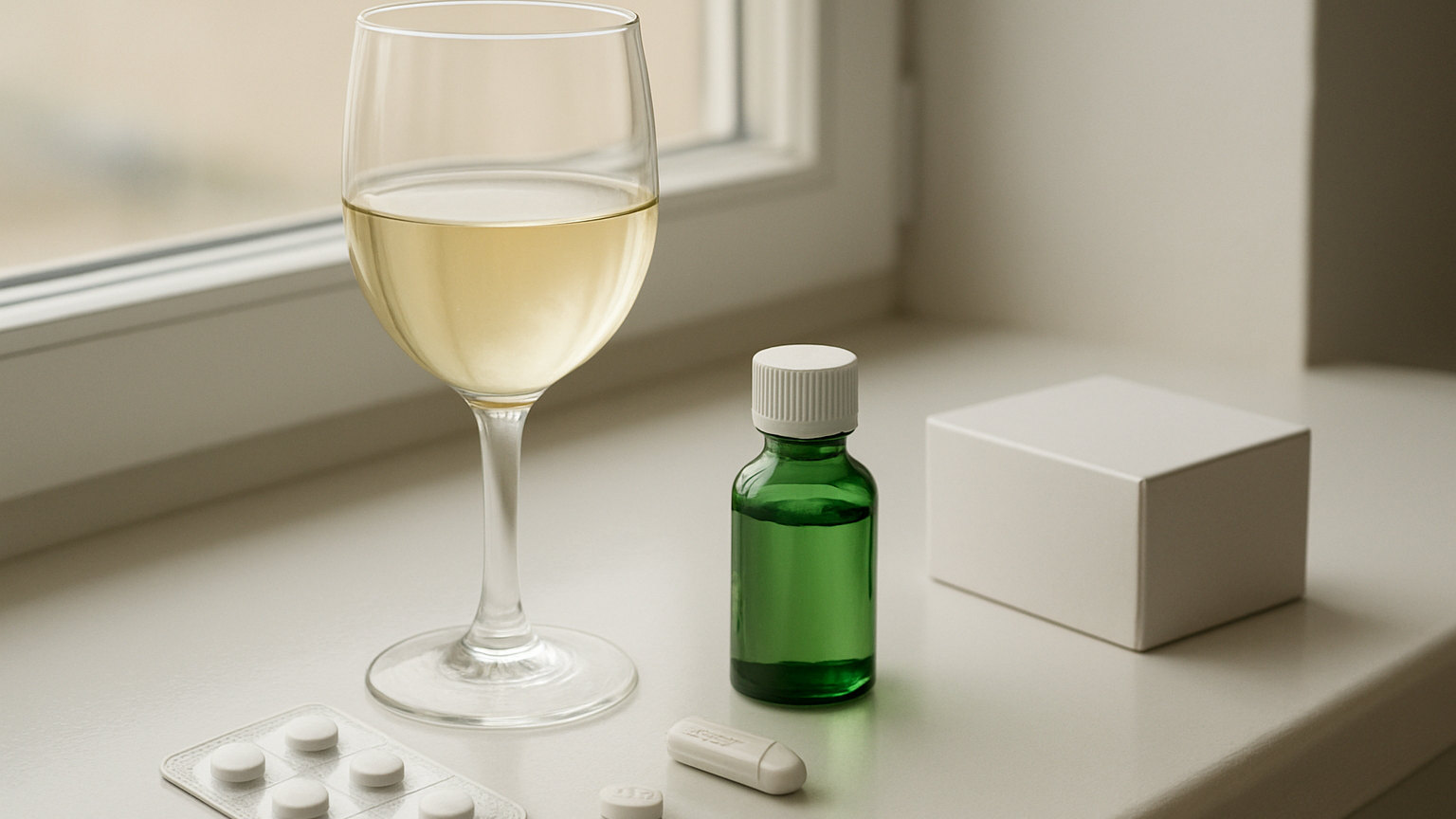
Some combinations of prescribed medicines and recreational drugs are dangerous rather than merely unwise, and a few are lethal. This is not a lecture about drug use - it is about the specific interactions that cause harm, and about why telling a clinician honestly changes what they do. Medical staff are not there to report you, and an accurate answer in an emergency can be the difference between the right treatment and the wrong one.
The combinations that kill
Opioids with benzodiazepines, alcohol or other sedatives. Each depresses breathing by a different route, and together the effect is more than additive. This is the leading pattern in drug-related deaths involving prescribed medicines, and it includes prescribed opioids taken with illicitly obtained sedatives, and vice versa. Our guide to codeine and co-codamol covers the prescribed side.
Nitrates with erectile dysfunction medicines. "Poppers" are alkyl nitrites, and they act on blood vessels in the same way as GTN. Combined with sildenafil, tadalafil or similar, they can cause a catastrophic drop in blood pressure. The same applies to prescribed GTN for angina - our guide to angina and your GTN spray flags this as an absolute avoid.
Stimulants with medicines that raise serotonin. MDMA, and to a lesser extent cocaine and some other stimulants, raise serotonin. Combined with an SSRI, SNRI, tramadol or an MAOI, there is a real risk of serotonin syndrome - agitation, muscle rigidity, sweating and a dangerously high temperature. Our guide to serotonin syndrome covers recognition, and it is a medical emergency.
Stimulants with heart medicines. Cocaine causes coronary artery spasm, and the interaction with beta blockers is contested but clinically important - anyone presenting with chest pain after stimulant use needs to say so, because it changes the treatment given.
Quieter interactions that still matter
Cannabis increases drowsiness with any sedating medicine, and can affect the metabolism of some drugs. High-potency products are associated with worsening of psychosis, which matters for anyone on antipsychotic treatment.
Ketamine adds to sedation and affects the bladder and liver with heavy use, which interacts with the monitoring of several long-term medicines.
Nitrous oxide inactivates vitamin B12 with repeated use, and can cause nerve damage. It matters particularly for anyone already at risk of low B12 - including people on long-term metformin, as our guide to metformin notes.
Anything bought as one thing and containing another. Substances sold illicitly are frequently adulterated, and synthetic opioids appearing in other products have caused clusters of overdoses. You cannot interaction-check something whose contents are unknown.
When to call 999
Call an ambulance for someone who is unresponsive or difficult to rouse, breathing slowly, noisily or not at all, blue or grey around the lips, having a seizure, very hot with rigid muscles, or has chest pain.
Put an unresponsive person who is breathing into the recovery position and stay with them. Tell the call handler and the crew what has actually been taken, including prescribed medicines. That information changes treatment - naloxone for opioid overdose works only if opioids are involved.
Nobody attending an emergency is interested in reporting you. Withholding what was taken is the thing that causes avoidable harm.
Telling your prescriber
It changes prescribing decisions in ways that protect you. A prescriber who knows will avoid certain combinations, may choose a different painkiller, and can arrange naloxone where opioid use is a risk.
GP records are confidential in the same way as everything else. If you would rather discuss it separately, drug and alcohol services accept self-referral, are free and confidential, and can also advise on interactions with your prescriptions.
Pharmacists have a private consultation room and deal with these questions - see our guide to what your pharmacist can do.
If you use opioids, know about naloxone
Naloxone reverses opioid overdose and is available without a prescription through drug services in the UK, along with training. It works within minutes and buys time for an ambulance.
Anyone at risk of opioid overdose, and people around them, can be supplied with it. Tolerance falls quickly after any break in use, which is why overdose most often follows a period of abstinence - a point our guide to coming off opioid painkillers makes about prescribed opioids too.
If you are in hospital or having surgery
Tell the anaesthetist and the ward team. Regular use of opioids, benzodiazepines, stimulants or alcohol changes anaesthetic requirements and changes what withdrawal looks like on a ward, where it can be mistaken for something else entirely.
Untreated withdrawal during an admission is unpleasant, avoidable and occasionally dangerous. Staff can manage it if they know, and they cannot if they do not.
Where to get help
Local drug and alcohol services accept self-referral and are free. FRANK provides confidential information, and your GP can refer you. Asking for help is not an admission of anything, and it does not affect your prescribing except to make it safer.
The Usage section covers more on taking medicines day to day - Medicines and Driving: What the Law Says is closely related to this one.