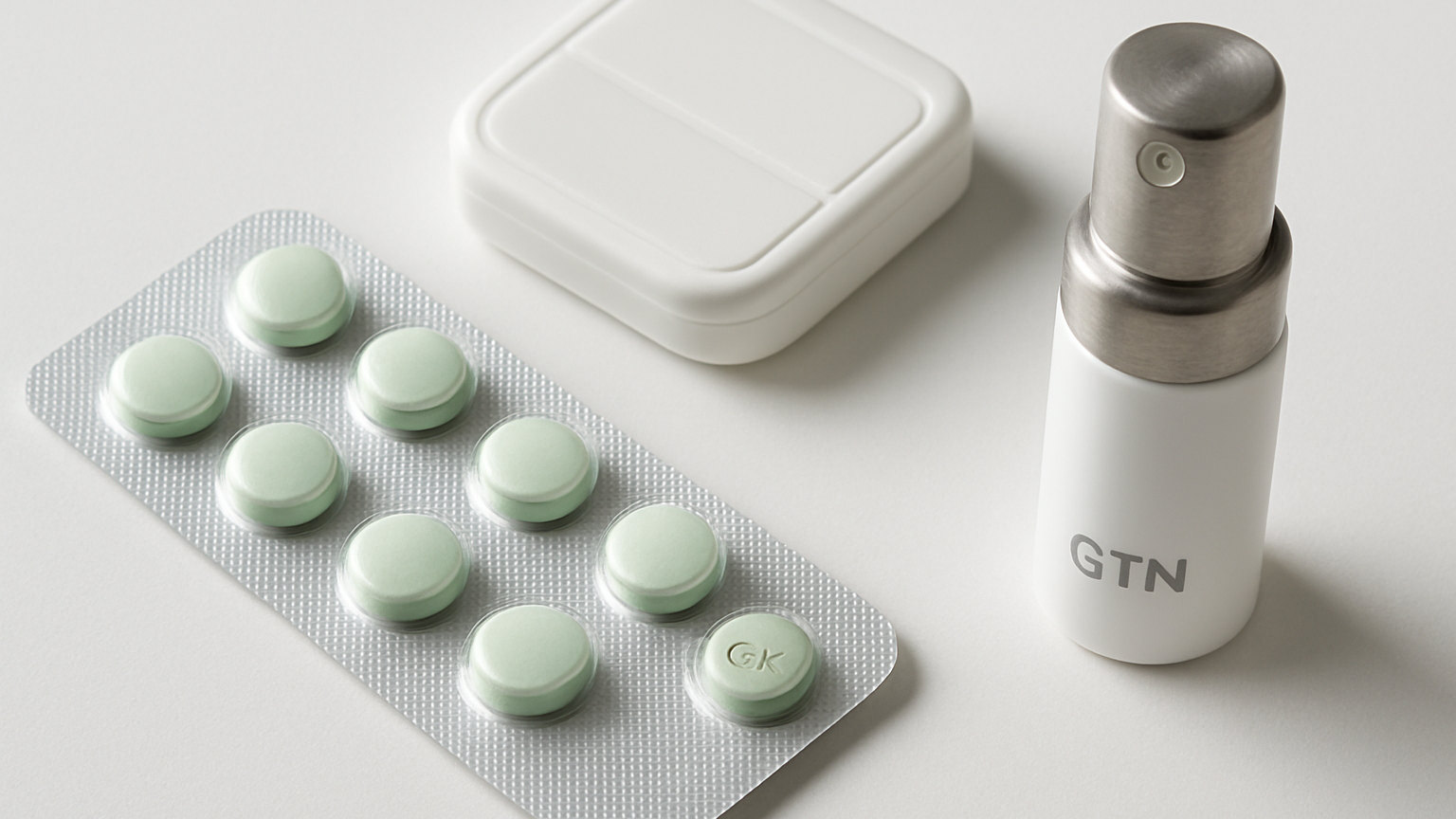
Glyceryl trinitrate - GTN - relieves angina within minutes by relaxing and widening blood vessels, reducing the work the heart has to do and improving blood flow to the heart muscle. It comes as a spray or tablets used under the tongue. Sit down before using it, because it can drop your blood pressure enough to make you faint. And know the point at which continuing chest pain means calling 999 rather than trying another dose.
Use it according to the plan you were given. This guide describes what it does, not how many doses to take.
Call 999 if
- chest pain is severe, or feels heavy, tight or crushing
- pain continues after using your GTN as your plan directs
- pain comes with breathlessness, sweating, nausea or a feeling of impending doom
- pain spreads to the jaw, neck, back or arms
- pain comes on at rest, or wakes you
- your usual angina pattern has changed - more often, more easily, or lasting longer
Do not drive yourself or be driven. An ambulance can begin treatment on the way, and outcomes after a heart attack depend heavily on how quickly it is treated. If you are on aspirin or have been advised to take it in this situation, follow that advice while you wait.
The usual pattern is that your prescriber will have told you to use GTN, wait a set interval, use it again if pain persists, and call 999 if it continues after that. If nobody has given you that plan, ask for it at your next appointment.
Using it properly
Sit down first. This is the instruction most often skipped and it matters - GTN can cause a sudden drop in blood pressure, and people have fainted and injured themselves standing up.
Spray under the tongue, or place a tablet there, and do not swallow. GTN is absorbed through the lining of the mouth, and swallowing it means the liver breaks most of it down before it can work. Close your mouth afterwards and do not inhale the spray.
You can also use it before something you know brings on angina - walking uphill, cold weather, exertion. That is a legitimate preventive use, and worth asking about if you avoid activities because of angina.
Side effects you should expect
Headache is very common and is a direct consequence of the blood vessels widening. It usually settles within minutes and often becomes less troublesome with continued use. Flushing, dizziness and a fast heartbeat are also common.
These are expected rather than a reason to stop using it. If headache is severe enough to put you off using it when you need it, tell your prescriber - that is a problem worth solving, not tolerating.
Never use GTN with medicines for erectile dysfunction such as sildenafil or tadalafil. The combination can cause a catastrophic drop in blood pressure. This applies whether the ED medicine was prescribed or bought, and it is one of the more important reasons to be honest about everything you take - our guide to checking an online pharmacy covers why products bought unassessed are a particular risk here.
Looking after the spray
Check the expiry date regularly. Sprays generally have a longer shelf life than tablets, and GTN tablets in particular lose potency once the bottle has been opened - there is usually a limit on how long after opening they can be used, which is worth writing on the bottle.
Do not leave it in a car. Heat degrades it, and this is precisely the item you cannot afford to have failed when you need it - see our guide to medicines in hot weather.
Keep it with you rather than at home. An unused spray in a drawer helps nobody.
The rest of your treatment
GTN relieves symptoms; it does not treat the underlying narrowing. Most people with angina are also on medicines that reduce the frequency of attacks and lower cardiovascular risk - beta blockers or calcium channel blockers, a statin, and usually aspirin or another antiplatelet.
Those are the ones doing the long-term work, and needing your spray more often is a signal that they need reviewing rather than that you should simply use more spray. Our guides to blood pressure treatment and statins cover the reasoning behind them.
Tell someone if the pattern changes
Stable angina that comes on predictably with exertion and settles with rest and GTN is one thing. Angina that is happening more often, with less provocation, at rest, or lasting longer is unstable angina, and it needs urgent assessment rather than a routine appointment.
Keep a rough note of how often you use your spray. It is the single most useful piece of information you can bring to a review.
Heart Failure Medicines: What Each Does covers a related point, and the Conditions section has the rest of these guides.