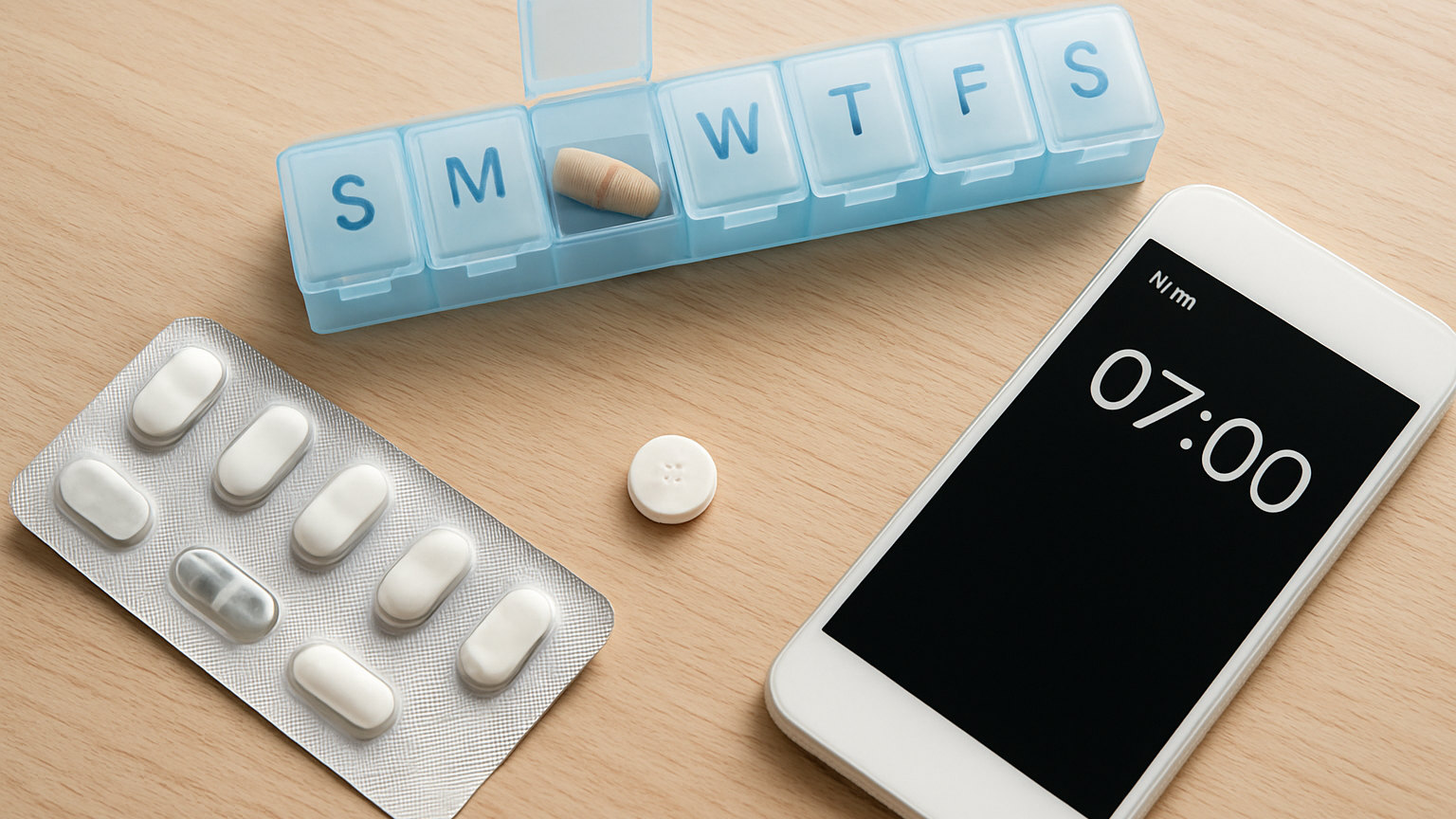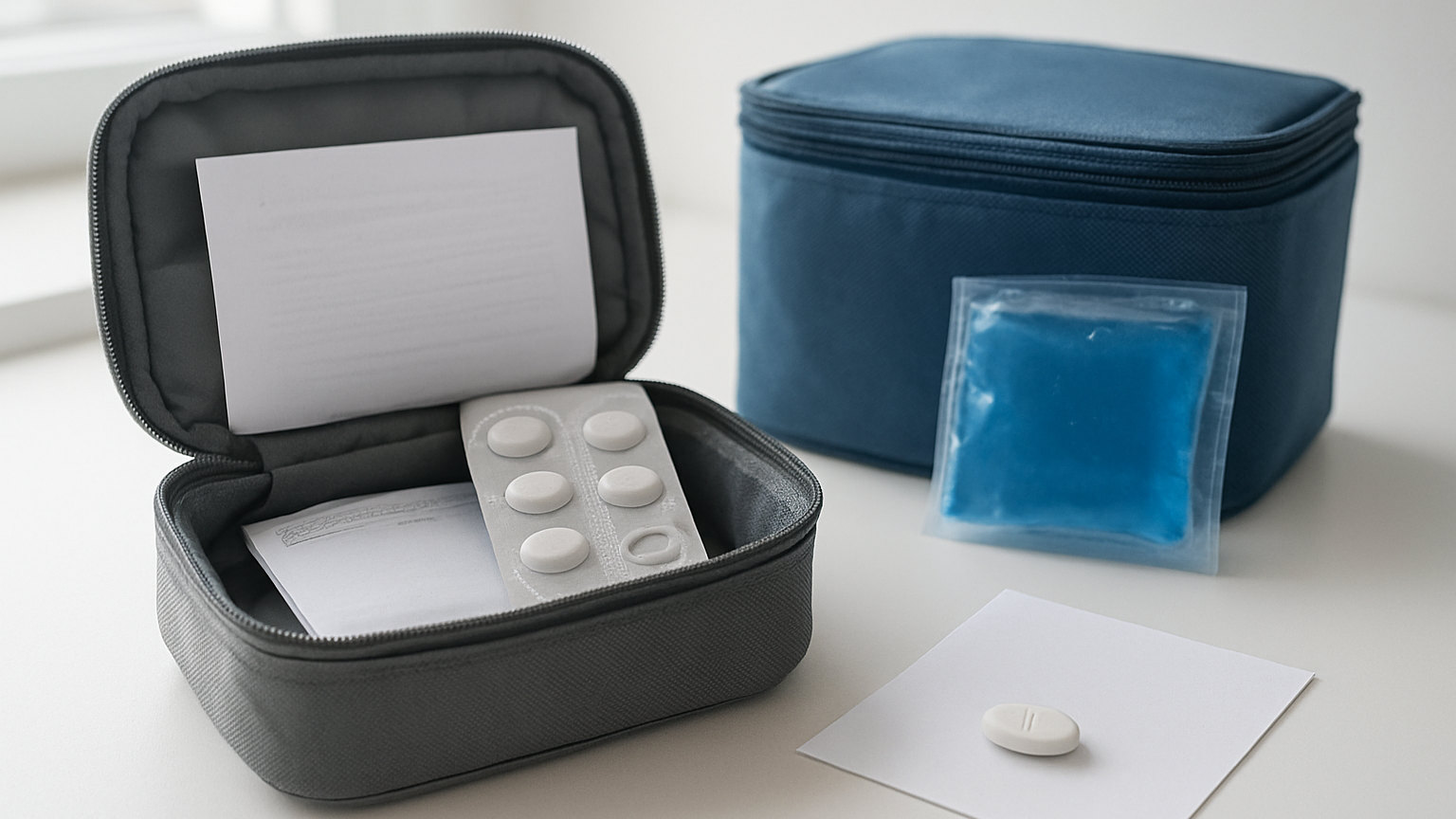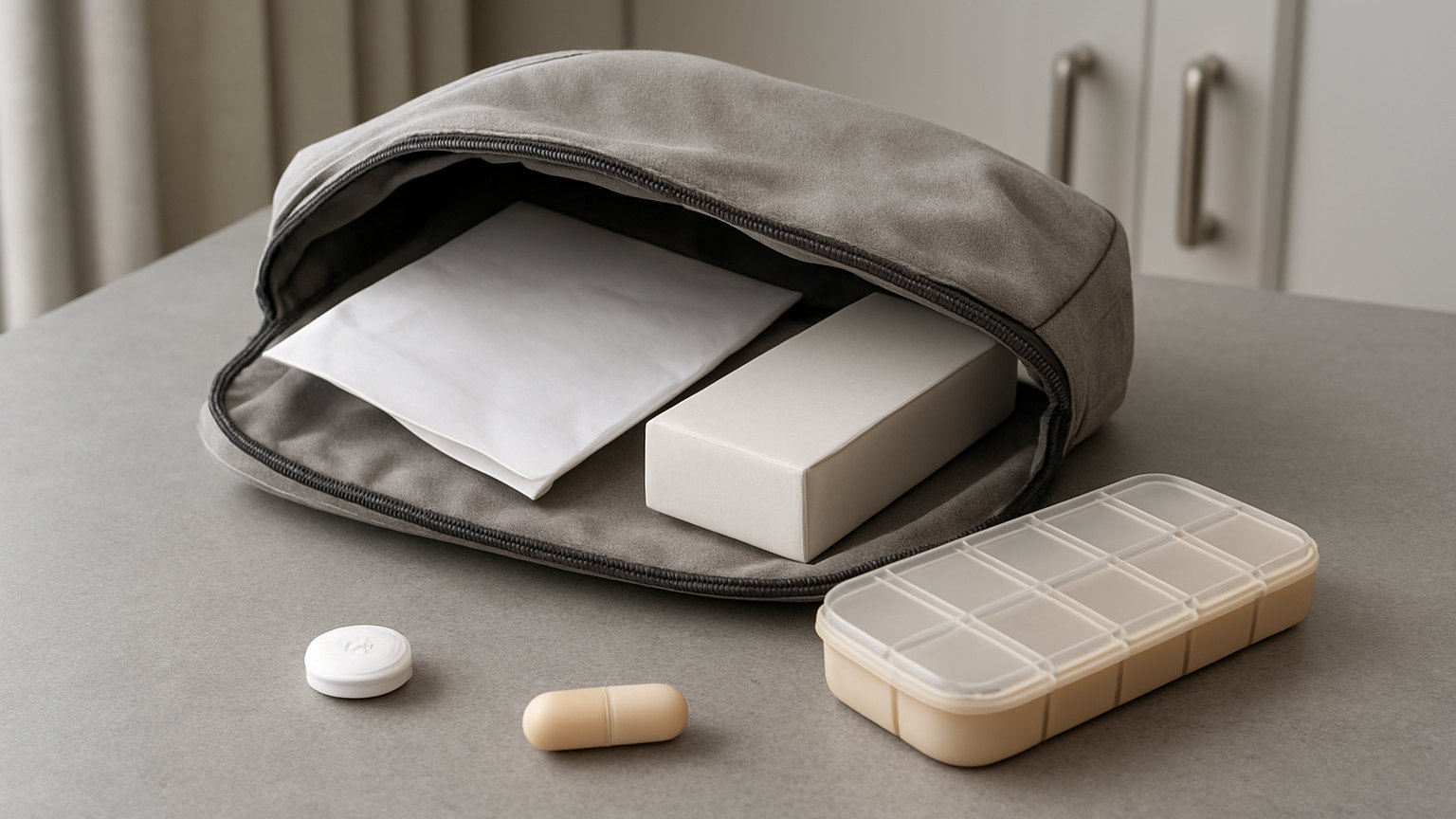
If you lose your medicines abroad or run out, the practical order is usually: local pharmacy first, then a local doctor, then your insurer's assistance line, then in serious cases the nearest British embassy or consulate. The single most useful thing to have is a list of your medicines by generic name and strength, because brand names change between countries while generic names are internationally recognised. A photograph of your repeat list on your phone covers most of this.
Prepare before you go
Take more than the trip needs, split between two bags, all in hand luggage and in original labelled packaging - our guide to flying with prescription medicines covers documentation and the countries where ordinary UK prescriptions are restricted.
Photograph your repeat list, your packaging including strengths, and any prescriber's letter. Store it somewhere you can reach without your luggage. Our guide to using the NHS App covers getting a copy of your list.
Learn the generic names. "Ramipril" will be understood almost anywhere; a UK brand name may mean nothing.
Pharmacies abroad
In much of Europe and beyond, pharmacists have broader scope than in the UK and can supply a wider range of medicines directly, including some that need a prescription here. For a straightforward replacement of a regular medicine, a pharmacy is usually the fastest route and often the only one you need.
Take your packaging or your photographed list. Be prepared for the product to look different, have a different name, and occasionally come in a different strength requiring a different number of tablets - check that carefully rather than assuming, as our guide to reading a medicine label explains.
You will normally pay. Keep receipts for your insurer.
Seeing a doctor
For controlled drugs, injectables, or anything a pharmacist cannot supply, you will need a local prescriber. Your accommodation, your insurer's assistance line, or a local pharmacy can usually direct you.
Reciprocal healthcare arrangements - the GHIC or EHIC card in participating countries - cover state-provided medically necessary treatment on the same basis as a local resident, which may mean a co-payment rather than free care. Carry whichever card is current, and note that it supplements travel insurance rather than replacing it.
Your travel insurer's assistance line is often the most useful single number, since they deal with this daily and can direct you to providers who will bill them.
Where the counterfeit risk is highest
Falsified medicines are a substantial global trade, and the risk varies enormously by country and by where you buy. Products bought from street vendors, markets, unlicensed sellers or online while abroad carry real risk - testing has repeatedly found the wrong drug, the wrong strength, or nothing active at all.
Buy from a proper registered pharmacy. If a price seems implausible, or a prescription-only medicine is offered without any questions, treat that as a warning rather than convenience - the same principles as our guide to checking an online pharmacy is legitimate.
What not to bring home
Medicines bought abroad may contain different ingredients or strengths than the UK version of the same brand, and some contain drugs not licensed here. Bringing back a supply to continue using is not a good substitute for sorting your prescription out at home.
There are also legal limits on importing medicines, particularly controlled drugs. If you have been prescribed something abroad, tell your GP when you get back so it can be recorded and reviewed - our guide to over-the-counter interactions covers why an incomplete list is the underlying problem in most missed interactions.
If you are taken ill
Carry a list of your conditions as well as your medicines, along with allergies and what actually happened when you reacted - our guide to allergy or side effect covers why the detail matters.
A medical alert bracelet is worth having for anything significant, since it works when you cannot speak or when there is a language barrier.
Tell any doctor abroad everything you take, including things bought over the counter. Language barriers make this harder, so a written list is worth more than usual.
Keep the receipts and the packaging
Keep anything you are given, including the box and leaflet, until you are home and have shown it to your own pharmacist. The generic name on foreign packaging lets them work out exactly what you were supplied, which is not always obvious from the brand.
Receipts matter for insurance claims, and most insurers require the original rather than a photograph. Photograph them anyway as a backup before you travel home.
Fever after tropical travel
One thing to carry home with you: any fever within a year of visiting a malaria area, and especially within three months, needs urgent medical assessment - and you must say where you have been. Our guide to travel vaccines and malaria tablets covers why the post-travel course matters and why taking the tablets does not rule malaria out.
If this was useful, Travelling With Controlled Drugs is worth reading next, and Usage collects the rest.