Controlled drugs are medicines subject to additional legal restrictions because of their potential for misuse. Several are entirely ordinary prescriptions - strong painkillers, ADHD medicines, some sedatives, and gabapentin and pregabalin. Taking them abroad involves two separate questions: whether you need a Home Office licence to take them out of the UK, and whether they are legal at your destination. The second is the one that catches people out, because some ordinary UK prescriptions are criminal offences elsewhere.
Start this six to eight weeks before you travel. It cannot be sorted at the airport.
Which of your medicines are controlled
Commonly prescribed ones include morphine, oxycodone, fentanyl patches, methadone, buprenorphine, tramadol, codeine at higher strengths, methylphenidate and lisdexamfetamine for ADHD, benzodiazepines such as diazepam and lorazepam, zopiclone and zolpidem, ketamine, and gabapentin and pregabalin.
Your pharmacist can tell you which of yours fall into this category and which schedule they sit in, since the rules differ between schedules. Our guide to codeine and co-codamol and nerve pain medicines cover two of the groups people least expect to be controlled.
The UK side: licences
The Home Office issues personal licences for taking controlled drugs out of the UK. Whether you need one depends on the drug, the quantity and the length of trip - broadly, longer trips carrying larger amounts are more likely to require one, and there are published thresholds.
Applications take time, so apply early. A licence covers travel out of and back into the UK; it does not make anything legal at your destination, which is an entirely separate question.
Even below the licence threshold, carry a letter from your prescriber. It should state your name, travel dates, each medicine by generic name, the strength, the quantity carried, and confirm it is for your personal use. Practices commonly charge for this and may take a couple of weeks.
The destination side: legality
This is where the serious problems occur. Medicines legal on prescription in the UK are restricted or banned in a number of countries, and enforcement can be severe - including detention.
Categories that most often cause difficulty are strong painkillers, sleeping tablets and sedatives, ADHD medicines, and some cold and allergy remedies containing pseudoephedrine or codeine. Cannabis-based products prescribed in the UK are illegal in many countries.
Some Gulf states, parts of Asia and Japan have particularly strict rules, and a few require an import permit applied for in advance through their own authorities.
Check with the embassy or consulate of every country you enter, including anywhere you transit, since a stopover can still mean clearing customs. Do this in writing where you can, and keep the reply.
How to carry them
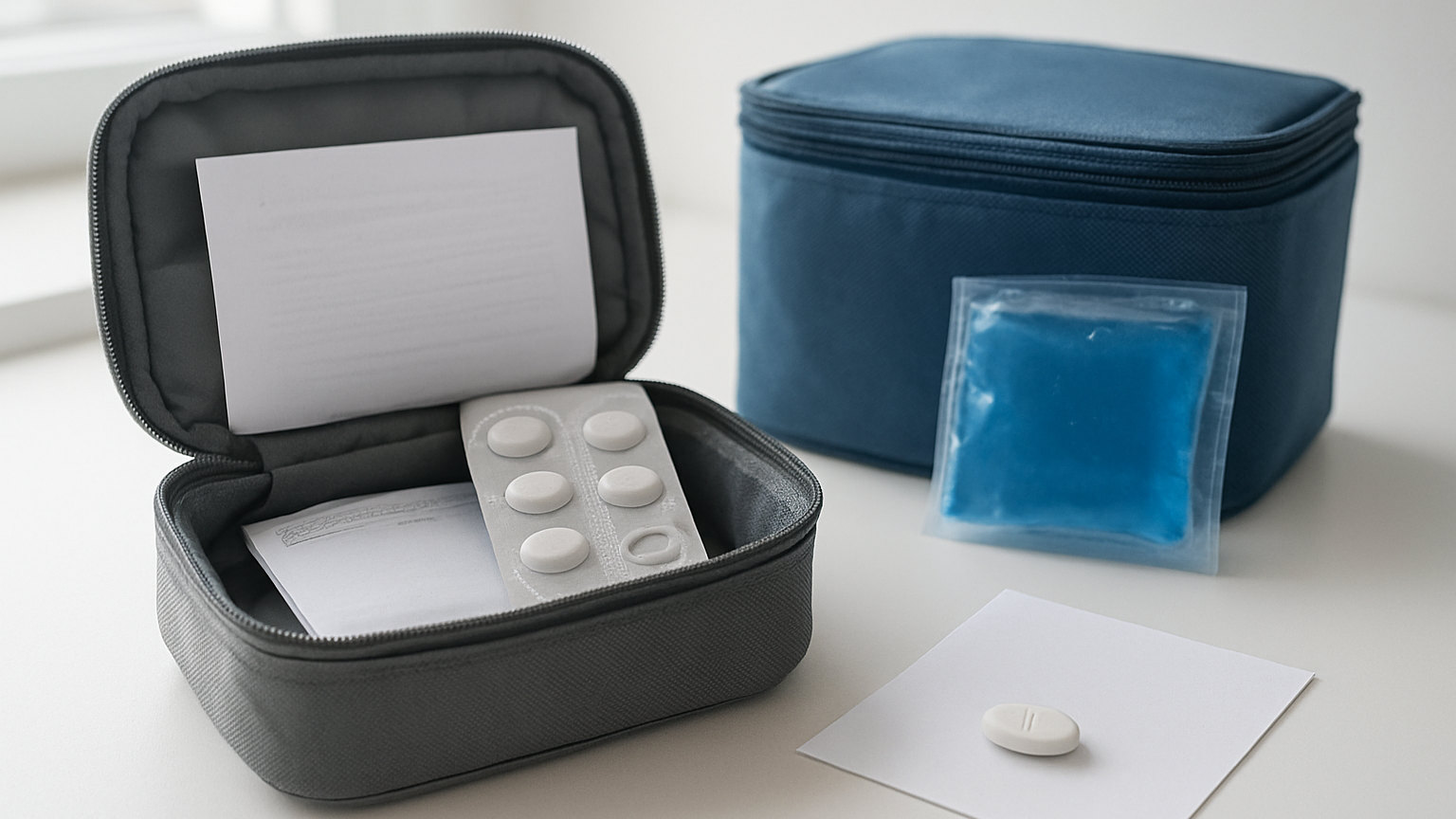
- In your hand luggage, never in the hold.
- In the original packaging with the pharmacy label showing your name.
- With your licence, prescriber's letter and a copy of your repeat list - our guide to using the NHS App covers getting a copy.
- Only the quantity you need for the trip plus a reasonable margin.
- Declare them at security and customs rather than waiting to be asked.
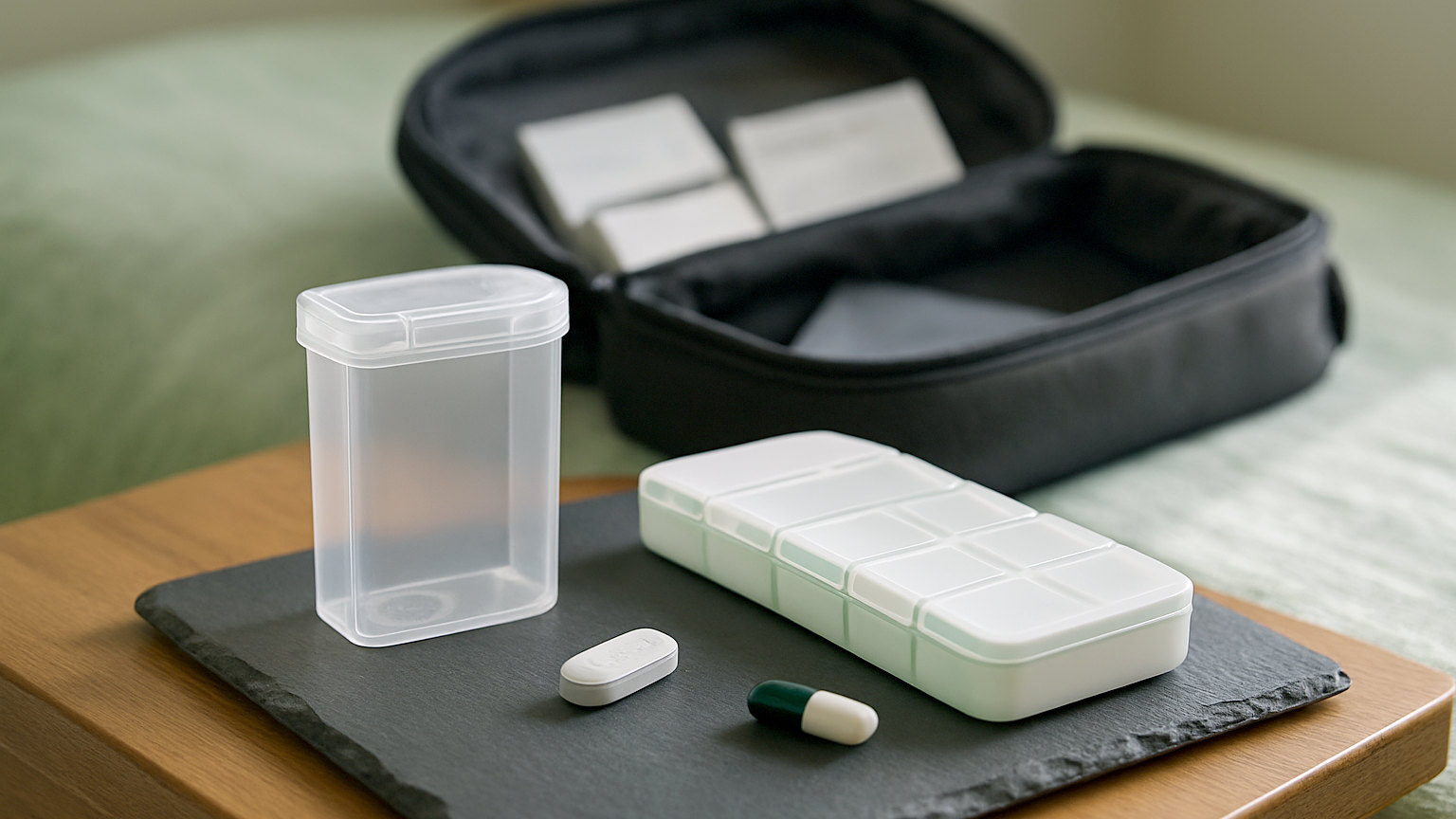
Do not decant controlled drugs into a pill organiser for travel. The labelled packaging is what connects the medicine to you and to a lawful prescription.
Getting extra supply
Prescribing limits apply to controlled drugs, and practices cannot simply issue several months at once. Ask early, explain the trip and the dates, and expect it to take longer than an ordinary repeat.
Our guide to getting extra medicine before a holiday covers the general process, and controlled drugs are the category where the lead time matters most.
If something goes wrong abroad
Replacing a controlled drug overseas is considerably harder than replacing an ordinary medicine, and in some countries effectively impossible. Split your supply between two bags so a lost bag does not leave you without.
If you do run short, contact your travel insurer's assistance line and a local pharmacy. Do not buy from an unregulated source - falsified medicines cluster around exactly this situation, as our guide to getting medicines while you are abroad covers.
Cruises, driving and multi-country trips
Each border is a separate legal question, so a cruise calling at several countries or a road trip across a region needs each one checking rather than the destination alone.
Ships operate under the law of their flag state while at sea and under local law in port, which adds a further layer. If you are carrying controlled drugs on a cruise, contact the line in advance and ask what documentation they expect - most have a stated policy.
Coming home
The licence and documentation apply on the return journey too, so keep everything with you rather than discarding it at the destination.
If you were prescribed anything while away, tell your GP when you get back so it is recorded - and be aware that bringing back a supply of a controlled drug obtained abroad has its own legal restrictions.
Flying With Prescription Medicines: UK Rules covers a related point, and the Usage section has the rest of these guides.