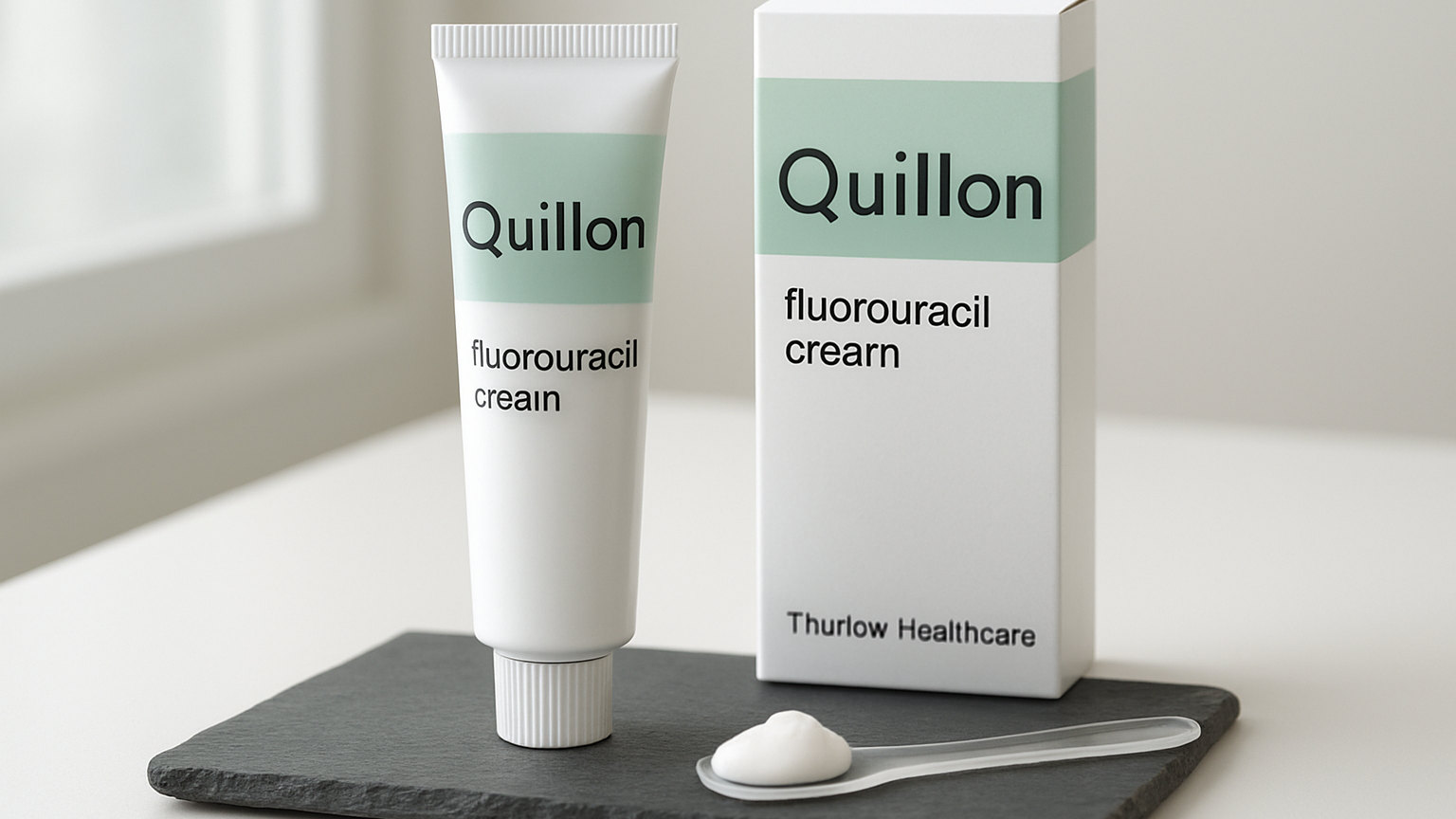
Fluorouracil cream is applied to areas of sun-damaged skin - actinic keratoses, Bowen's disease and some superficial skin cancers. It interferes with DNA synthesis, and because abnormal cells divide faster than normal ones, it destroys them preferentially. What makes this treatment distinctive is the reaction: the treated area becomes red, sore, crusted and inflamed, often dramatically. That reaction is the treatment working, and being unprepared for it is the main reason people stop halfway.
Follow the instructions on your label. This guide contains no doses.
What actinic keratoses are
Rough, scaly patches on skin that has had years of sun exposure - scalp, face, ears, forearms and the backs of hands. They are areas where cells have been damaged and are behaving abnormally.
A small proportion progress to squamous cell carcinoma, and there is no reliable way to predict which. Treating them is partly about removing something uncomfortable and partly about reducing that risk.
Fluorouracil treats the whole field rather than individual lesions, which is its advantage - it reaches damage that is present but not yet visible.
What to expect, week by week
Roughly, and it varies:
- Week one - little visible change, perhaps mild redness
- Week two - marked redness, burning, soreness. Lesions you did not know were there light up, which is the field effect working
- Week three - the peak: erosion, crusting, weeping. This is the point people stop
- After stopping - healing over two to four weeks, leaving smoother skin
Courses typically run a few weeks, and the endpoint is often defined by the reaction rather than by the calendar - your dermatologist or GP will tell you what to aim for.
Look at photographs of the expected reaction before you start. Knowing what week three looks like is what gets people through it.
Managing the reaction
A bland emollient soothes and does not interfere - see emollients. Simple pain relief helps if it is sore.
A short course of a mild topical steroid is sometimes used after the fluorouracil course to settle the inflammation - not during, which would suppress the reaction you are trying to produce.
Contact your prescriber if the reaction becomes more severe than you were told to expect, if there is spreading redness with pain and fever suggesting infection, or if it extends well beyond the treated area.
How to apply it
Wash and dry the area, apply a thin film with a gloved finger or an applicator, and wash your hands thoroughly afterwards.
Avoid the eyes, nostrils and mouth - it is severely irritant to mucous membranes. Do not apply to broken skin unless directed, and do not cover with an occlusive dressing unless told to, since that increases absorption.
Do not treat a larger area than instructed. Field treatment is done in sections for a reason.
Sun protection is essential
Fluorouracil makes treated skin far more sensitive to ultraviolet light, and sun exposure during treatment makes the reaction considerably worse.
Stay out of the sun, cover up, and use a high-factor sunscreen once the skin has healed enough to tolerate it. Avoid sunbeds entirely.
Treatment is often scheduled for winter for exactly this reason. See medicines that make you sun-sensitive.
Pregnancy and handling
Fluorouracil must not be used in pregnancy, and effective contraception is advised during treatment.
It should not be handled by anyone who is or could be pregnant. Keep it well away from children and pets, and do not let others touch treated skin.
The DPD question
A small proportion of people have reduced activity of dihydropyrimidine dehydrogenase, the enzyme that breaks fluorouracil down. In those given fluorouracil intravenously for cancer, that deficiency causes severe and sometimes fatal toxicity, and testing before systemic treatment is now standard in the UK.
With the cream, absorption is limited and the risk is far lower - but severe reactions have been reported in people with complete deficiency. If you or a close relative has had a severe reaction to fluorouracil or capecitabine, mention it before starting the cream.
The alternatives
Cryotherapy freezes individual lesions and is quick, but does not treat the surrounding field.
Imiquimod works through the immune system and produces a comparable inflammatory reaction. Photodynamic therapy is done in clinic and gives a more controlled, shorter reaction. Diclofenac gel is gentler and slower with a milder reaction.
Which suits depends on the site, the extent and how much visible reaction you can tolerate - a face before a wedding is a different proposition from a scalp in January.
Afterwards
Sun-damaged skin stays sun-damaged. Lifelong sun protection matters, repeat courses are often needed after a few years, and any lesion that does not heal, grows, bleeds or ulcerates needs assessing rather than treating again.
See also Dorzolamide: Eye Drops That Reduce Fluid, and the Conditions section for more on what medicines are prescribed for.