Hot weather creates two distinct problems. The first is what heat does to your medicines - most are meant to be stored below 25°C, and sustained warmth degrades them invisibly, so a tablet can look perfectly normal and have lost potency. The second, less obvious, is what some medicines do to your ability to cope with heat: several interfere with sweating, fluid balance or blood pressure regulation, which makes overheating and dehydration more likely.
Keeping medicines cool
Store them in the coolest, driest, darkest part of the house - a bedroom drawer or a high cupboard away from the kitchen. Avoid conservatories, sunny windowsills and anywhere near a radiator or cooker.
Cars are the worst offender. A parked car in summer reaches temperatures far above anything a medicine is tested for, and a glovebox is hotter still. This matters most for things carried "just in case" and left there for months - a reliever inhaler, a GTN spray, an adrenaline auto-injector. Those are exactly the items you need to work first time.
Beach bags, handbags left in the sun and hotel windowsills all present the same problem on holiday - see our guide to travelling with medicines.
Refrigerated medicines
Insulin, some eye drops, some injectables and some antibiotic liquids need to stay between 2°C and 8°C. Keep them in the body of the fridge rather than the door, where temperature swings most, and away from the back wall where things can freeze.
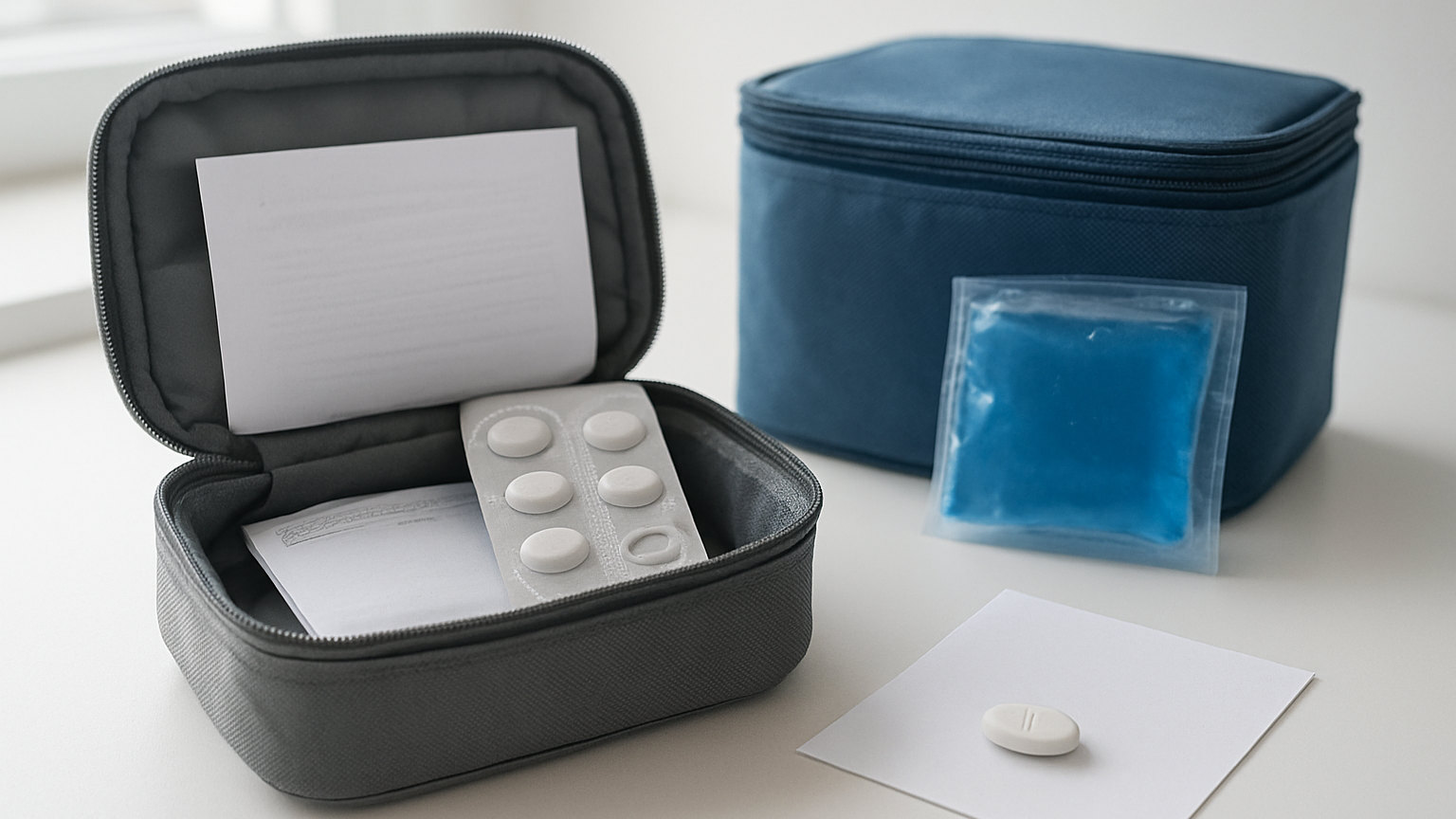
Freezing damages many of these as thoroughly as overheating, and insulin that has frozen should not be used. Ask your pharmacist how long yours can safely be out of the fridge - the answer varies and matters for a journey or a power cut. Cool bags and specialist wallets are worth having if you travel.
Medicines that make heat harder to handle
This is the part people rarely think about.
Diuretics increase fluid loss, so dehydration comes on faster.
Anticholinergic medicines - some for bladder problems, some older antihistamines, some antidepressants and antipsychotics - reduce sweating, which is the body's main cooling mechanism.
Beta blockers limit the heart rate response and can reduce blood flow to the skin.
ACE inhibitors, ARBs and other blood pressure medicines can contribute to dizziness and faintness when blood vessels are already dilated by heat.
Lithium requires particular care: dehydration raises blood levels and can cause toxicity. Anyone on lithium should be careful about fluids in hot weather and know the warning signs.
None of these is a reason to stop taking anything. They are a reason to drink more, stay out of the midday sun, and take a heatwave seriously.
Sick day rules apply in heat too
Some practices issue rules for pausing certain medicines during illness with dehydration - typically some blood pressure tablets, diuretics, metformin and SGLT2 inhibitors. Severe dehydration from heat raises similar concerns.
Ask whether you have sick day rules and whether they apply in hot weather. Do not pause anything on your own - our guide to monitoring long-term medicines covers why these lists exist.
Sun sensitivity
Several medicines make skin burn far more easily than usual, sometimes dramatically. They include some antibiotics - particularly tetracyclines used for acne and doxycycline for travel - some diuretics, some anti-inflammatories, some antifungals, and topical retinoids.
If you are on any of these, use high-factor sun protection, cover up, and be far more careful than your usual tolerance suggests. Reactions can occur through cloud and window glass.
Signs of heat illness
Heat exhaustion - heavy sweating, tiredness, dizziness, headache, cramps, feeling sick - needs cooling down, resting somewhere cool, and fluids. It should improve within about half an hour.
Call 999 for heatstroke: confusion, no longer sweating despite being very hot, a temperature that will not come down, rapid breathing, seizure, or loss of consciousness. That is an emergency.
Older people, very young children, people with heart or kidney conditions and people on several medicines are at higher risk, and may not feel thirsty even when dehydrated.
A quick check after a hot spell
Look at anything that was stored badly - left in a car, a bag or a sunny room. If a tablet has changed colour, texture or smell, if a cream has separated, or if a liquid looks different, ask your pharmacist rather than using it.
Anything you are unsure about should go back to a pharmacy, as our guide to leftover medicines explains. A replacement is cheaper than a medicine that has quietly stopped working.
See also Where Should You Actually Keep Your Medicines?, and the Usage section for more on taking medicines day to day.