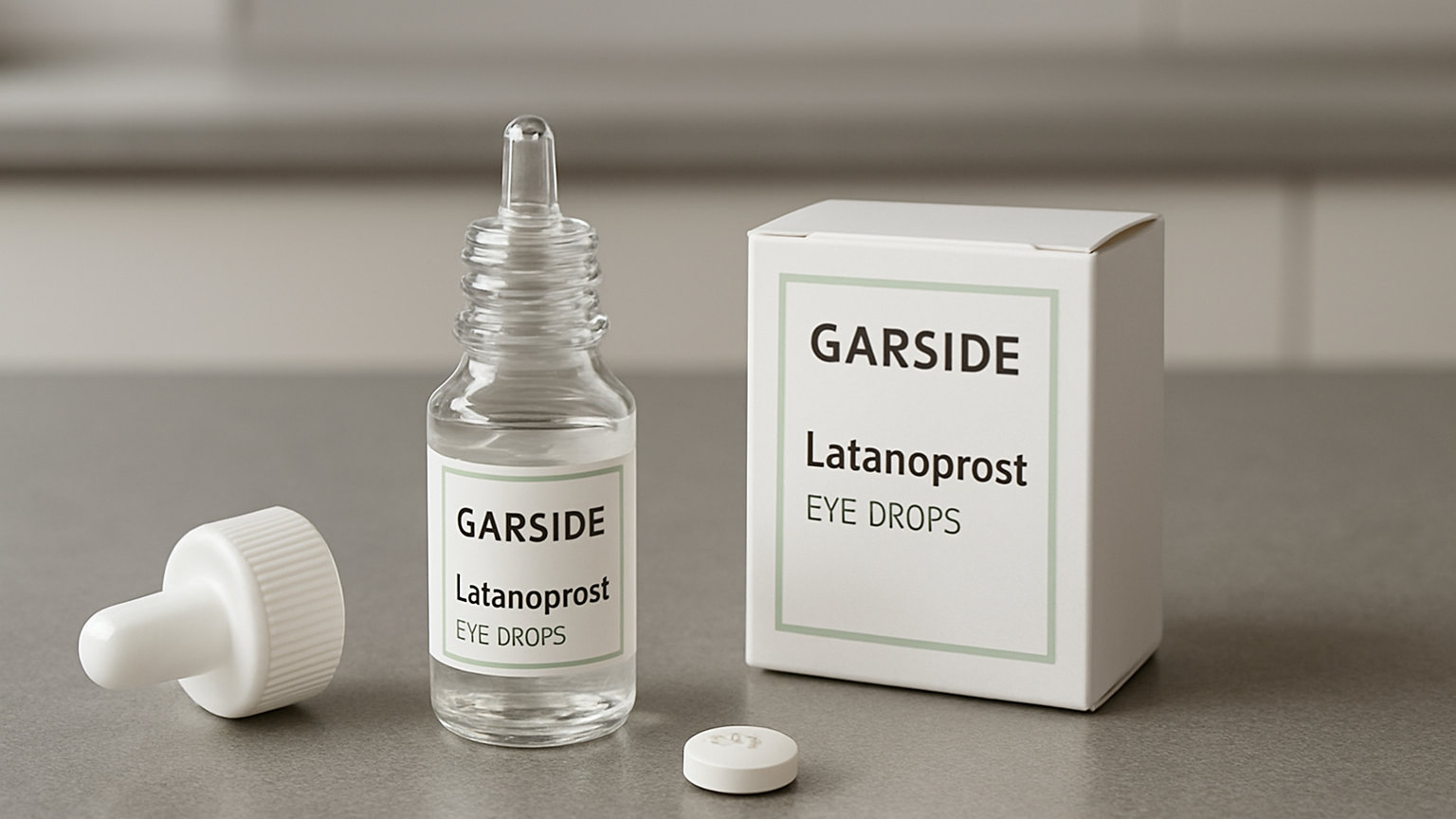
Latanoprost is a prostaglandin analogue used to lower pressure inside the eye in glaucoma and ocular hypertension. It increases the drainage of fluid from the eye, and it is usually first choice because it is effective, taken only once a day, and has few effects elsewhere in the body. The difficulty with it is not the drug: glaucoma damages sight silently and irreversibly, so there is nothing to feel whether you take the drops or not.
Follow the instructions on your label. This guide contains no doses.
Why adherence is the whole problem
Glaucoma damages the optic nerve gradually, starting with peripheral vision. The brain fills in the gaps, so people do not notice until a substantial proportion of the nerve fibres are gone - and by then the loss cannot be recovered.
Treatment does not improve sight. It prevents further loss. So the reward for taking your drops every night for twenty years is that nothing happens, which is a poor motivator and the reason adherence in glaucoma is among the worst in medicine.
If you have stopped, or drift in and out, say so plainly at your next appointment. The clinic cannot manage your pressure sensibly if the readings reflect a drug you have not been using.
Once a night
Latanoprost is taken in the evening, which is when it works best. Once daily is enough - more frequent use actually reduces its pressure-lowering effect, which is unusual and worth knowing.
One drop per eye. The eye holds only a fraction of a drop, so a second is wasted.
After instilling it, close the eye gently and press the inner corner next to the nose for about a minute. That closes the tear duct so the drop stays on the eye rather than draining into your throat, and it both improves the effect and reduces what is absorbed elsewhere.
Our guide to eye drops and ear drops covers the technique in full, and leaving at least five minutes between different drops if you use more than one.
The cosmetic side effects
These are unusual among medicines in being visible, and they are the reason some people stop.
Iris darkening. Latanoprost increases pigment in the iris, gradually turning it browner. It is permanent, it is most noticeable in mixed-colour irises such as green-brown or blue-brown, and if only one eye is treated the two can end up different colours.
Eyelash changes. Lashes grow longer, thicker and darker - the same effect is marketed commercially as a cosmetic product. Most people do not mind; some find it uneven if one eye is treated.
Periorbital changes. Loss of fat around the eye over time, giving a deepened, hollowed appearance.
Darkening of the eyelid skin also occurs. None of these affects vision, but they are worth being told about rather than discovering.
Other effects
Stinging, redness, blurring immediately after instilling, and a feeling of something in the eye are common and usually settle.
Report persistent eye pain, marked redness, sensitivity to light or a change in vision. Inflammation inside the eye and swelling at the back of the eye are uncommon but recognised, particularly after cataract surgery.
Very little reaches the rest of the body, which is the main advantage over beta blocker drops such as timolol. Those can slow the heart and worsen asthma - a genuine and frequently forgotten interaction, since eye drops are rarely listed as medicines.
Put your eye drops on your medicines list. Our guide to over-the-counter interactions covers why omissions cause most missed interactions.
Storage
Unopened bottles are kept in the fridge. Once opened, latanoprost is usually kept at room temperature and discarded a set number of weeks later - commonly four - regardless of the printed expiry.
Write the opening date on the bottle, because nothing else will remind you and contaminated drops risk a serious eye infection. See medicines that need the fridge.
Preservative-free single-use units are available for people who react to preservative, and they are discarded immediately after use.
Contact lenses
Remove soft lenses before instilling and wait before putting them back in - preservatives are absorbed by the lens material.
If you struggle to instil them
This is common with arthritis, tremor or poor vision, and there are answers rather than reasons to give up. Lie down, rest the hand holding the bottle against your forehead, or ask your pharmacist about a dropper aid that grips and positions the bottle.
Missing glaucoma drops matters more than missing most medicines, so struggling is worth reporting.
What else is used
If latanoprost alone is not enough, beta blocker drops, carbonic anhydrase inhibitors such as dorzolamide, and alpha agonists such as brimonidine are added, often as combination bottles to reduce the number of drops.
Laser treatment is increasingly used as a first-line alternative and removes the adherence problem entirely, which is worth asking about.
More on what medicines are prescribed for in the Conditions section, including Donepezil: What It Can and Cannot Do.