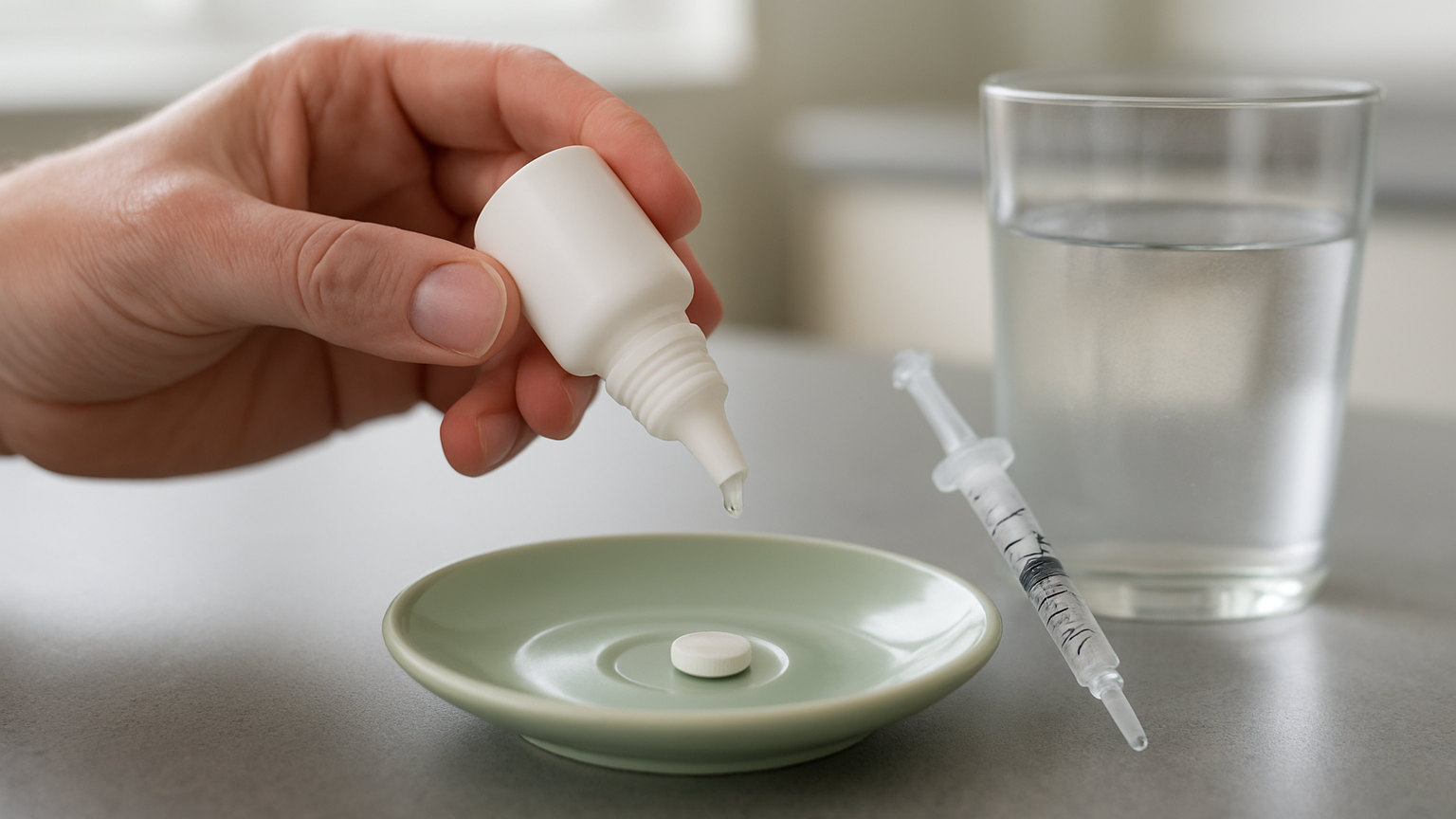
The eye can hold only a fraction of a single drop, so most of what you instil runs down your cheek or drains into the tear duct and is absorbed elsewhere in the body. Two habits change that: gently closing the eye and pressing the inner corner for a minute afterwards, and leaving several minutes between different drops. Both keep more medicine where it is needed and reduce the amount absorbed into the rest of you - which matters for some eye medicines more than people realise.
Using eye drops
- Wash your hands.
- Tilt your head back, or lie down.
- Pull the lower lid gently down to make a small pocket.
- Look up and squeeze one drop into the pocket, not onto the eyeball itself.
- Close the eye gently - do not screw it shut or blink hard, both of which pump the drop away.
- Press the inner corner, next to the nose, for about a minute. This closes the tear duct so the drop stays on the eye rather than draining into your nose and throat.
- Blot any excess with a clean tissue.
Do not let the dropper tip touch your eye, eyelashes or fingers - that is how bottles get contaminated.
One drop is enough. A second immediately afterwards simply washes the first away and uses up the bottle faster.
Why pressing the corner matters
Drops draining through the tear duct are absorbed from the nose and throat directly into the bloodstream. For some eye medicines that produces real effects elsewhere - beta blocker drops used for glaucoma can slow the heart and affect breathing in susceptible people, which is why anyone with asthma or a heart condition should mention their eye drops.
It is one of the more surprising interactions, and it is why eye drops belong on your medicines list. Our guide to over-the-counter interactions covers why an incomplete list is the underlying problem in most missed interactions.
More than one drop, or a drop and an ointment
Leave at least five minutes between different eye drops, otherwise the second washes out the first.
Where you use both drops and an ointment, use the drops first and the ointment last, since ointment forms a barrier. Ointments blur vision temporarily, so they are usually best at bedtime.
If you wear contact lenses, ask - many drops require lenses to be out, and preservatives can be absorbed by soft lenses. Waiting a period before reinserting is commonly advised.
How long a bottle lasts once opened
This is the part most often overlooked. Multi-dose eye drops usually contain a preservative and are typically discarded a set number of weeks after opening, regardless of the expiry date on the box - four weeks is common, but check yours.
Write the opening date on the bottle. Nothing else will remind you, and using contaminated drops risks a serious eye infection.
Single-use minims contain no preservative and are discarded immediately after use, even if some is left. Drops used after eye surgery often have their own rules.
Our guide to where to keep your medicines covers storage, and some eye drops need refrigerating.
If you struggle to instil them
This is common, particularly with arthritis, tremor or reduced vision, and there are solutions rather than reasons to give up:
- lie down, which makes aiming far easier
- rest the hand holding the bottle against your forehead to steady it
- ask your pharmacist about a dropper aid, which grips the bottle and positions it
- ask whether a preservative-free or once-daily preparation would suit
Missing glaucoma drops matters, because the damage they prevent is silent and irreversible. If you are struggling, say so rather than persisting badly - our guide to remembering to take your medicine covers building them into a routine.
Ear drops
Warm the bottle in your hand first - cold drops in the ear cause dizziness. Lie on your side with the affected ear upwards, pull the outer ear gently up and back for an adult, or down and back for a young child, to straighten the canal.
Instil the drops, then stay lying down for several minutes so they run in rather than out. A small piece of cotton wool loosely in the outer ear helps, but do not push anything into the canal.
Do not use ear drops if you have or might have a perforated eardrum, or if there is discharge, unless specifically told to - some preparations can damage the middle ear. Check with a pharmacist or GP first.
When to get it looked at
Seek urgent advice for sudden loss of vision, severe eye pain, a painful red eye with sensitivity to light, or an eye injury. Sudden hearing loss also needs urgent assessment rather than a wait-and-see approach.
Contact your GP or pharmacist if a course of drops has not helped, if symptoms worsen, or if you develop a rash or swelling around the eye or ear, which may be a reaction to the preparation - see rashes from medicines.
Can I Cut or Crush My Tablets? covers a related point, and the Usage section has the rest of these guides.