Clozapine is the only antipsychotic with established effectiveness in treatment-resistant schizophrenia - illness that has not responded to two other antipsychotics. It also reduces suicide risk, which no other antipsychotic has been shown to do. It is genuinely different, and it asks a great deal in return: mandatory blood monitoring, a registration system, and vigilance about a side effect that sounds trivial and is its leading cause of death.
Follow the plan your team gave you. This guide contains no doses. Never stop clozapine abruptly.
The blood monitoring
Clozapine can cause agranulocytosis - a severe fall in neutrophils leaving you defenceless against infection.
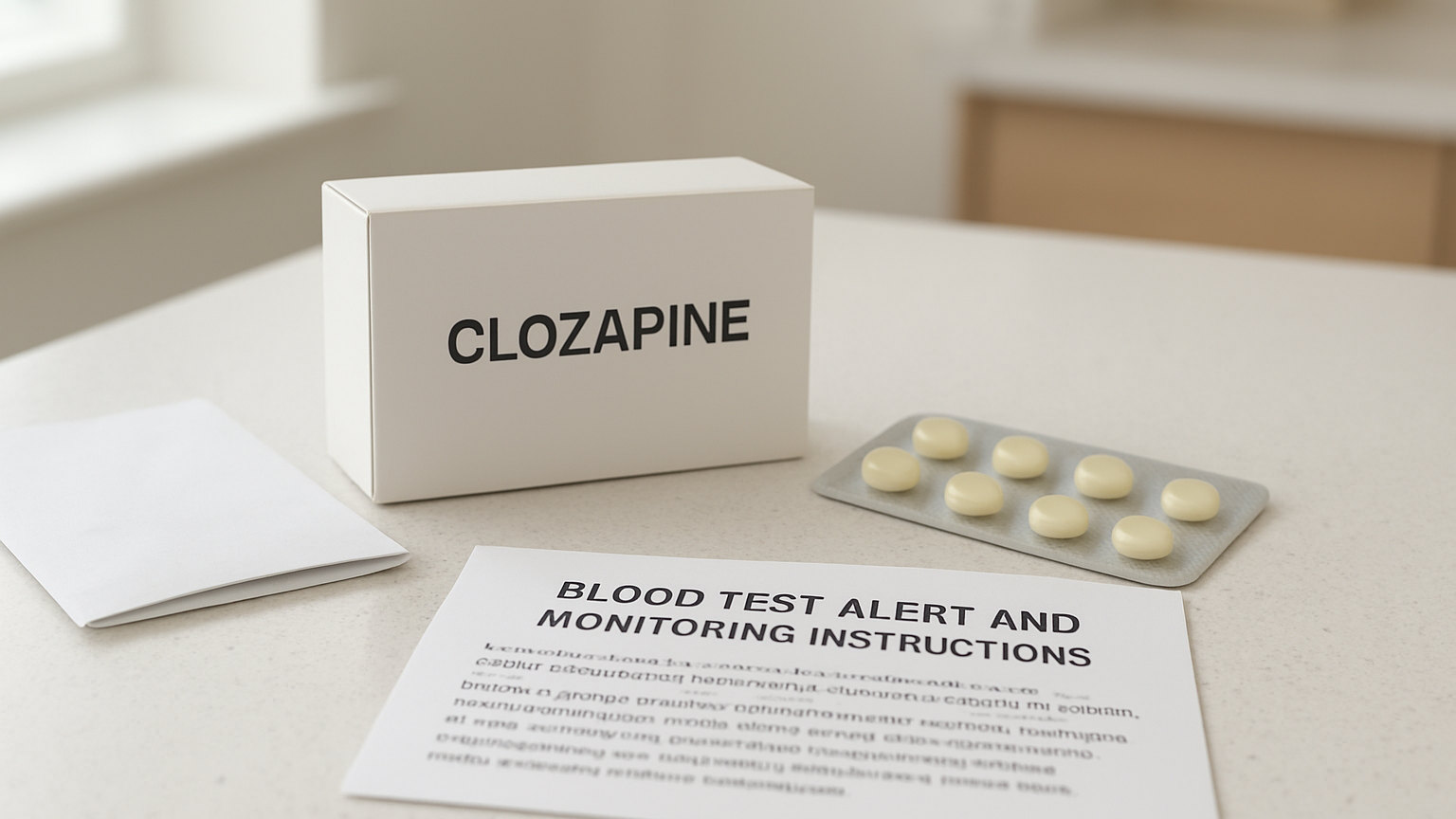
Monitoring is therefore mandatory and linked to supply: you cannot get clozapine without a satisfactory blood result. Testing is weekly at first, then fortnightly, then monthly once stable, continuing for as long as you take it.
The system works. Deaths from agranulocytosis fell dramatically once monitoring became compulsory.
Report fever, sore throat, mouth ulcers or flu-like symptoms urgently, at any point, and say that you take clozapine - it changes what should be tested immediately.
Missing a blood test means missing your medicine, so appointments are not optional in the way other appointments sometimes are.
Constipation kills people
This is the part most often underestimated. Clozapine slows the gut profoundly, and gastrointestinal hypomotility - progressing to impaction, obstruction and bowel perforation - causes more deaths than agranulocytosis does.
The reason it is missed is that constipation sounds minor, and clozapine also reduces the sensation of it, so people do not complain until things are advanced.
It should be managed actively and from the start:
- A laxative prescribed prophylactically rather than added when symptoms appear
- Bowel habit asked about at every review, in specific terms
- Fluid, fibre and activity
Seek urgent medical help for no bowel movement for several days, abdominal pain or distension, vomiting, or stopping passing wind.
See macrogol and why medicines cause constipation. Avoid adding other constipating medicines where possible.
Myocarditis in the first weeks
Clozapine can cause inflammation of the heart muscle, typically in the first four to eight weeks.
Report chest pain, palpitations, breathlessness, unexplained fever, flu-like symptoms or a persistently fast heart rate during that period.
Troponin, CRP and an ECG are monitored during initiation for this reason.
Cardiomyopathy can occur later - report breathlessness, ankle swelling or reduced exercise tolerance at any stage.
Missed doses
This catches people out and is genuinely dangerous.
If clozapine is stopped for more than 48 hours, it cannot simply be restarted at the previous dose - the whole titration has to begin again from a low dose, because tolerance to its blood pressure and sedative effects is lost quickly.
Restarting at full dose after a gap has caused collapse and death.
Gaps happen after hospital admission, after illness, after a missed blood test, or after running out.
If you have missed doses for more than two days, contact your team before taking any more.
See ordering repeats.
Stopping smoking raises levels
Tobacco smoke induces the enzyme that clears clozapine, so smokers need higher doses.
Stopping smoking can raise clozapine levels substantially - enough to cause toxicity, sedation and seizures - and it can happen quickly, including on admission to a smoke-free hospital.
It is the smoke rather than the nicotine, so patches and vaping do not prevent it.
Tell your team before or as soon as you stop or cut down, so levels and dose can be reviewed. The same applies if you start smoking again.
See bupropion.
Caffeine also raises clozapine levels, so a large change in coffee intake matters too.
Other effects
Excess saliva, particularly at night, is very common and can be socially difficult. It is treatable - raise it.
Sedation, weight gain, raised glucose and lipids - the metabolic burden is at the top of the class, and monitoring of weight, glucose and lipids is part of treatment.
Seizures, more likely at higher doses.
Dizziness on standing, particularly during titration.
See olanzapine and medicines and your weight.
Alcohol and other medicines
Alcohol adds to clozapine's sedation and to its effect on blood pressure, and heavy drinking complicates the monitoring.
Several medicines raise clozapine levels, including fluvoxamine, ciprofloxacin and erythromycin - tell any prescriber that you take it before accepting a new medicine, particularly an antibiotic. See ciprofloxacin.
Why people take it anyway
Because for a substantial proportion of people with treatment-resistant illness, nothing else works - and clozapine does.
It is also under-used: people frequently wait years on ineffective combinations before being offered it, and earlier use produces better outcomes.
If two antipsychotics have not worked, asking about clozapine is reasonable.
If you are struggling, Samaritans are free on 116 123, or you can text SHOUT to 85258.
The Conditions section covers more on what medicines are prescribed for - Alprazolam: Why It Is Not Prescribed Here is closely related to this one.