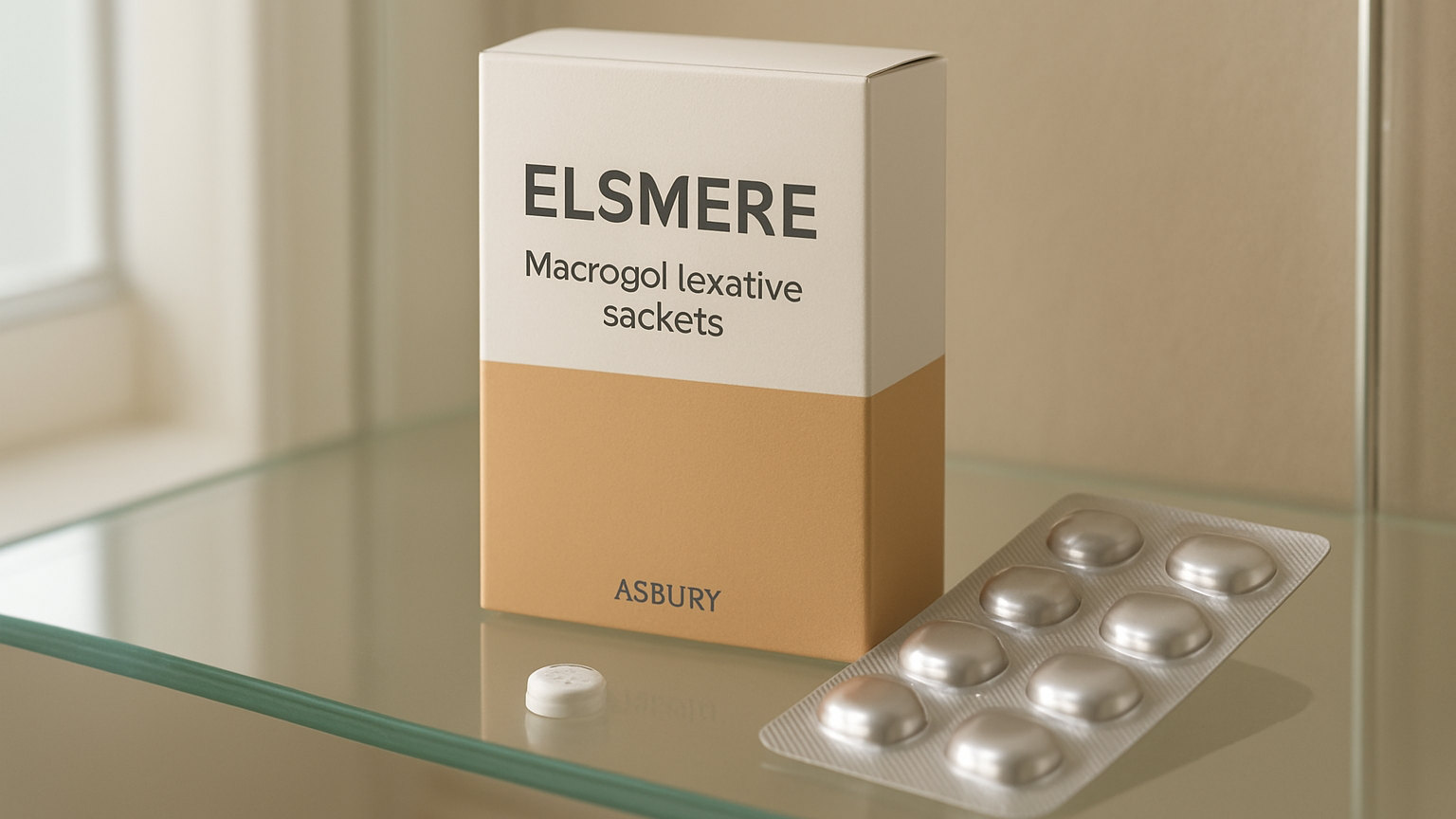
Macrogol - polyethylene glycol, sold under brand names including Movicol and Laxido - is an osmotic laxative. It is an inert polymer that is not absorbed and does not irritate or stimulate the bowel. It works by holding water in the stool, softening it and increasing its bulk so it passes more easily. That mechanism is why it can be used long-term, including in children, without the concerns attached to stimulant laxatives.
Follow the instructions on your label. This guide contains no doses.
How it differs from other laxatives
Osmotic - macrogol, lactulose - draws and holds water in the bowel. Works over one to three days.
Stimulant - senna, bisacodyl - makes the bowel wall contract. Works overnight, but causes cramping and is generally intended for shorter use.
Bulk-forming - ispaghula, methylcellulose - adds fibre. Needs plenty of fluid or it makes things worse.
Softeners - docusate - wet the stool.
Macrogol is usually first choice for ordinary constipation, and it is the one most often used in children. Lactulose is an alternative but causes more bloating and wind, and works less reliably.
Mixing it properly
Each sachet is dissolved in a specified volume of water. The water is not optional and the volume matters - the drug works by holding that water in the bowel, so using less reduces the effect and can make constipation worse.
Stir until completely dissolved rather than partly. Some people find it more palatable chilled, or mixed with a small amount of squash - check your product allows that.
If several sachets are taken in a day they can usually be spread out. Made-up solution can normally be kept covered in a fridge for a limited period, which helps if the volume is difficult to get through at once.
The impaction regimen
For faecal impaction - a hard mass that ordinary treatment will not shift - macrogol is used at much higher doses over a few days, escalating daily.
This is a specific prescribed regimen and it is worth knowing what to expect: the volume of fluid is large, and the result when it works is sudden and substantial. It is genuinely unpleasant and it avoids the alternative, which is manual disimpaction.
People with heart or kidney disease need caution because of the fluid and salt load, so this should be supervised rather than improvised.
How long to take it
For ordinary constipation, until things are regular and comfortable, then reduce gradually rather than stopping abruptly.
Long-term use is acceptable and is standard in children with chronic constipation, where treatment often continues for months after regular bowel habit returns. Stopping too early is the commonest reason it relapses.
Macrogol does not cause the dependence that was historically attributed to stimulant laxatives - a concern that is itself now regarded as overstated, but the point stands that an osmotic agent is not habit-forming.
Side effects
Bloating, wind, abdominal cramps, nausea and, if the dose is too high, diarrhoea. Most settle with an adjustment.
It contains salts, so people on a restricted sodium or potassium intake, or with significant heart or kidney disease, should check first.
Seek advice for severe abdominal pain, vomiting, or if you stop passing wind as well as stool - obstruction needs excluding and laxatives are not the answer.
When constipation needs assessing
See your GP rather than self-treating if you have a persistent change in bowel habit, blood in the stool, unintentional weight loss, a new lump in the abdomen, or constipation starting over the age of 50 without an obvious cause.
Our guide to warning signs you should not ignore covers what needs prompt attention.
Medicines that cause constipation
A great deal of constipation is caused by something else on the repeat list. Opioids are the most significant - and opioid-induced constipation does not settle with time, so a laxative should be started at the same time as the opioid rather than after the problem appears.
Iron tablets, some antidepressants, anticholinergics, some blood pressure medicines and ondansetron all contribute. Our guides to why medicines cause constipation, iron tablets and ondansetron cover the common culprits.
If you are on several of them, the useful question is whether any can be reduced - see deprescribing.
Children and macrogol
Macrogol is the standard first treatment for constipation in children, using a paediatric preparation, and it is safe for long periods.
Two things go wrong in practice. Treatment is stopped as soon as things improve, when it usually needs continuing for months to allow a stretched bowel to recover its tone. And the volume of fluid is a struggle for a child who does not like the taste - mixing with squash, chilling it, and using a straw all help. Persisting is worth it, because the alternative is a cycle of impaction and overflow that becomes much harder to treat.
Alongside the sachets
Fluid, fibre and activity all help, and a regular unhurried routine matters more than people expect - particularly not ignoring the urge, and allowing time after breakfast when the bowel is most active.
The Medicines section covers more on how the main families of medicine work - Estradiol: What HRT Does and Who It Suits is closely related to this one.