
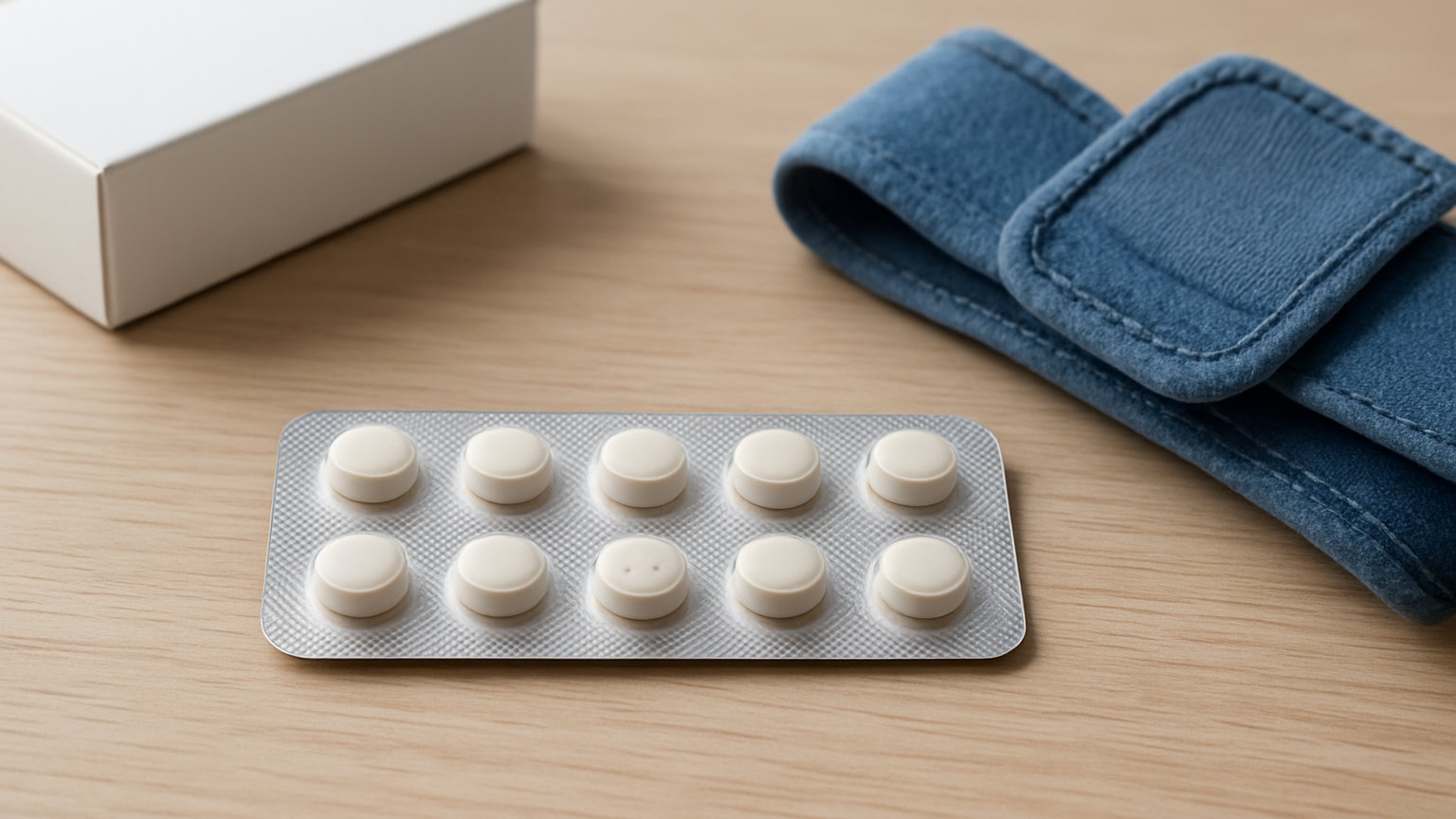
Baclofen is a GABA-B receptor agonist that acts on the spinal cord to reduce the reflex activity driving muscle spasticity. It is used in multiple sclerosis, spinal cord injury, cerebral palsy and after stroke, where spasticity causes stiffness, painful spasms and difficulty with movement and care. It works well for many people. The thing that most needs understanding is what happens when it stops.
Follow the plan your prescriber gave you. This guide contains no doses. Do not stop it abruptly.
Oral withdrawal
Stopping oral baclofen suddenly after regular use causes a withdrawal reaction: rebound spasticity worse than before, agitation, confusion, hallucinations and seizures.
Reduction must be gradual, over weeks, and planned with your prescriber.
Running out counts as stopping. Order repeats with a good margin and earlier before bank holidays - see ordering repeats and why you cannot just stop some medicines.
Pump withdrawal is a medical emergency
Where spasticity is severe, baclofen is delivered by an implanted pump directly into the fluid around the spinal cord - intrathecal baclofen. Far smaller doses achieve far greater effect with less drowsiness.
Interruption of that delivery - a pump failure, a blocked or dislodged catheter, a missed refill, or a battery reaching end of life - causes abrupt withdrawal that can be fatal.
It presents with sudden marked return of spasticity, high fever, altered consciousness, and muscle rigidity that can progress to rhabdomyolysis, organ failure and death.
This is an emergency. Go to A and E immediately and say that you have an intrathecal baclofen pump. Treatment involves restoring baclofen urgently, and staff unfamiliar with pumps may not recognise the picture - which is why saying it explicitly matters.
Never miss a scheduled refill appointment, and know who to contact if the pump alarms.
Drowsiness is the main limit
Baclofen is sedating, and drowsiness, fatigue and dizziness are the commonest reasons the dose cannot be pushed high enough to control spasticity fully.
It is built up gradually for that reason, and the sedation often eases over a couple of weeks.
Do not drive until you know how it affects you - see medicines and driving. Alcohol and other sedatives add to it, including opioids and gabapentinoids - see pregabalin.
Spasticity is not always the enemy
This is worth saying because it is counter-intuitive. Some people rely on spasticity to stand, transfer or walk - the stiffness in the legs provides support that weak muscles cannot.
Reducing it too much can leave someone less mobile rather than more, and less able to transfer independently.
The aim is therefore to relieve painful spasms and ease care without removing useful tone - which is why doses are individual and why increasing further is not always better.
If mobility has worsened since starting or increasing baclofen, say so.
Look for the trigger
Spasticity worsening is frequently caused by something else, and treating that works better than increasing the drug.
Common triggers: urinary infection, constipation, a pressure sore, an ingrowing toenail, tight clothing or a poorly fitting splint, and pain of any kind.
A sudden increase in spasticity is a reason to look for a cause - see urinary infection treatment and macrogol.
Kidney function
Baclofen is cleared almost entirely by the kidneys, and it accumulates rapidly in impairment.
Doses are substantially reduced, and baclofen toxicity in people with kidney disease - causing drowsiness, confusion and coma - is a recognised problem, sometimes at doses that would be modest for anyone else.
See medicines that affect your kidneys.
Other side effects
Nausea, dry mouth, headache, low blood pressure and muscle weakness.
Urinary symptoms occur in both directions - frequency in some, retention in others.
It can lower the seizure threshold, so tell your prescriber about epilepsy.
Confusion is more likely in older people and contributes to falls - see medicines and your memory.
The alternatives
Tizanidine works similarly with less muscle weakness but more drowsiness and a liver caution. Gabapentin helps spasticity in some people. Botulinum toxin injections target specific muscles and avoid systemic effects.
Physiotherapy and stretching are not an afterthought - they are the foundation, and drugs work considerably better alongside them.
Reviewing whether it still helps
Spasticity changes over time, and so does what you need from treatment. Someone whose mobility or circumstances have altered may need a different dose, or a different approach entirely.
An annual review asking whether the drug is still doing what it was started for is reasonable, particularly given the sedation it causes - see deprescribing. Any reduction is still gradual, for the reasons above.
The alcohol use
Baclofen is used off-label for alcohol dependence, and is licensed for it in France though not in the UK.
Evidence is mixed, and it is generally reserved for people who have not responded to established treatments - see naltrexone.
Adalimumab: Biologics and Infection Risk covers a related point, and the Conditions section has the rest of these guides.


