Telmisartan is an angiotensin II receptor blocker - an ARB. It blocks the receptor angiotensin II acts on, relaxing blood vessels and lowering blood pressure, without preventing the breakdown of bradykinin and therefore without causing the cough that ACE inhibitors do. What distinguishes it within its class is duration: its half-life is around twice that of most other ARBs, and that shows up in the hours you are not thinking about your blood pressure.
Follow the instructions on your label. This guide contains no doses.
Why duration matters
Blood pressure is not constant through the day. It falls overnight and rises sharply in the early morning, and that morning surge is when heart attacks and strokes cluster.
A once-daily drug whose effect has faded by the small hours leaves that period unprotected, even though the daytime readings in clinic look fine.
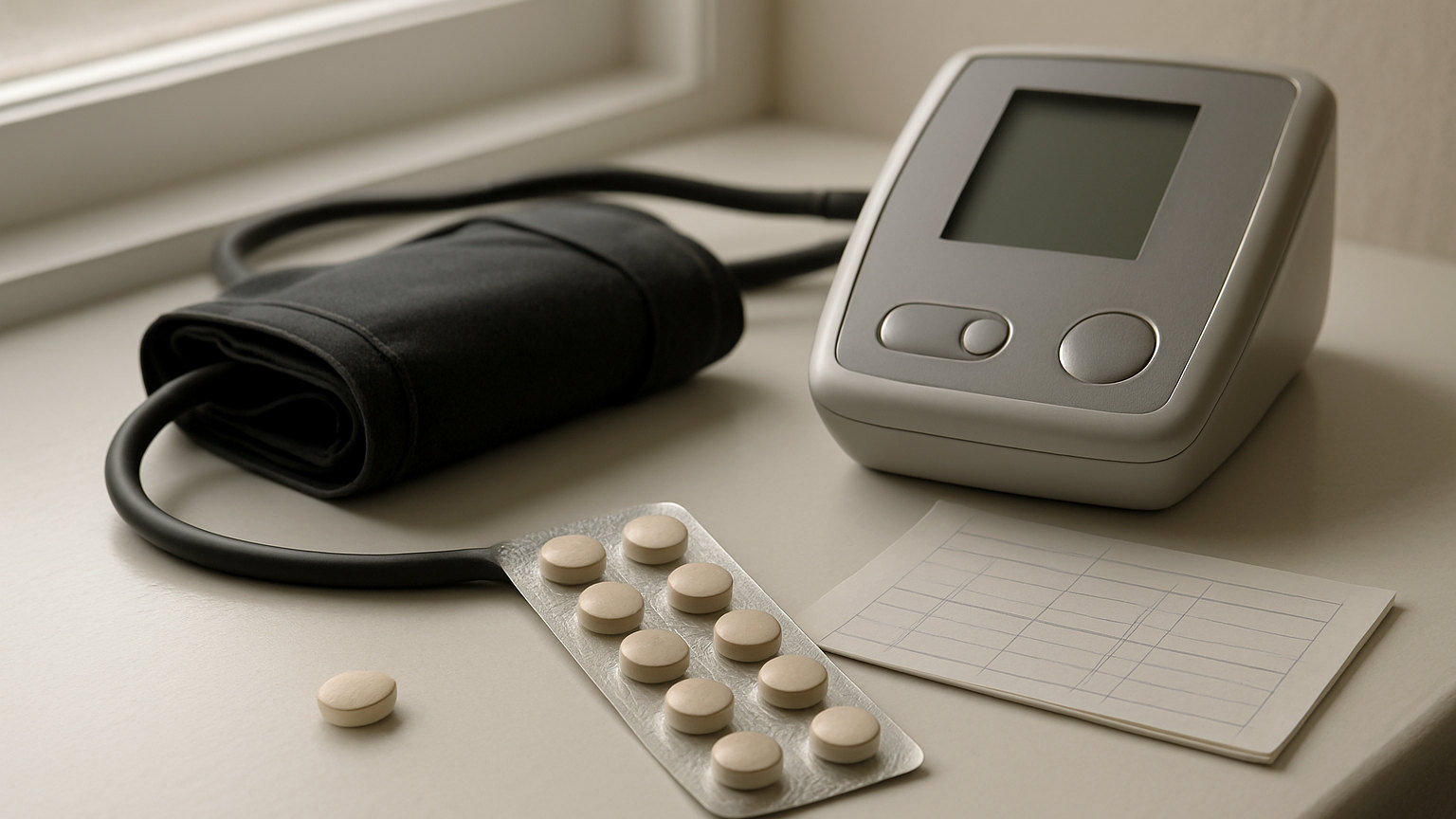
Telmisartan maintains its effect across the full twenty-four hours and into the following morning - which is measurable on ambulatory monitoring and is its main practical advantage.
It is also forgiving of a late or missed dose, which matters more in real life than in trials.
The cardiovascular evidence
Telmisartan is unusual among ARBs in having been tested head to head against ramipril in a large outcome trial in people at high cardiovascular risk.
It performed as well as ramipril for preventing cardiovascular death, heart attack and stroke, with less cough and less angioedema - though more hypotension.
The same trial tested the two drugs combined and found more harm than benefit - more kidney injury, more high potassium, more hypotension, without better outcomes.
That is the origin of the firm rule against combining an ACE inhibitor with an ARB. If a "-pril" and a "-sartan" both appear on your repeat list, query it.
See lisinopril and losartan.
The metabolic angle
Telmisartan is a partial activator of PPAR-gamma, the receptor pioglitazone acts on - which in theory gives it favourable effects on glucose and lipids.
The effect is modest and has not translated into clear clinical benefit in trials, so it is not a reason to choose telmisartan over another ARB.
It is worth knowing about because it appears in marketing and in discussions, and the honest position is that it is interesting rather than decisive.
See pioglitazone.
Where ARBs sit
An ACE inhibitor or ARB is usually first choice for people under 55 who are not of Black African or African-Caribbean family origin, and is added later for those who are.
Beyond blood pressure, ARBs are used in heart failure, after a heart attack, and for kidney protection in diabetes with protein in the urine.
See why blood pressure needs more than one tablet.
Blood tests are part of the treatment
Kidney function and potassium are checked before starting, one to two weeks after starting or any increase, and periodically thereafter.
A small rise in creatinine after starting is expected and is not a reason to stop. A large rise is different, which is what the test distinguishes.
Telmisartan raises potassium, so potassium supplements and salt substitutes containing potassium chloride need checking first - see potassium chloride and spironolactone.
Sick day rules
During illness with vomiting, diarrhoea or fever, an ARB combined with a diuretic and an anti-inflammatory is the recognised route to acute kidney injury.
Ask whether you have sick day rules covering it - see sick day rules and medicines that affect your kidneys.
Pregnancy
Telmisartan must not be taken in pregnancy. ARBs can seriously harm a developing baby, particularly the kidneys.
If you could become pregnant, this should have been discussed at the outset and raised again if your plans change.
Do not simply stop - a switch to something suitable in pregnancy is planned, because blood pressure still needs controlling. See labetalol.
Side effects
ARBs are among the better-tolerated blood pressure medicines, and telmisartan is no exception.
Dizziness, particularly early and after increases. Get up slowly.
Back pain, sinus symptoms, diarrhoea and raised potassium are reported.
Call 999 for any swelling of the mouth or throat or difficulty breathing - angioedema is uncommon with ARBs but not impossible.
Anti-inflammatory painkillers reduce the effect and strain the kidneys; paracetamol is usually the better choice - see paracetamol.
Practical points
Telmisartan can be taken with or without food, at any consistent time of day.
Tablets are moisture-sensitive in some formulations and should be left in the blister until taken rather than decanted into a dosette box - check your product, since this catches people out.
See blister packs and dosette boxes.
There is nothing to feel
Treating blood pressure produces no sensation. The benefit is reduced stroke and heart attack risk years from now, and it accrues only while you take it.
If side effects are the problem, say so rather than stopping - switching within the class is straightforward.
Prazosin: Blood Pressure and Nightmares covers a related point, and the Medicines section has the rest of these guides.