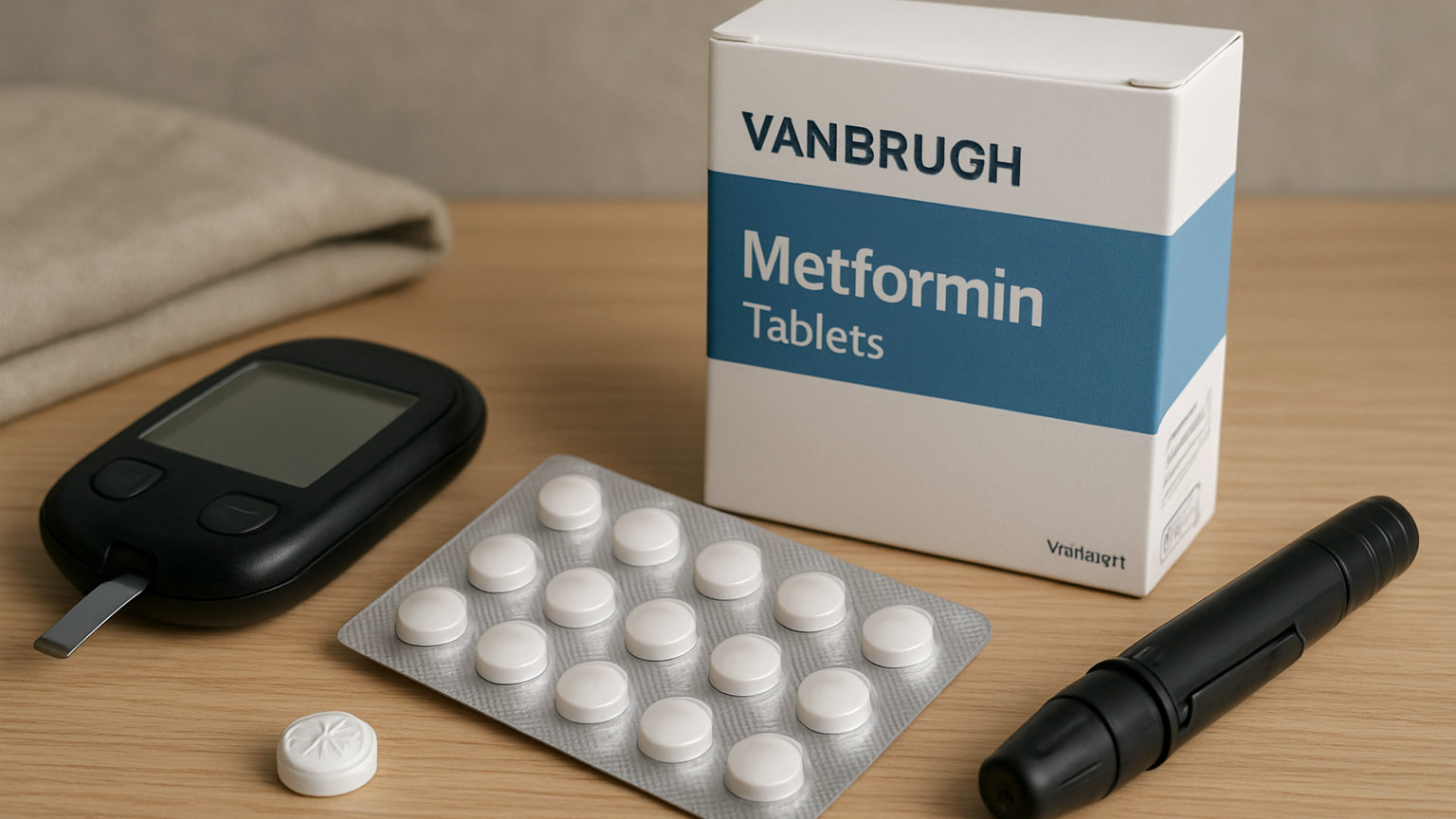
Metformin is the usual first medicine for type 2 diabetes and one of the most prescribed drugs in the world. It works mainly by reducing the glucose the liver releases and improving how the body responds to insulin. A large proportion of the people who conclude they cannot tolerate it were either started too quickly or took it on an empty stomach - both of which are fixable, and both of which are worth trying before giving up on it.
Follow the instructions on your label. This guide contains no doses.
Take it with food
The single most useful instruction. Metformin taken with or immediately after a meal causes considerably less nausea, cramping and diarrhoea than the same amount taken on an empty stomach.
If you take it twice daily, that usually means with breakfast and with your evening meal. Skipping the meal but taking the tablet is the combination most likely to make you feel dreadful.
Build up slowly
Doses are normally increased in steps over several weeks rather than starting at the target amount. Each increase may bring a few days of stomach upset which then settles.
If you were started at a higher amount and felt unwell, that is a reason to ask about restarting lower and building up, not a reason to abandon it. Most gastrointestinal effects settle within one to two weeks at any given step.
Our guide to metformin side effects and how to settle them covers the practical measures in more detail.
Standard and modified-release
Modified-release metformin - labelled MR, SR or XR - releases the drug slowly over the day and causes less stomach upset in many people. It is usually taken once daily with the evening meal.
It is a genuine option worth asking about if the standard version does not suit, and switching resolves the problem for a good proportion of people.
The two are not interchangeable tablet for tablet, and modified-release tablets must be swallowed whole - never crushed or chewed, since that releases the whole amount at once. Our guides to cutting and crushing tablets and how medicines get their names cover why the letters after a name matter.
You may see the empty shell of a modified-release tablet in your stools. That is normal and does not mean it has not worked.
If you miss a dose
Take it with your next meal if you remember soon after. If it is nearly time for the next one, skip the missed one - do not take two together, which will simply cause stomach upset.
Our guide to what to do if you miss a dose covers the general principle.
Sick day rules
This matters more with metformin than with most tablets. Stop metformin during any illness causing dehydration - vomiting, diarrhoea, high fever, or being unable to drink enough - and restart once you are eating and drinking normally again, usually after a day or two.
The reason is lactic acidosis: a rare but serious build-up of acid that becomes more likely when kidney function drops, which is what dehydration causes. Seek urgent help for rapid breathing, severe muscle pain, unusual tiredness, feeling very cold, or severe abdominal pain.
Metformin is also paused before procedures using iodinated contrast dye and before surgery. Tell whoever is arranging it - see sick day rules.
Alcohol
Heavy or binge drinking raises the lactic acidosis risk, and alcohol on an empty stomach can cause low blood sugar. Moderate drinking with food is generally acceptable - ask your team what applies to you, and see medicines and alcohol.
Vitamin B12
Long-term metformin reduces vitamin B12 absorption in a proportion of people, which can cause tiredness, nerve symptoms and anaemia that get attributed to the diabetes itself.
It is worth asking for a B12 level if you have been on it for years, particularly if you have tingling or numbness in your feet. It is easily corrected once found - our guide to medicines and your memory lists it among the reversible causes worth excluding.
Kidney function sets the ceiling
Metformin is cleared by the kidneys, so the amount you can safely take depends on how well they are working. Doses are reduced below a certain level of function and the drug is stopped altogether below a lower one.
That is why kidney function is checked at least annually on metformin, and more often if it is declining or if you are also on medicines that affect it. A dose that was right five years ago may not be right now - our guide to medicines that affect your kidneys covers how function is measured.
What it does not do
Metformin does not cause hypoglycaemia on its own, so it does not require the same precautions as insulin or a sulfonylurea - see sulfonylureas.
It is broadly weight-neutral, sometimes causing modest loss. And it is usually continued rather than replaced when other medicines are added, because it remains the foundation of treatment.
The Medicines section covers more on how the main families of medicine work - SGLT2 Inhibitors: What They Do is closely related to this one.