
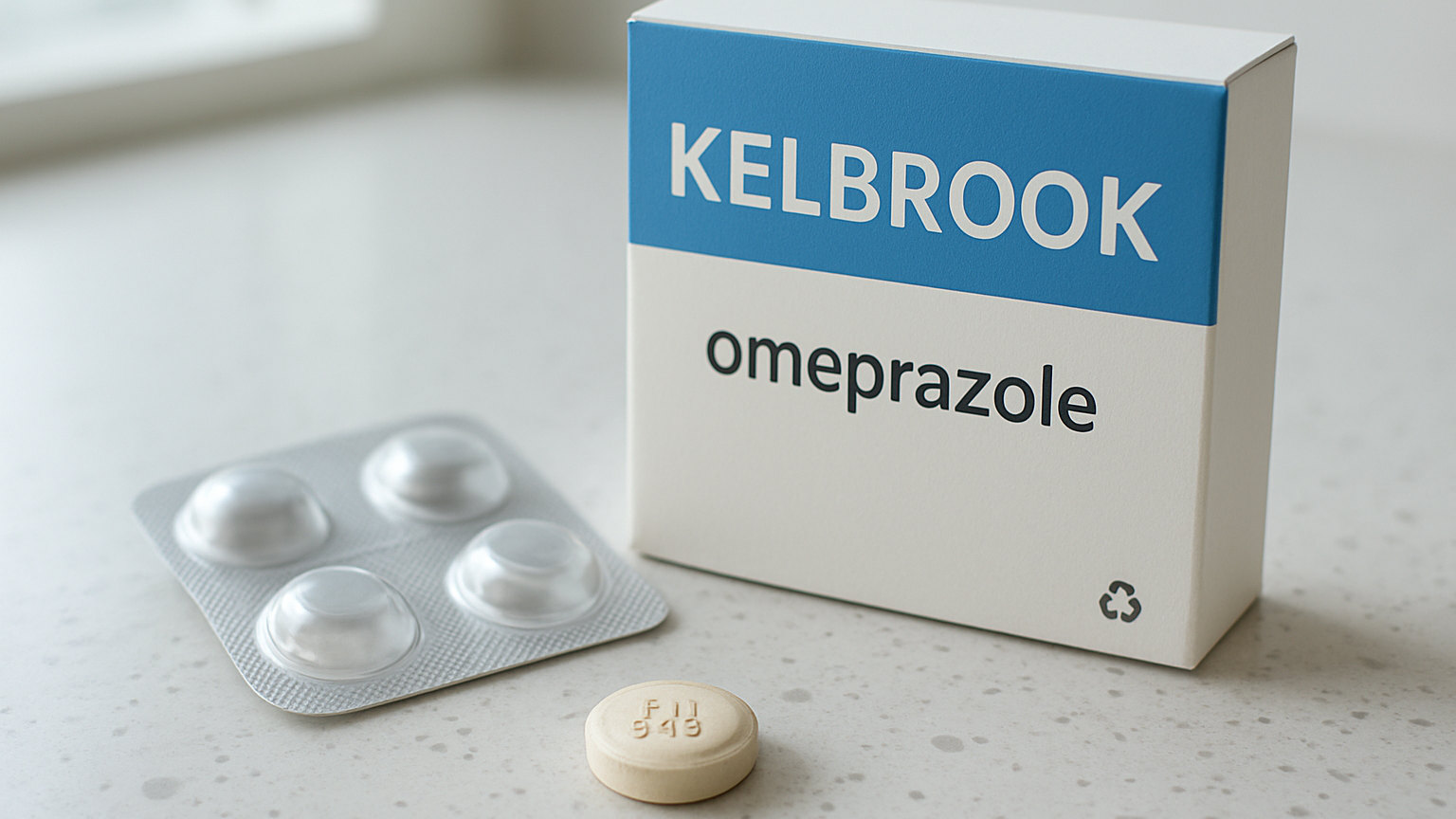
Omeprazole is a proton pump inhibitor - it switches off the pumps in the stomach lining that produce acid, reducing acid production substantially rather than just neutralising what is there. It treats reflux, heals ulcers, and protects the stomach in people who need anti-inflammatory painkillers. It is also among the most commonly continued medicines in the country: started for a four-week course, still on the repeat list a decade later, never revisited.
Follow the instructions on your label. This guide contains no doses.
What it is used for
- Gastro-oesophageal reflux disease - heartburn and acid coming up into the gullet.
- Stomach and duodenal ulcers, both healing them and preventing recurrence.
- Protecting the stomach in people taking anti-inflammatory painkillers long term, or on several medicines that raise bleeding risk - see naproxen and ibuprofen.
- As part of H. pylori eradication, combined with antibiotics - see the penicillins, since amoxicillin is usually one of them.
- Barrett's oesophagus and other specialist indications.
How to take it
Usually before food, commonly thirty to sixty minutes before breakfast. The pumps it blocks are activated by eating, so taking it on an empty stomach shortly beforehand catches them at the right moment.
Taken after a meal it works less well, which is a frequent reason for someone concluding it is not effective.
Capsules should be swallowed whole. If swallowing is difficult, some can be opened and the granules taken in a small amount of soft food - check yours rather than assuming, and see cutting and crushing tablets.
How long it should be taken
For reflux, courses are typically four to eight weeks, then a review. The aim afterwards is usually the lowest effective approach - stopping, stepping down to an as-needed basis, or switching to something weaker.
Continuous long-term use is appropriate for some people: severe oesophagitis, Barrett's, ongoing anti-inflammatory use, and a few other situations. The problem is not long-term use where it is needed - it is long-term use that nobody has examined.
Our guide to deprescribing covers asking for that review, and proton pump inhibitors are the single most common item on the list.
Stopping causes rebound acid
This is why people fail to come off it. Stopping abruptly after months causes a temporary surge in acid production above the original level, producing heartburn that feels like proof the medicine was still needed.
It settles over a few weeks. Reducing gradually, or stepping down to a lower dose or to an as-needed approach first, makes it considerably easier. Discuss it rather than simply stopping and concluding you cannot manage without it.
Long-term effects worth knowing
Most people take omeprazole for years without difficulty. The recognised associations with long-term use are:
- Low magnesium, which can cause cramps, tremor and palpitations and sometimes needs checking.
- Reduced vitamin B12 absorption, since acid helps release it from food - relevant if you are also on metformin, as our guide to metformin notes.
- Reduced iron and calcium absorption.
- A modest increase in fracture risk with prolonged use - see medicines and bone health.
- A raised risk of some gut infections, including C. difficile, because stomach acid is part of your defence against swallowed bacteria.
Each is a reason for periodic review rather than alarm.
Interactions
Omeprazole reduces the effectiveness of clopidogrel, which needs converting to its active form by an enzyme omeprazole inhibits. Where a PPI is genuinely needed alongside clopidogrel, a different one is usually chosen.
It also affects medicines that need stomach acid to be absorbed, and some HIV and antifungal treatments. Tell your prescriber - our guide to medicines and your liver covers the enzyme mechanism behind most of this.
Red flags that need seeing, not treating
See your GP promptly rather than self-treating with an acid reducer if you have difficulty swallowing, food sticking, unintentional weight loss, persistent vomiting, vomiting blood or material like coffee grounds, black tarry stools, or new indigestion starting over the age of 55.
Acid suppression can mask symptoms while something else progresses, which is the main risk of buying it over the counter indefinitely. Our guide to when buying over the counter costs less covers the trade-off.
Why the dose is sometimes doubled then halved
For reflux, a common approach is a higher dose to settle symptoms and heal inflammation, then stepping down to the lowest that keeps you comfortable. That step-down is part of the plan rather than a sign of improvement being withdrawn.
Some people end up on an as-needed approach - a short course when symptoms flare, nothing in between. That works well for mild intermittent reflux and is worth asking about if you are on a daily tablet you are not sure you still need.
What else helps
Smaller meals, not eating late, raising the head of the bed, losing excess weight, and cutting alcohol and smoking all reduce reflux. They are unglamorous and they work, and they are what makes coming off the tablet possible.
If this was useful, Antibiotic Resistance: What It Means for You is worth reading next, and Medicines collects the rest.


