Patches deliver medicine through the skin at a steady rate over hours or days, which suits drugs that need constant levels rather than peaks and troughs. HRT, nicotine replacement, strong painkillers, some Parkinson's and dementia medicines and some heart medicines all come in patch form. Three things cause almost every problem: heat, leaving the old one on, and applying the new one to the same patch of skin.
Follow the instructions on your label. This guide contains no doses.
Heat is the dangerous one
Warming the skin increases blood flow and how much drug is absorbed, sometimes substantially. For a patch delivering a strong painkiller, that can mean a dangerous amount entering the bloodstream over a short period.
Avoid hot baths, saunas, hot tubs, heat pads, electric blankets, sunbeds and direct sun on the patch. Take particular care if you have a fever - a high temperature raises absorption from a patch that was fine yesterday.
This matters most for opioid patches, where overdose can cause dangerously slow breathing. Call 999 if someone with a patch becomes very drowsy, difficult to rouse, or is breathing slowly or noisily, and tell the crew about the patch - our guide to opioid painkillers covers what naloxone does.
Take the old one off
Two patches on at once means a double dose. It sounds obvious and it happens regularly, usually because a patch has worked loose under clothing and gone unnoticed, or because someone forgot which day it was.
Fixes that work: remove the old one before applying the new one, every time, in that order. Write the date on the new patch with a pen. Keep a simple chart. And check the old site afterwards to confirm it actually came off.
If you find an extra patch, remove it and contact your prescriber or 111 for advice rather than assuming it is fine. Our guide to accidental double doses covers the general principle.
Rotating sites
Applying to the same spot repeatedly causes irritation, and skin reactions are the commonest reason people abandon an otherwise suitable treatment.
Use a different site each time and keep a rough rotation going, leaving several days before returning to a spot. Your leaflet will specify which areas are suitable - upper arm, chest, back, abdomen and buttock are common, and they differ by product.
Apply to clean, dry, unbroken skin with little hair. Do not shave first, since that irritates the skin - clip if you must. Avoid skin that is cut, irritated, scarred or recently moisturised, because creams stop the patch sticking.
Applying it properly
- Wash and dry your hands and the site, and do not use soap, oil or lotion on the area.
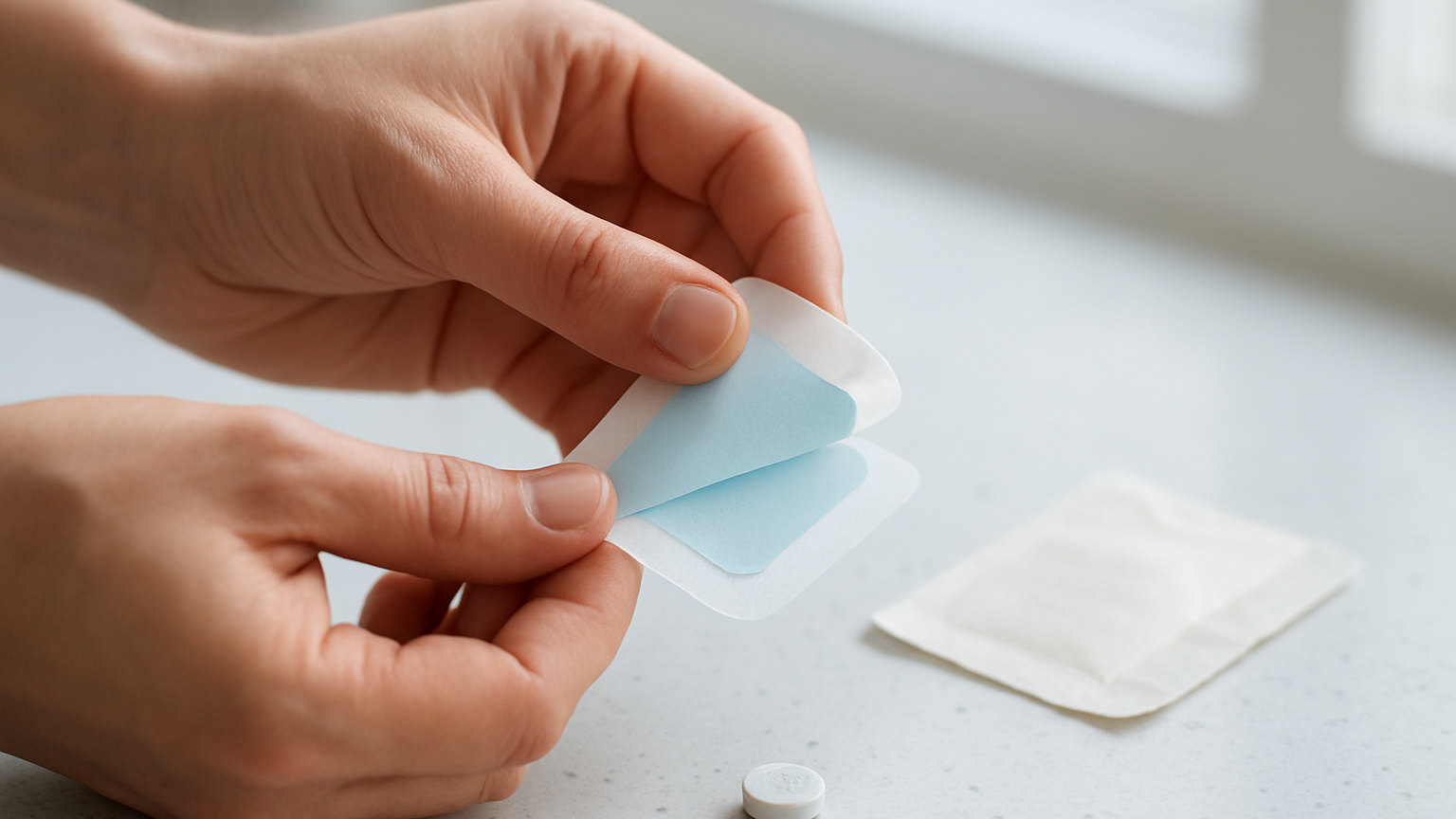
- Open the pouch by tearing, not cutting - scissors can cut the patch.
- Peel the backing without touching the adhesive.
- Press it on firmly with the flat of your hand for around thirty seconds, paying attention to the edges.
- Wash your hands afterwards.
Do not cut a patch in half to halve the dose unless the manufacturer says you may. Many use a reservoir or a rate-controlling membrane, and cutting destroys the mechanism and can release the contents all at once. Our guide to cutting and crushing makes the same point about tablets.
If it falls off
Check the leaflet - the advice differs by product. Generally, if it comes off early you apply a new one to a different site and carry on with your usual change day, rather than shifting the whole schedule.
Swimming, showering and exercise are usually fine. If adhesion is a recurring problem, ask about an overlay dressing rather than taping it down with something random.
Disposal matters more than you would think
A used patch still contains a significant amount of drug. That is the single most important safety point after heat.
Fold it in half with the sticky sides together so the drug-containing surface is sealed inside, then return it to a pharmacy or dispose of it as your leaflet directs. Never leave one where a child or a pet could find it - a used opioid patch stuck to a child's skin or chewed by a dog is a genuine emergency.
Our guides to leftover medicines and keeping medicines away from children cover safe disposal and storage.
Tell people it is there
Mention your patch before an MRI scan - some contain metal backing and must be removed. Tell anyone treating you in an emergency, since a patch is easily missed on examination and changes what is safe to give.
Tell your dentist, surgeon and anaesthetist too. Anyone on a strong painkiller patch should be carrying that information on them, as our guide to warning signs covers.
More on taking medicines day to day in the Usage section, including Trouble Swallowing Tablets: What to Do.