
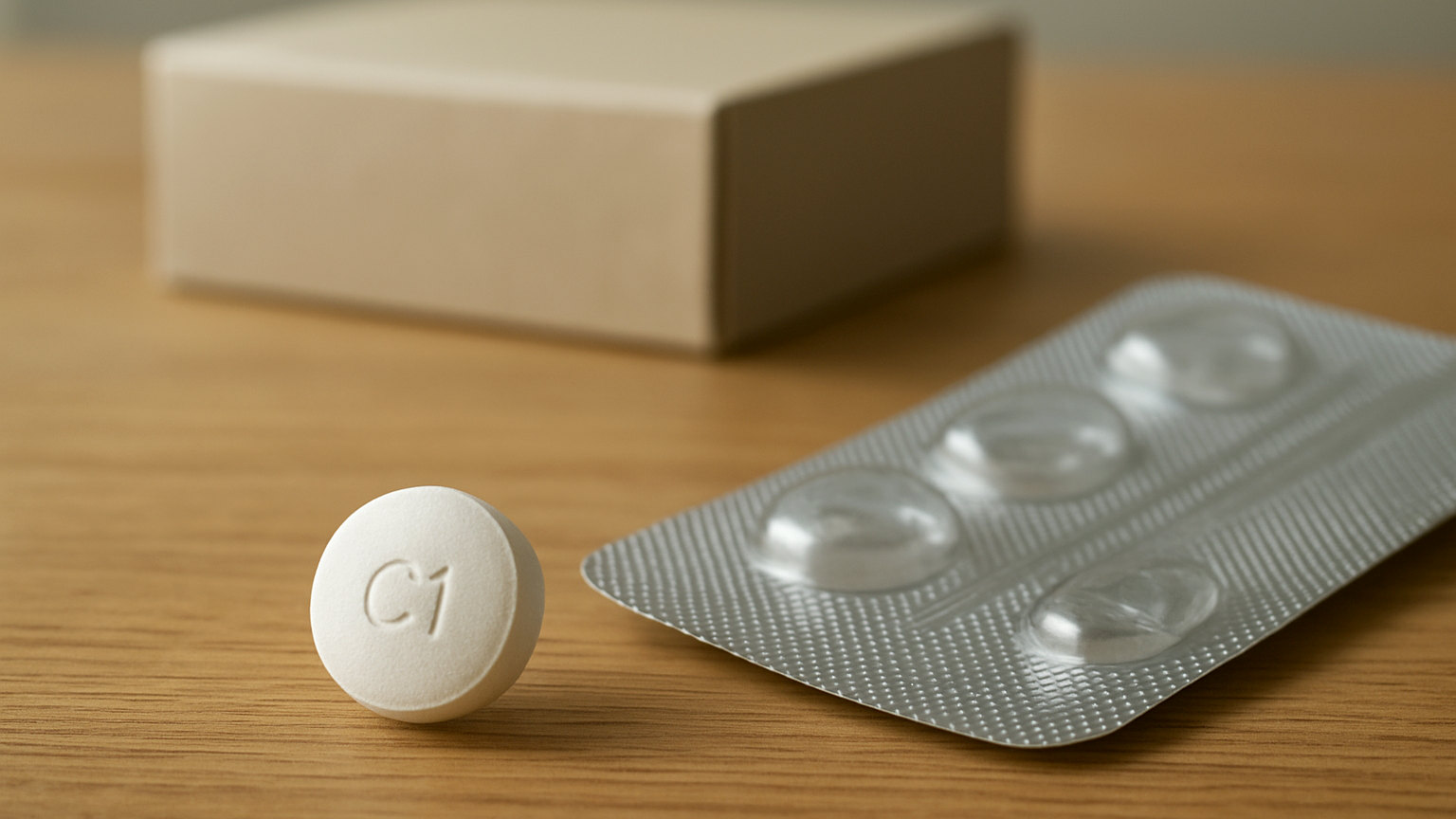
Nabumetone is a non-steroidal anti-inflammatory drug with an unusual arrangement: it is inactive as swallowed. The liver converts it into the active compound after absorption, so the drug never sits in the stomach in its irritant form. That reduces local irritation and is the basis of its reputation as a gentler anti-inflammatory. It does not change the systemic effects, which is where most of the serious harm from NSAIDs actually comes from.
Follow the instructions on your label. This guide contains no doses.
What the prodrug design does and does not do
NSAIDs damage the stomach two ways: by direct contact with the lining, and by blocking the prostaglandins that maintain and repair it. The second mechanism is systemic and happens regardless of how the drug arrives.
Nabumetone removes the first and leaves the second. It is also weakly COX-2 preferential, which helps a little more.
Comparative data suggest a somewhat lower rate of gastrointestinal complications than with older NSAIDs - but ulcers and bleeding still occur, and the same precautions apply.
A proton pump inhibitor is prescribed alongside for anyone at higher risk - over 65, previous ulcer, or also taking aspirin, an anticoagulant, a steroid or an SSRI.
See pantoprazole and meloxicam, which makes a similar claim on different grounds.
Seek urgent help for vomiting blood or material like coffee grounds, black tarry stools, or severe abdominal pain.
Once daily, and slow to clear
The active metabolite has a long half-life, so nabumetone is taken once daily - usually in the evening, which suits morning stiffness.
The other side of that is that it takes days to clear after stopping. If a problem develops - kidney function falling during an illness, or a bleed - the effect persists rather than wearing off overnight.
It also means dose changes take several days to show their full effect.
Kidneys and blood pressure
These effects come from prostaglandin inhibition and are unaffected by the prodrug design.
Nabumetone reduces kidney blood flow, raises blood pressure and causes fluid retention like any NSAID.
The combination of an NSAID with an ACE inhibitor or ARB and a diuretic is a recognised route to acute kidney injury, particularly during illness with dehydration - and the long half-life makes it harder to reverse quickly.
See medicines that affect your kidneys and sick day rules.
It raises lithium levels as other NSAIDs do - see lithium.
The heart
All NSAIDs except naproxen carry some increase in cardiovascular risk.
Nabumetone is avoided in established ischaemic heart disease, cerebrovascular disease, peripheral arterial disease and heart failure, and used cautiously where risk factors exist.
Where heart risk dominates, naproxen has the most favourable profile - see naproxen.
The liver
Because nabumetone depends on the liver to become active, significant liver impairment changes both how much active drug you get and how it is cleared.
It is used cautiously or avoided in liver disease, and liver enzymes are sometimes monitored.
Report jaundice, dark urine or persistent nausea - see medicines and your liver.
Where it is used
Osteoarthritis and rheumatoid arthritis are the licensed indications.
Once-daily dosing suits long-term inflammatory conditions and improves adherence.
For osteoarthritis of the knee or hand specifically, a topical anti-inflammatory is recommended first and gives useful relief with far less systemic absorption - see painkilling gels and patches.
Exercise and weight management do more for osteoarthritis than any tablet, with better evidence behind them than any anti-inflammatory has.
Asthma
Some people with asthma react badly to aspirin and other anti-inflammatories, often alongside nasal polyps.
If an anti-inflammatory has ever worsened your breathing, say so - see montelukast.
Pregnancy
NSAIDs are avoided in pregnancy, particularly from around twenty weeks, because of effects on the fetal kidneys and the ductus arteriosus.
Paracetamol is the usual alternative - see paracetamol.
How long to take it
The principle for all NSAIDs is the lowest effective dose for the shortest necessary period.
They are frequently started for a flare and then continue on the repeat list for years unreviewed, which is where most cumulative harm comes from.
For osteoarthritis, intermittent use during flares often works as well as daily treatment and substantially reduces exposure.
An annual question about whether it is still needed is reasonable - see deprescribing.
Taking it
Once daily, usually in the evening, with or after food and a full glass of water.
Take it when you remember if a dose is missed, unless it is nearly time for the next - and never double up, since the long half-life means the previous dose is still working.
Interactions
Bleeding risk rises alongside anticoagulants, antiplatelets and SSRIs, and it blunts the effect of blood pressure medicines and diuretics.
It raises methotrexate levels - see methotrexate.
If this was useful, Ubrogepant: A Gepant for Acute Migraine is worth reading next, and Medicines collects the rest.


