
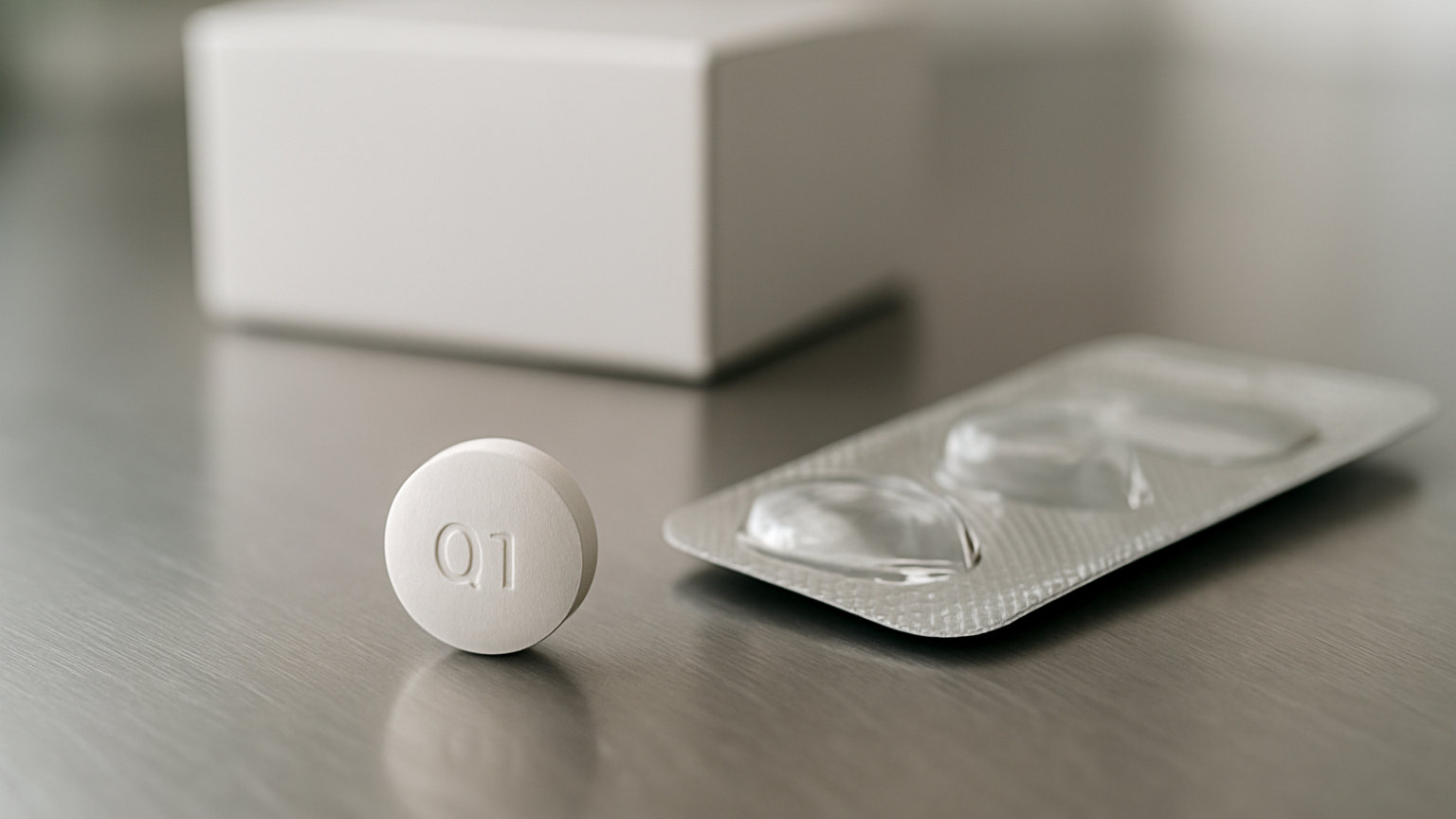
Naproxen is a non-steroidal anti-inflammatory drug, blocking the enzymes that produce inflammatory prostaglandins. It is used for musculoskeletal pain, arthritis, period pain, gout and a range of inflammatory conditions. Among the common anti-inflammatories it occupies a particular position: large analyses consistently find its cardiovascular risk to be the lowest of the group, which is why it is generally preferred where heart or stroke risk is the concern.
Follow the instructions on your label. This guide contains no doses.
Why the heart profile differs
Naproxen inhibits platelet COX-1 more persistently than ibuprofen or diclofenac, which produces a mild antiplatelet effect that appears to offset the prothrombotic tendency other NSAIDs have.
The practical consequence is that where someone with cardiovascular risk factors genuinely needs an anti-inflammatory, naproxen is usually the one chosen.
Diclofenac, by contrast, carries the highest cardiovascular risk and is now contraindicated in established heart and vascular disease - see diclofenac and celecoxib.
That said, no NSAID is risk-free for the heart, and naproxen is still avoided where possible in heart failure and in uncontrolled hypertension.
The stomach is the trade-off
Naproxen's gastrointestinal risk is towards the higher end of the group - the mirror image of its cardiovascular advantage, and for the same reason.
A proton pump inhibitor is frequently prescribed alongside, particularly for anyone over 65, with a previous ulcer, or also taking aspirin, an anticoagulant, a steroid or an SSRI.
See pantoprazole.
Seek urgent help for vomiting blood or material like coffee grounds, black tarry stools, or severe abdominal pain.
Kidneys and blood pressure
All NSAIDs reduce kidney blood flow, raise blood pressure and cause fluid retention.
The combination of an NSAID with an ACE inhibitor or ARB and a diuretic is a recognised route to acute kidney injury, particularly during illness with dehydration.
See medicines that affect your kidneys and sick day rules.
NSAIDs also blunt the effect of blood pressure medicines and of diuretics - see furosemide - and raise lithium levels substantially, which is the commonest drug cause of lithium toxicity. See lithium.
Taking it
Usually twice daily, with or after food. The twice-daily schedule is an advantage over ibuprofen's three or four times.
Take it with a full glass of water, and do not lie down immediately afterwards.
A lower-strength naproxen is available from pharmacies for period pain after a consultation; higher strengths are prescription-only.
Period pain
Naproxen works well for period pain because prostaglandins are directly responsible for the cramping.
It works considerably better started before the pain is established - at the first sign, or the day before if your cycle is predictable - rather than once cramping is severe.
Tranexamic acid helps heavy bleeding and can be taken alongside. Persistently severe period pain, or pain that has changed, deserves assessment rather than escalating painkillers.
Gout
Naproxen is one of the standard treatments for an acute gout attack, alongside colchicine and steroids.
Which suits depends on your other conditions - NSAIDs are avoided in kidney disease, heart failure, ulcer history and alongside anticoagulants, which is often why colchicine is chosen instead.
See colchicine and allopurinol - and note that allopurinol should be continued through an attack rather than stopped.
Asthma
Some people with asthma react badly to aspirin and other anti-inflammatories, often alongside nasal polyps.
If an anti-inflammatory has ever worsened your breathing, say so - see montelukast.
Pregnancy
NSAIDs are avoided in pregnancy, particularly from around twenty weeks, because of effects on the fetal kidneys and the ductus arteriosus.
Paracetamol is the usual alternative. Tell whoever prescribes if you are or might be pregnant.
Modified-release and gastro-resistant forms
Naproxen comes as standard tablets, gastro-resistant tablets designed to dissolve past the stomach, and modified-release preparations.
Gastro-resistant coating reduces local irritation but does not meaningfully reduce serious ulcers and bleeding, most of which come from the systemic prostaglandin effect rather than direct contact - the same point that applies to enteric-coated aspirin. A proton pump inhibitor does reduce that risk; a coating largely does not.
Modified-release tablets must be swallowed whole - see cutting and crushing tablets.
How long to take it
The principle for all NSAIDs is the lowest effective dose for the shortest necessary period.
They are frequently started for a flare and then continue on the repeat list for years unreviewed, which is where most of the cumulative harm comes from.
For osteoarthritis of the knee or hand, a topical anti-inflammatory is recommended first and delivers useful relief with far less systemic absorption - see painkilling gels and patches.
Exercise and weight management do more for osteoarthritis than any tablet.
The Medicines section covers more on how the main families of medicine work - Fentanyl Patches: Why They Need Respect is closely related to this one.


