
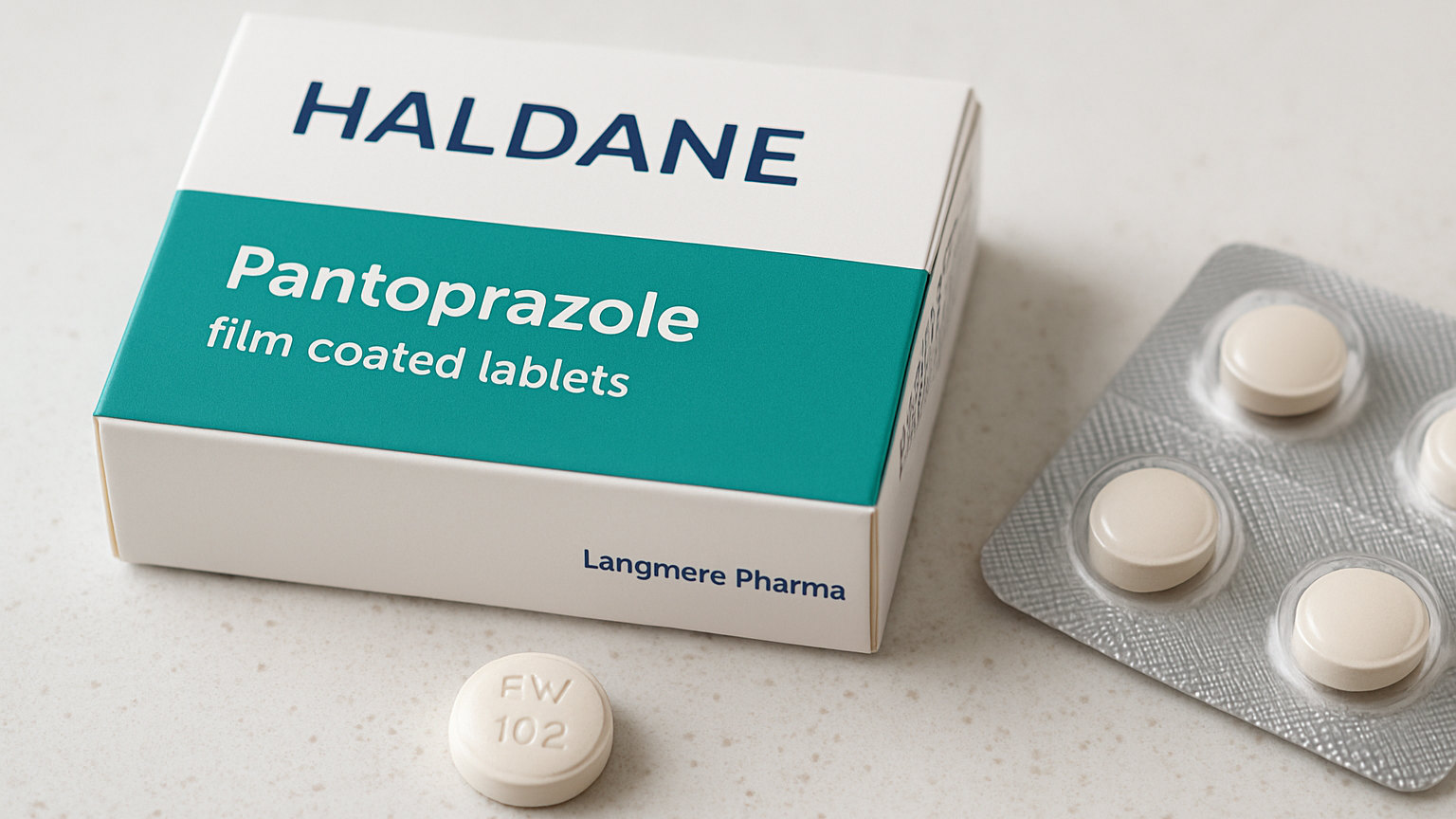
Pantoprazole is a proton pump inhibitor, switching off the pumps in the stomach lining that produce acid. For treating reflux and healing ulcers it performs much like omeprazole, lansoprazole and esomeprazole - the differences in acid suppression between them are small. The reason pantoprazole gets chosen usually has nothing to do with your stomach at all: it inhibits the liver enzyme CYP2C19 far less than the others, so it interferes with fewer medicines.
Follow the instructions on your label. This guide contains no doses.
The clopidogrel problem
Clopidogrel is a prodrug. It has to be converted by CYP2C19 into its active form before it can prevent platelets sticking together.
Omeprazole and esomeprazole inhibit that enzyme appreciably, reducing how well clopidogrel works - which matters, because clopidogrel is usually being taken to prevent a stroke or a further heart attack.
Pantoprazole inhibits it least of the group. So where someone on clopidogrel genuinely needs acid suppression - after a bleeding ulcer, or on several medicines that raise bleeding risk - pantoprazole is the usual choice.
Our guide to omeprazole covers the class, and famotidine covers the alternative mechanism that avoids the issue entirely.
Other interactions it avoids
The same enzyme handles some antidepressants, some anti-epileptics, warfarin and others. Pantoprazole's lighter touch makes it a sensible default for anyone on a long list, where each additional interaction compounds.
It does still share the class effects that come from reducing acid rather than from enzyme inhibition - see below.
What it is used for
- Reflux and oesophagitis
- Stomach and duodenal ulcers, healing and prevention
- Stomach protection alongside anti-inflammatory painkillers - see naproxen and ibuprofen
- H. pylori eradication, with antibiotics
- Zollinger-Ellison syndrome and other rare acid-overproduction conditions
An intravenous form is used in hospital for acute upper gastrointestinal bleeding.
How to take it
Before food, usually thirty to sixty minutes before breakfast. The pumps are activated by eating, so the drug needs to be in the bloodstream when that happens. Taken after a meal it works measurably less well.
Tablets are enteric-coated to survive the stomach and should be swallowed whole - not crushed or chewed. See cutting and crushing tablets.
How long
For uncomplicated reflux, four to eight weeks then a review. Long-term use is appropriate for severe oesophagitis, Barrett's oesophagus, a history of bleeding ulcer, and ongoing anti-inflammatory use.
The problem is not long-term use where it is needed. It is long-term use nobody has examined - and proton pump inhibitors are the single most common item on any deprescribing list. See deprescribing.
Rebound acid on stopping
Stopping abruptly after months causes a temporary surge in acid production above the original level, producing heartburn that feels like proof the medicine was still needed.
It settles over a few weeks. Stepping down - a lower dose, then alternate days, then as needed - makes it far more manageable, and an antacid or alginate can cover the gap. Our guide to lansoprazole covers the step-down approach.
Long-term effects
Shared across the class:
- Low magnesium, causing cramps, tremor and palpitations
- Reduced vitamin B12 absorption - see cyanocobalamin
- Reduced iron and calcium absorption - see calcium supplements, since calcium carbonate needs acid
- A modest increase in fracture risk with prolonged use
- A raised risk of gut infections including C. difficile
Seek advice for persistent diarrhoea, or for cramps and palpitations on long-term treatment.
A rare skin reaction, subacute cutaneous lupus erythematosus, is recognised with PPIs - report any unexplained rash, particularly in sun-exposed areas. See rashes from medicines.
Red flags
See your GP rather than continuing to suppress acid if you have difficulty swallowing, food sticking, unintentional weight loss, persistent vomiting, blood in vomit or black tarry stools, or new indigestion over the age of 55.
Acid suppression masks symptoms while something else progresses - see warning signs you should not ignore.
Esomeprazole and the rest
Esomeprazole is the single active half of omeprazole, in the same way escitalopram relates to citalopram. It is marketed as more potent, and it does suppress acid somewhat more at equivalent doses - but it inhibits CYP2C19 as strongly as omeprazole does, so it offers no interaction advantage.
For most people the differences between all of these are small enough that cost and local formulary decide. The exception is the clopidogrel situation above, where the choice genuinely matters. Our guide to how medicines get their names explains why every "-prazole" is the same family - useful for spotting if two have somehow ended up on one list.
Before tests
PPIs suppress H. pylori and produce false negatives on testing, and they affect endoscopy findings. They are stopped for a period beforehand - follow the interval you are given rather than assuming it does not matter.
Ulipristal: When It Beats the Morning-After Pill covers a related point, and the Medicines section has the rest of these guides.


