
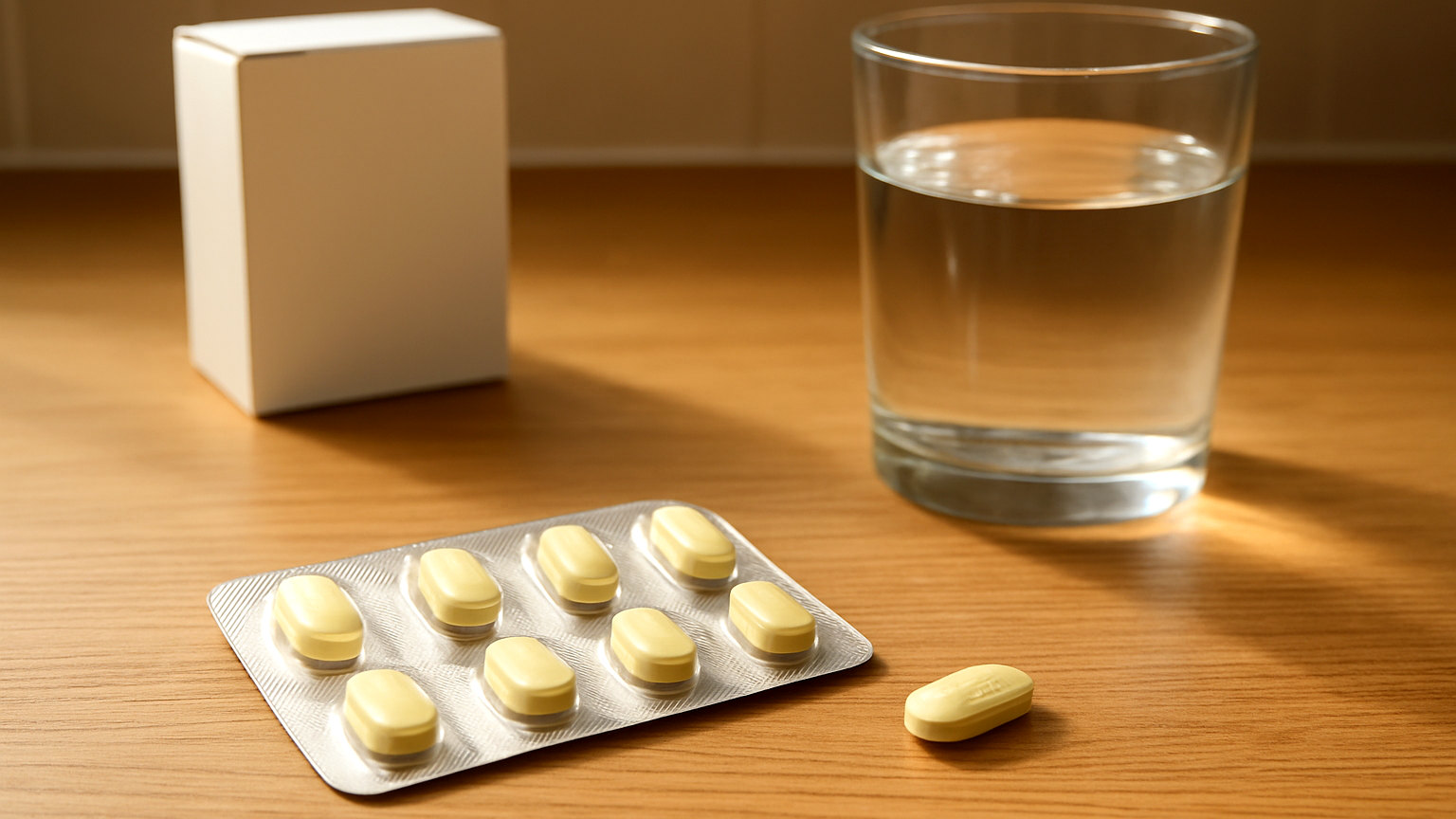
Pravastatin blocks the liver enzyme that makes cholesterol, like every statin. What sets it apart is chemistry: pravastatin is hydrophilic - water-soluble rather than fat-soluble - and it is not metabolised by CYP3A4. It is taken up into the liver by a transporter and excreted largely unchanged. That makes it the least potent statin available, and the one least likely to clash with anything else you take.
Follow the instructions on your label. This guide contains no doses.
Where that matters
Simvastatin and atorvastatin are cleared by CYP3A4, so anything inhibiting that enzyme raises their levels and with them the risk of muscle damage.
Pravastatin sidesteps almost all of it:
- Grapefruit is not a practical problem - see grapefruit and medicines
- Clarithromycin does not force it to be stopped - see clarithromycin
- HIV protease inhibitors and boosters are considerably less problematic - see cobicistat
- Ciclosporin raises pravastatin levels, so the dose is capped - but the combination is usable, which matters after transplant. See ciclosporin.
- Antifungals such as itraconazole are less of an obstacle
For someone on a long or complicated medicines list, that is a real practical advantage - and it is a reason pravastatin is chosen in transplant recipients and in people on HIV treatment.
Rosuvastatin shares some of this advantage while being far more potent - see rosuvastatin.
The trade-off is potency
Pravastatin lowers LDL considerably less than atorvastatin or rosuvastatin at typical doses. It is classed as low to moderate intensity.
For someone needing a large LDL reduction - after a heart attack, or with familial hypercholesterolaemia - pravastatin will not get there alone.
Adding ezetimibe achieves more than pushing any statin dose higher, and that combination is a reasonable route where a more potent statin is not tolerated - see ezetimibe.
Muscle symptoms
Being water-soluble, pravastatin enters muscle cells less readily than the fat-soluble statins, and it has the lowest reported rate of muscle symptoms in the class.
That makes it worth trying for someone who has had muscle problems on other statins - though the honest position is that blinded trials found similar muscle symptom rates on statin and placebo, which suggests expectation contributes considerably.
A supervised trial off and back on establishes cause, and frequently shows the statin was not responsible - which means you keep the benefit. See statins and muscle pain.
Seek advice promptly for severe widespread muscle pain or weakness, particularly with dark urine.
Timing
Pravastatin has a short duration of action, so the liver's overnight cholesterol production means an evening dose works better - as with simvastatin, and unlike atorvastatin and rosuvastatin where timing barely matters.
It can be taken with or without food.
That said, a statin taken every morning beats one taken at bedtime four nights a week - see when to take your statin.
What to expect
Cholesterol falls measurably within two to four weeks, with close to full effect by six. A blood test around three months in checks whether the target reduction was reached.
Ask what your result was and what the target was - the blood test is the only feedback available. See cholesterol numbers.
The benefit you are actually taking it for - reduced heart attack and stroke risk - accrues over years and is never felt, which is why statins are among the most commonly abandoned medicines.
Other points
Liver enzymes are usually checked before starting and a few months in. Mild rises are common and rarely need action.
Statins slightly increase the chance of developing type 2 diabetes, mainly in people already near the threshold - a fair thing to be told rather than discover.
Pravastatin is not taken in pregnancy and is stopped before conception. If you could become pregnant, raise it.
The interactions it does have
Bile acid sequestrants such as colestyramine bind pravastatin in the gut - separate them by several hours.
Fibrates raise muscle risk when combined with any statin, though fenofibrate is safer than gemfibrozil for that purpose - see fenofibrate.
Colchicine combined with a statin raises muscle risk - see colchicine.
Where it sits now
UK guidance favours atorvastatin first for most people, being more potent and inexpensive.
Pravastatin's place is specific rather than general: where interactions rule out the alternatives, where muscle symptoms have been a problem, or where only a modest LDL reduction is required.
If you are on pravastatin and have never been told what your target was, that is the question worth asking.
If this was useful, Evolocumab: Injections When Statins Are Not Enough is worth reading next, and Medicines collects the rest.


