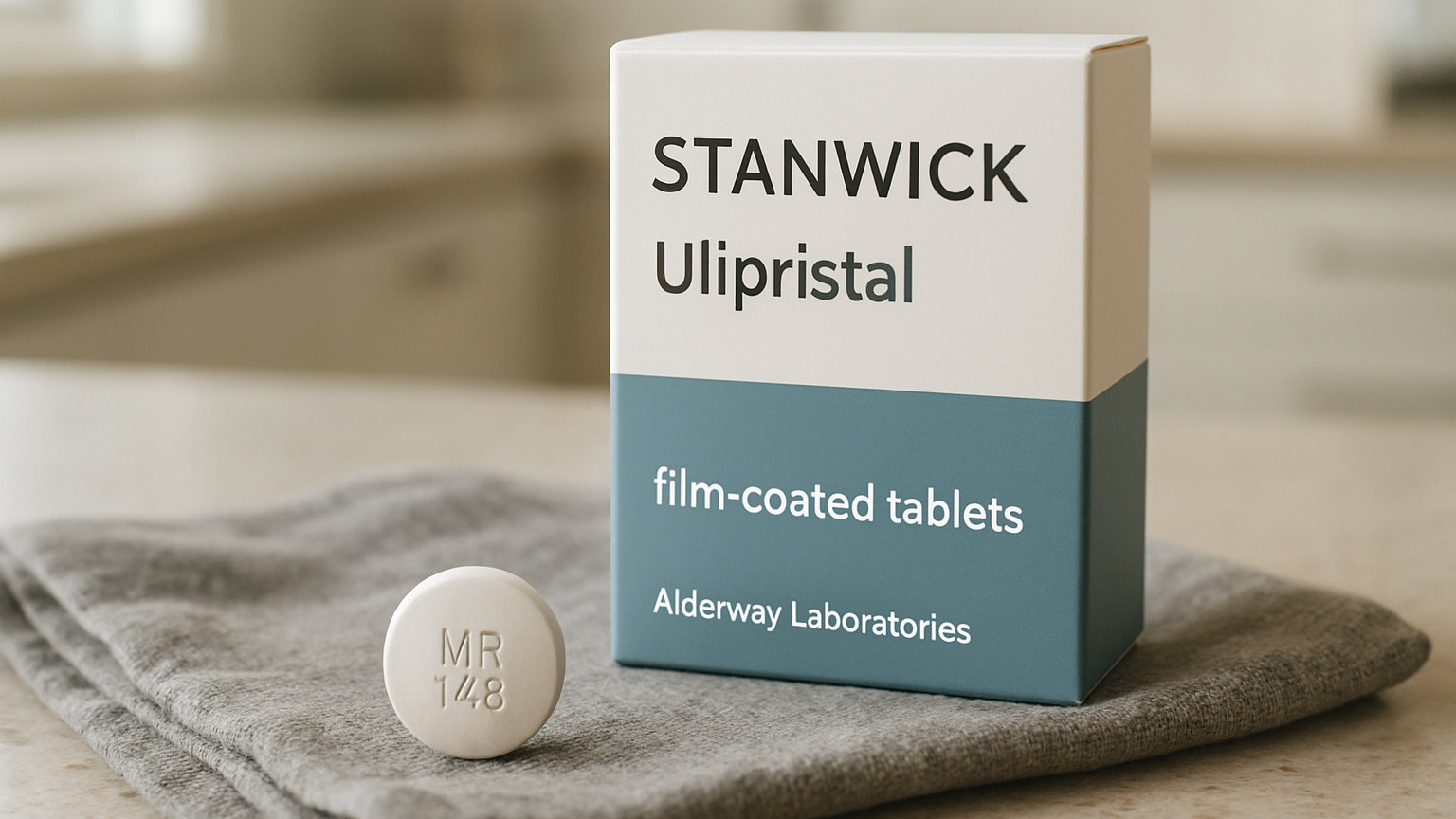
Ulipristal acetate is emergency contraception licensed for use up to 120 hours - five days - after unprotected sex. It works by delaying ovulation, like levonorgestrel, but it remains effective closer to ovulation, which is precisely when the risk of pregnancy is highest. That makes it the better choice in several common situations. The complication is that it interacts with progestogen, which creates a gap in ongoing contraception that has to be covered.
Follow the instructions on your label. This guide contains no doses.
Where it beats levonorgestrel
- More than 72 hours have passed - levonorgestrel is only licensed to 72 hours, ulipristal to 120.
- You are close to ovulation, around the middle of your cycle, where levonorgestrel becomes much less effective and ulipristal still works.
- Higher body weight, where levonorgestrel's effectiveness falls - though ulipristal's may also reduce at higher BMI, less so.
Our guide to levonorgestrel covers the alternative, and the copper coil - which is more effective than either pill and unaffected by weight.
Sooner is still better
Being licensed to five days does not mean day five is as good as day one. Both drugs work by delaying ovulation, and neither works once ovulation has happened.
The licence describes the window in which it can help, not a window in which effectiveness is constant. Take it as soon as you can.
The progestogen problem
This is the part that causes confusion and real failures.
Ulipristal works by blocking progesterone receptors. Progestogen - in the pill, implant, injection or hormonal coil - competes at those receptors and reduces ulipristal's effectiveness.
So two rules follow:
Do not take ulipristal if you have taken progestogen in the previous seven days - including a recent dose of levonorgestrel emergency contraception. Levonorgestrel or a copper coil is the better option then.
Do not restart hormonal contraception for five days after ulipristal. That means five days of condoms or abstinence, plus the usual period needed for the restarted method to become effective - so realistically a couple of weeks of additional precautions.
That gap is where people get caught out, because it is longer than anyone expects and it is often not explained clearly at the counter.
With levonorgestrel you can restart hormonal contraception immediately, which is one practical argument for it if you are on a method you want to resume straight away.
Breastfeeding
After ulipristal, breastfeeding should be avoided for a week - expressing and discarding milk during that period.
Levonorgestrel is compatible with breastfeeding, so it is usually preferred if you are feeding. This is worth raising at the point of asking rather than discovering afterwards.
Medicines that stop it working
Enzyme-inducing drugs reduce ulipristal's effectiveness substantially - rifampicin, several anti-epileptics, some HIV medicines, modafinil and St John's wort.
Unlike with levonorgestrel, a double dose is not recommended for ulipristal in this situation. A copper coil is the advised option.
See carbamazepine and supplements that interfere with your medicines.
Medicines that raise stomach pH, including proton pump inhibitors and antacids, may also reduce absorption - mention them.
Side effects
Headache, nausea, abdominal pain, tiredness, dizziness and a period that arrives early or late. Most settle within days.
If you vomit within three hours, the dose may not have been absorbed - go back for another.
Seek urgent help for severe one-sided abdominal pain, which needs ectopic pregnancy excluded.
Afterwards
It does not protect you for the rest of the cycle, and you can use emergency contraception again if needed - though not ulipristal and levonorgestrel close together, for the reasons above.
Take a pregnancy test if your period is more than a week late or is unusual in any way.
Ulipristal is not an abortion pill. It prevents or delays ovulation and does not end an established pregnancy - a different drug, mifepristone, is used for that, and the two being related in name causes recurring confusion.
Ulipristal for fibroids
Ulipristal is also licensed at a different dose for uterine fibroids, and that use has a separate and more complicated history - cases of serious liver injury led to a suspension, a review, and heavy restrictions on who may take it and what monitoring is required.
None of that applies to the single-dose emergency contraceptive use, where liver injury has not been a signal. But it is worth knowing the two exist, because searching the drug name turns up the fibroid warnings and they are alarming out of context.
Where to get it
Free from sexual health clinics, many pharmacies and GP practices, and available to buy from pharmacies.
The consultation exists to work out which option suits - timing, weight, what contraception you are on, what else you take, and whether a coil would be better. It is worth answering honestly rather than briefly.
It is also a good moment to sort out ongoing contraception - see pharmacy health checks.
If this was useful, Adrenaline Auto-Injectors: How and When to Use One is worth reading next, and Medicines collects the rest.