
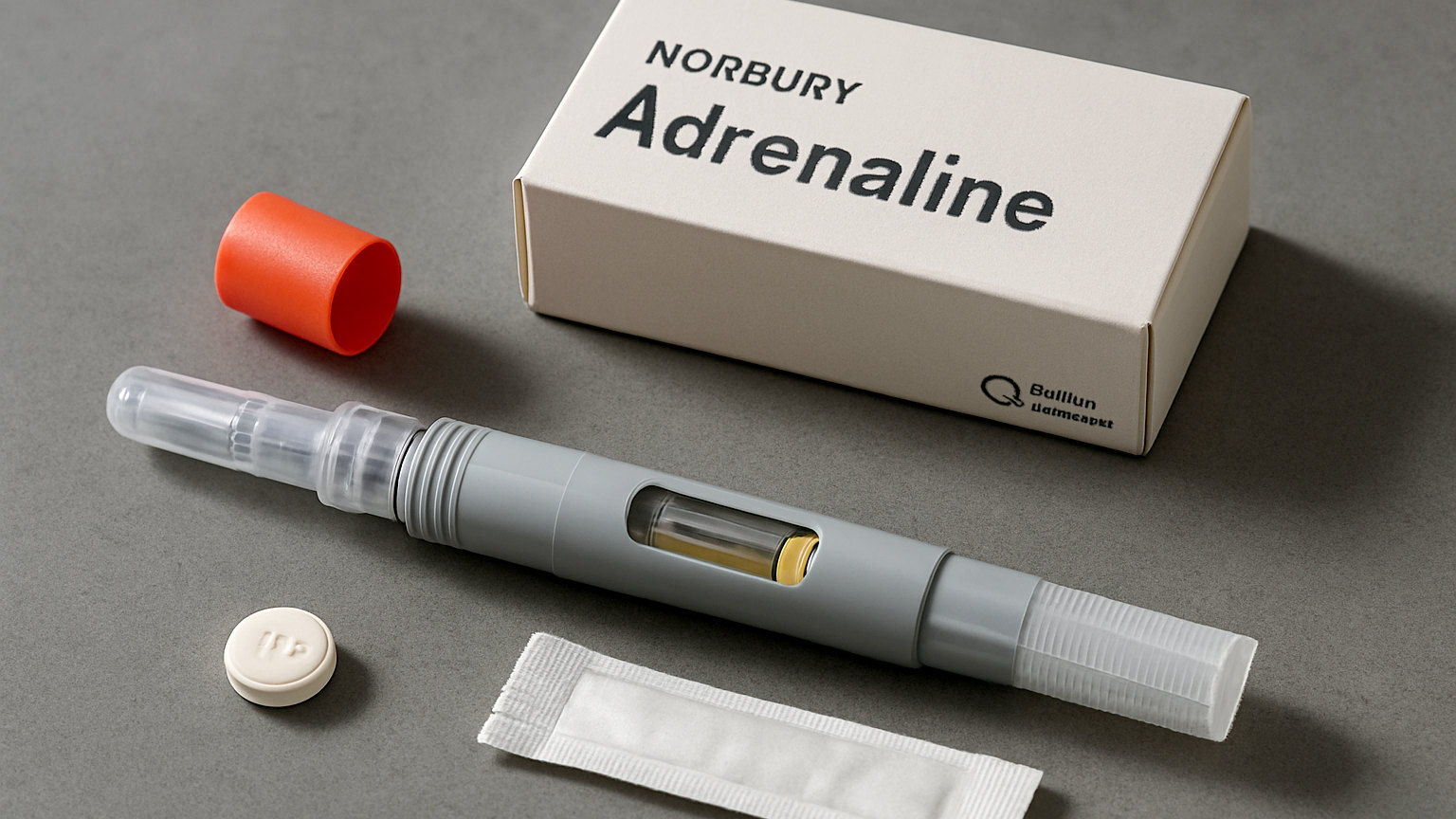
Adrenaline - called epinephrine in the United States - is the only treatment for anaphylaxis. It narrows blood vessels to restore blood pressure, opens the airways, and reduces swelling. Antihistamines and steroids do not do any of that and are not a substitute. The problem in practice is almost never the injection itself: it is hesitation. Adrenaline given when it turns out not to have been needed does far less harm than adrenaline withheld when it was.
Follow the instructions for your specific device. This guide contains no doses.
When to use it
Use it immediately for any of:
- swelling of the lips, tongue, mouth or throat
- difficulty breathing, wheeze, noisy breathing or a hoarse voice
- a tight throat or difficulty swallowing
- feeling faint, dizzy or collapsing
- sudden confusion, or a pale clammy appearance
- persistent severe vomiting or abdominal pain after a known allergen, in someone with a history of anaphylaxis
A rash alone, or itching alone, is usually not anaphylaxis - but if there is any airway, breathing or circulation involvement, give it.
Do not wait to see whether it gets worse. Adrenaline works far better given early, and the people who come to harm are overwhelmingly those in whom it was delayed.
How to use it
- Take the device out and hold it correctly - grip it in your fist, never with a thumb over either end.
- Remove the safety cap.
- Inject into the outer thigh, at right angles to the skin. Through clothing is fine.
- Hold it in place for the number of seconds your device specifies - this differs between brands.
- Remove and massage the site briefly.
- Note the time.
Then call 999 and say "anaphylaxis".
Lie them flat
This matters more than people realise. Lie the person flat with their legs raised, or on their side if vomiting or unconscious. If breathing is difficult they can sit up, but they should not stand.
Standing or sitting suddenly during anaphylaxis has been associated with deaths - blood pressure is already low, and standing empties the heart. Do not walk them to a car.
If there is no improvement after five minutes, give a second injection from a different device, into the other thigh.
Carry two, always
A second dose is needed in a meaningful proportion of reactions, so two devices should be carried at all times - not one at home and one at school.
Devices differ in how they operate and in how long to hold them. If your brand changes, get retrained rather than assuming - see why your tablets look different for why a switch is worth querying.
Expiry
Adrenaline degrades, and an expired device may not deliver a full effect. Check the date regularly and look at the window - if the liquid is discoloured or contains particles, replace it.
Manufacturers run free expiry reminder services by text or email. Registering takes a minute and is worth doing. Our guide to whether medicines really expire covers why this category is different from a box of paracetamol.
Store at room temperature. Do not refrigerate, and do not leave one in a car in summer or winter - see medicines in hot weather.
Go to hospital even if you feel better
Anaphylaxis can return hours after the initial reaction has settled - a biphasic reaction. Everyone who has used adrenaline needs assessment and a period of observation.
Take the used device with you so staff know what was given and when.
Antihistamines and steroids
An antihistamine may help itching and rash. It does nothing for the airway or blood pressure, and taking one is not a reason to delay adrenaline.
Steroids were once given routinely and are no longer recommended as part of initial treatment. Neither replaces adrenaline.
Our guide to anaphylaxis and the first few minutes covers recognition in more detail.
Afterwards
Referral to an allergy clinic should follow a first episode, for identification of the trigger and a written action plan.
Tell schools, workplaces and the people you spend time with where your devices are and how to use them - someone in anaphylaxis may not be able to do it themselves. Training devices without a needle are available free from manufacturers for practice.
Make sure the allergy is recorded accurately on your GP and pharmacy records - see allergy or side effect.
Beta blockers
Beta blockers can blunt the response to adrenaline, making anaphylaxis harder to treat. If you are at risk of anaphylaxis and take one, mention it - see beta blockers.
If this was useful, Famotidine: How It Differs From Omeprazole is worth reading next, and Medicines collects the rest.


