A private prescription is not funded by the NHS, so you pay the actual cost of the medicine plus the pharmacy's dispensing fee. That price is not fixed and varies between pharmacies, sometimes considerably. It can be more than the NHS prescription charge, and for inexpensive generics it can be less. Private prescriptions are used where a medicine is not available on the NHS for your situation, where you have chosen to see a private clinician, or for things the NHS does not fund such as most travel vaccinations and some malaria prevention.
What you actually pay
Two components: the cost of the medicine itself, and a professional fee for dispensing. Neither is regulated, which is why the same prescription can cost noticeably different amounts at different pharmacies.
It is entirely reasonable to ring round and ask for a price before handing the prescription in. Pharmacies are used to this question. For an expensive medicine the difference can be substantial, and for a cheap generic the fee may be the larger part of the total.
In England, if the medicine is an inexpensive generic, a private prescription may come to less than the NHS charge per item - so it is worth asking rather than assuming NHS is always cheaper. Our guide to prescription charges covers the NHS side.
Prescription exemptions and prepayment certificates do not apply to private prescriptions. If you are exempt from NHS charges, that exemption is worth nothing here.
When you would get one
- A medicine not funded by the NHS for your particular indication, or not on the local formulary.
- Travel vaccinations and antimalarials, most of which are not NHS-funded.
- You have seen a private clinician - a private GP, consultant, dentist or online service.
- Medicines for travel or work requirements, such as altitude sickness prevention.
- Some cosmetic or lifestyle treatments.
A private prescription from a registered prescriber is a genuine prescription - the thing that matters is that the prescriber and the pharmacy are regulated, not whether the route was NHS or private. Our guide to who can prescribe covers who is entitled to write one.
What a private prescription looks like
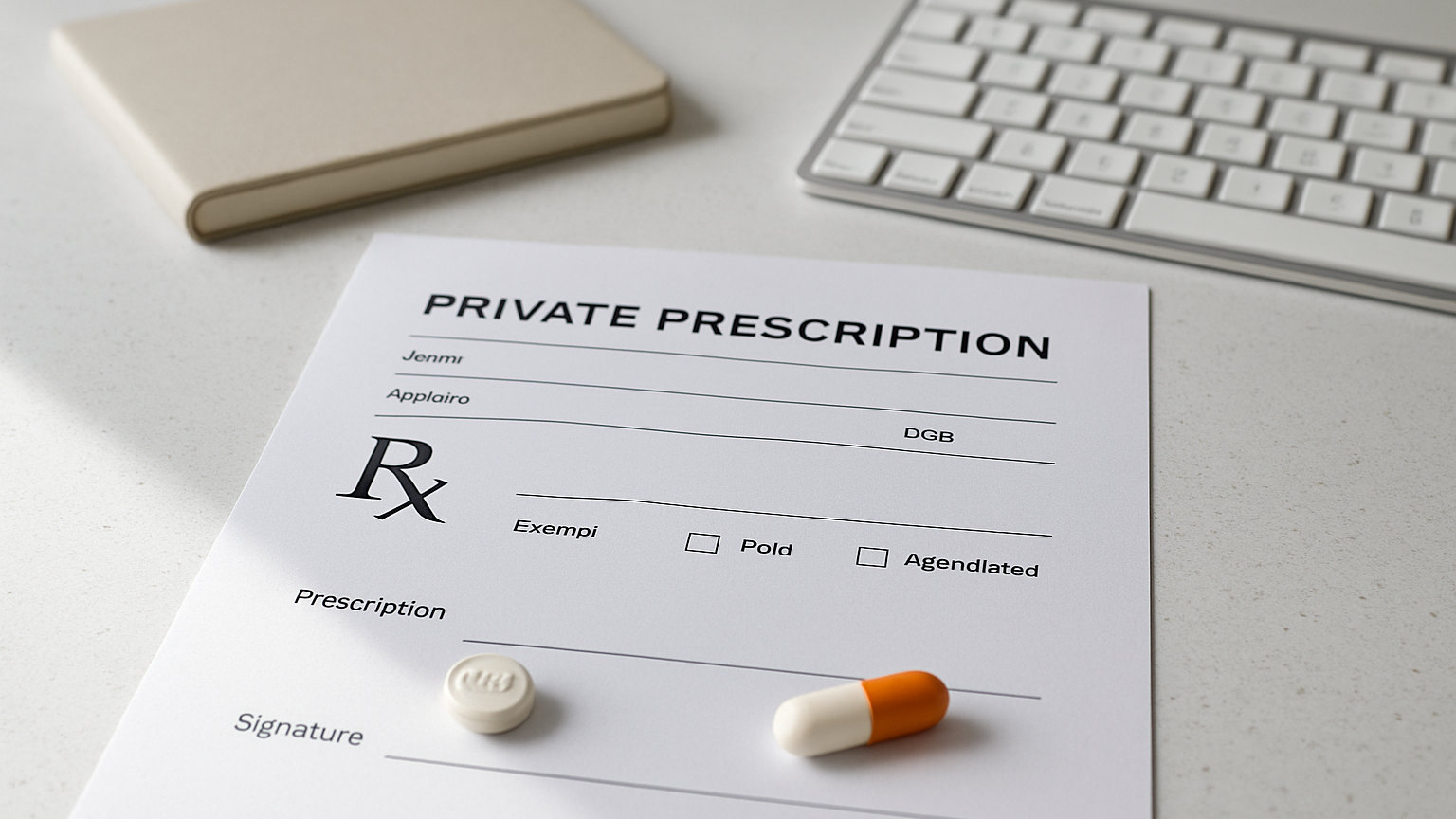
Usually paper rather than electronic, and it must carry the prescriber's details and registration number, your name and address, the medicine, strength, quantity and directions, and the date.
It can be dispensed at any pharmacy - you are not restricted to one connected to the prescriber, and you should not be told otherwise. Private prescriptions for controlled drugs have additional requirements and must be on specific forms.
They have a limited validity period, so do not sit on it. Some are marked repeatable, allowing more than one dispensing.
Getting it onto your GP record
This is the step most often missed and the one that matters most for safety. A private prescription does not automatically appear on your GP record, so your GP and your usual pharmacy may have no idea you are taking it.
That creates a genuine gap in interaction checking. Ask the private prescriber to write to your GP, consent to that sharing, and tell your usual pharmacy what you are taking so their record is complete - our guide to over-the-counter interactions explains why a partial list is the underlying problem in most missed interactions.
Moving between private and NHS
If a private consultant recommends a medicine, your GP may or may not be able to prescribe it on the NHS. It depends on whether it is funded locally for your condition, and on whether your GP is willing to take on the prescribing responsibility - which is a clinical decision, not obstruction.
Shared care arrangements exist for some specialist medicines, where a consultant initiates and the GP continues under an agreed protocol. Where no such arrangement exists, or the medicine is not funded, you may need to continue privately.
Ask the private clinician directly whether their recommendation is likely to be available on the NHS before you start, since discovering otherwise later is expensive and disruptive.
Online private services
Legitimate online prescribing services are private services. The distinction that matters is regulated versus unregulated, not online versus high street - a registered prescriber, a real assessment, and a GPhC-registered pharmacy.
Our guide to checking an online pharmacy is legitimate sets out how to verify one, and our guide to weight loss injections bought online covers the category where unregulated supply is most common.
Before you pay
- Ask the total cost before the prescription is dispensed.
- Ring more than one pharmacy for anything expensive.
- Check whether a cheaper generic version exists.
- Ask whether the medicine is one you will need long term, and what that will cost.
- Make sure your GP is told what you are taking.
The Prescriptions section covers more on prescriptions and pharmacy services - Shared Care: Hospital and GP Prescribing is closely related to this one.