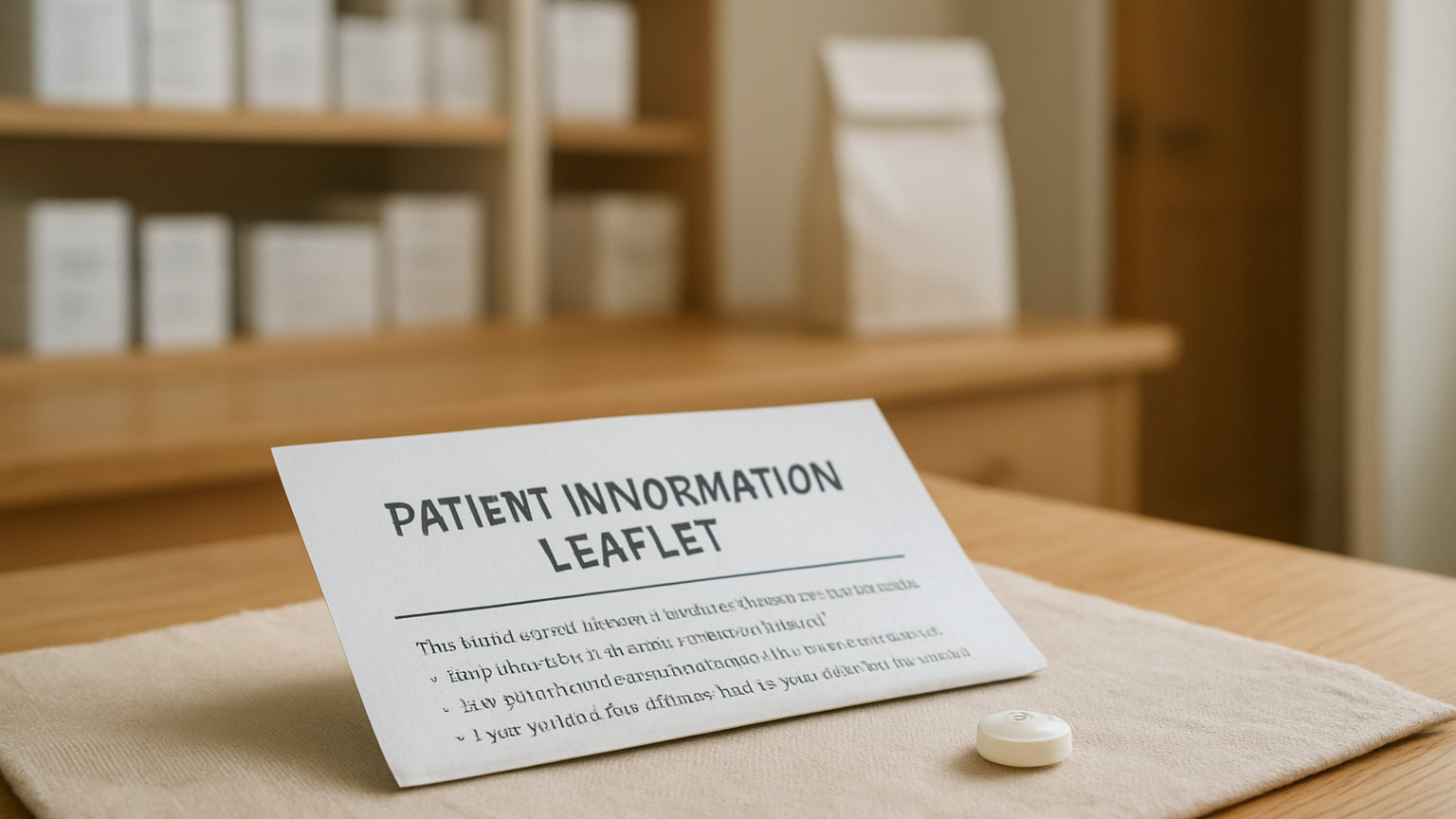
The folded sheet inside the box is a regulated document, written to satisfy medicines law as much as to inform you. That explains why it lists every effect ever reported, hedges everything, and devotes more space to remote possibilities than to how to actually take the thing. Read selectively and it becomes genuinely useful. Read it as a prediction of what will happen to you and it becomes a reason not to start.
The side effect list is not a forecast
It is a record of everything reported during trials and afterwards, whether or not the medicine caused it.
Trial participants report headaches, colds and aches at similar rates whether they took the drug or a placebo - and much of that appears in the leaflet.
The frequency categories are what make the list interpretable:
- Very common - more than one person in ten
- Common - between one in ten and one in a hundred
- Uncommon - between one in a hundred and one in a thousand
- Rare - between one in a thousand and one in ten thousand
- Very rare - fewer than one in ten thousand
Something listed as very rare has been reported in a handful of people out of tens of thousands. Reading it with the same weight as a very common effect is the mistake almost everyone makes.
Expectation genuinely influences experience, so reading a list of symptoms before starting makes reporting them more likely - which is a reason to read the useful sections first.
The sections worth reading
How to take it. With or without food, what to avoid taking it alongside, whether it can be crushed, what to do about a missed dose. This is the part that determines whether the medicine works.
Before you take this medicine. Conditions where it is unsuitable, and other medicines that interact. If something here applies to you, that is worth a phone call.
When to seek help. The specific warning signs, usually near the start of the side effects section. These are the sentences to remember.
Storage. Fridge requirements, and in-use expiry once opened - eye drops, insulin and liquid antibiotics all have their own clock.
See questions to ask about a new medicine and how to tell if a medicine has gone off.
Why your condition may not be mentioned
A common and alarming discovery.
The leaflet describes the licensed uses - the ones the manufacturer submitted evidence for. Prescribing outside that is off-label, entirely legal, and extremely common, particularly in children and in palliative care.
Amitriptyline for nerve pain, propranolol for migraine prevention and many paediatric doses are all off-label with good evidence behind them.
So a leaflet that does not mention your condition is not evidence of an error.
See off-label and unlicensed prescribing.
Other things that cause alarm and should not
The excipient warnings. Statements about lactose, sodium, sugars and alcohol are required where present, and most are irrelevant unless you have the specific condition named.
The black triangle. An inverted triangle means the medicine is under additional monitoring and that all suspected reactions should be reported. It is not a warning about the medicine.
Foreign packaging with an English label. Usually a legitimate parallel import - and you are entitled to an English leaflet if one is missing.
See black triangle medicines and parallel imports and foreign packaging.
What the leaflet will not tell you
It describes the medicine, not your situation.
It will not say why you are taking it, how it fits with everything else on your list, how long you should take it for, what monitoring you need, or what the alternatives were.
It is generic by design, and the pharmacist and prescriber fill those gaps.
See medication reviews.
Getting one you can read
The print is small, which defeats a lot of people.
Pharmacies can supply large print leaflets and labels on request, and can record the preference so it happens every time.
Leaflets for all UK medicines are available online, where you can enlarge the text, and many packs now carry a code linking to the digital version.
Easy-read and translated versions exist for many common medicines.
See using a pharmacy with a disability and how to read a medicine label.
Read the label as well
The pharmacy label on the box is specific to you and overrides the general leaflet where they differ - in dose, in frequency, or in duration.
If the two genuinely conflict in a way that matters, ring the pharmacy rather than choosing between them.
Keep it
Leaflets get thrown away with the outer carton and then wanted at two in the morning.
Keep it with the medicine, or note where to find the digital version.
And if a leaflet prompts a question, ask rather than deciding - see what your pharmacist can do.
More on prescriptions and pharmacy services in the Prescriptions section, including Getting Vaccinated at a Pharmacy.