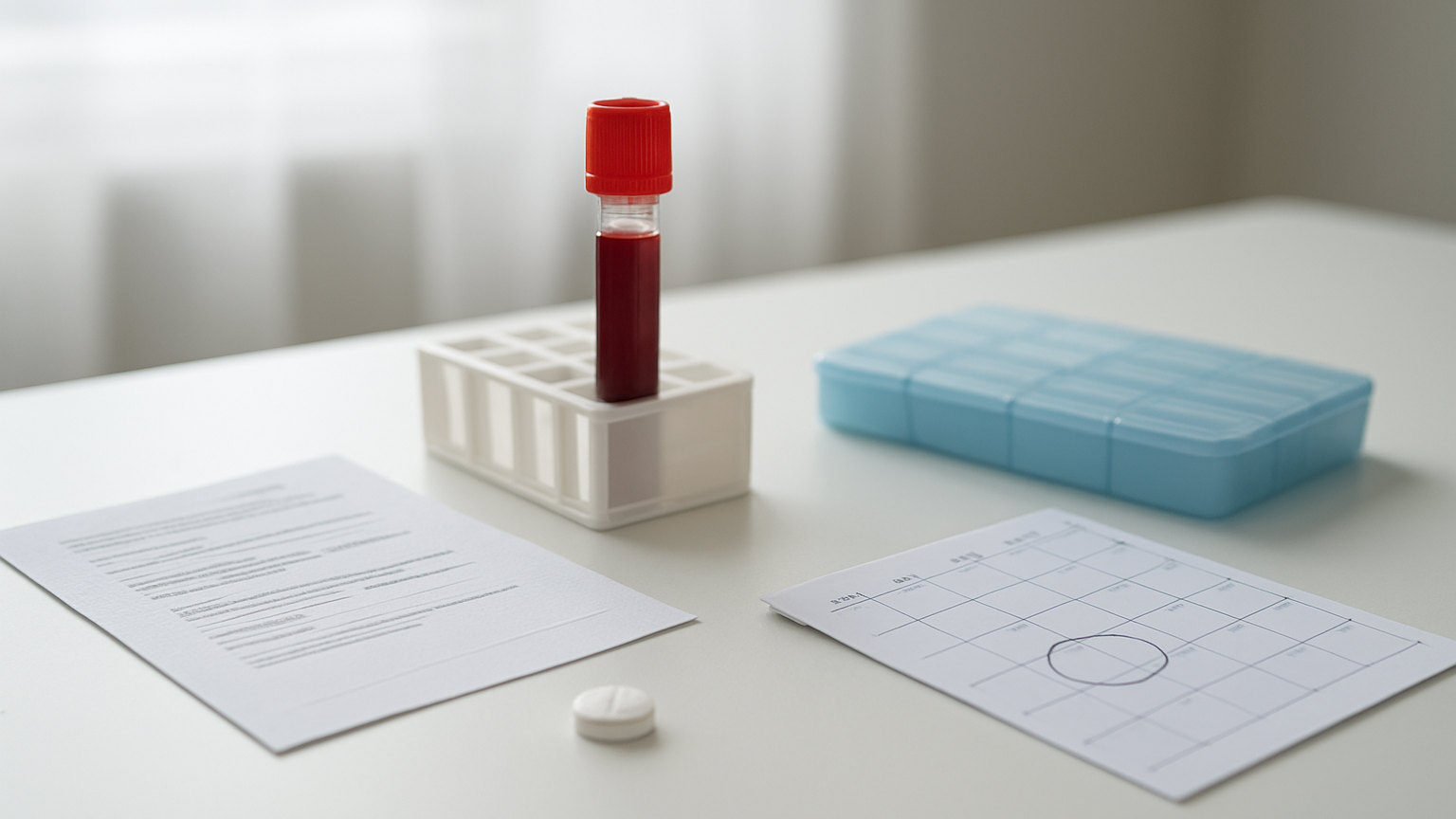
Fertility is affected by a range of medicines, in both men and women, and the effects differ enormously - some are fully reversible within months, some require a defined gap before conception, and a few are permanent. The common thread is timing: nearly all of this is manageable if raised before treatment starts, and considerably less so afterwards.
Raise it early
If you might want children at some point, say so when a long-term treatment is being started - not when you begin trying.
That allows a different drug to be chosen where one exists, fertility preservation to be arranged where it is needed, and the timing of any required gap to be planned.
This applies to men as much as women, and men are asked far less often.
Effects that reverse
Sulfasalazine reduces sperm count and motility in a large proportion of men taking it, and it is fully reversible - typically within a few months of stopping or switching to mesalazine. It is one of the commonest reversible drug causes of male infertility and is frequently not considered.
Opioids suppress testosterone in men and affect hormones in women, reducing libido and fertility. Long-term use is the issue, and it reverses on reducing or stopping.
Antipsychotics that raise prolactin - risperidone most of all - cause absent periods, reduced fertility and sexual dysfunction. Prolactin can be measured, and switching to a prolactin-sparing drug such as aripiprazole frequently resolves it.
Anabolic steroids and testosterone suppress the body's own production and sperm output, sometimes profoundly. Recovery is usual but can take many months, and is not guaranteed after prolonged high-dose use. This is a significant and under-recognised cause of male infertility.
Anti-inflammatory painkillers taken around ovulation can interfere with egg release, which is a reason to avoid them when trying to conceive.
See risperidone and mesalazine.
Where a gap before conception is required
Several medicines need stopping a defined period before trying, because of effects on the developing baby rather than on fertility itself.
Methotrexate requires effective contraception during treatment and a gap before conception, for women and men.
Isotretinoin, governed by a Pregnancy Prevention Programme, requires contraception during and after treatment.
Mycophenolate, with strict requirements for both partners.
Leflunomide, which persists for a very long time and may require a washout procedure to clear it.
The specific intervals vary and change as evidence develops, so ask rather than relying on anything remembered.
See methotrexate and isotretinoin.
Where effects may be permanent
Chemotherapy, particularly alkylating agents, can cause permanent infertility in both sexes, with risk depending on the drug, the dose and the age at treatment.
Radiotherapy to the pelvis or whole body.
Cyclophosphamide, used for cancer and for some severe autoimmune conditions.
Fertility preservation - sperm banking, egg or embryo freezing, and in some cases ovarian tissue freezing - should be discussed before treatment starts, and NHS funding exists for this in defined circumstances.
If you are facing treatment that may affect fertility and nobody has raised preservation, ask. It cannot be done retrospectively.
Medicines and pregnancy are a separate question
Being able to conceive is not the same question as which medicines are safe during pregnancy.
Some medicines that do not affect fertility must not be taken in pregnancy - ACE inhibitors, ARBs, valproate and topiramate among them - and those need planning too.
Do not simply stop a medicine on finding out you are pregnant. For epilepsy, serious mental illness, asthma, diabetes and transplant, stopping is considerably more dangerous than continuing.
See getting the right medicine in pregnancy.
Contraception while taking them
Where a medicine requires contraception, the method matters.
Enzyme-inducing medicines - carbamazepine, rifampicin, St John's wort - reduce the effectiveness of hormonal contraception, so a method unaffected by them may be needed.
GLP-1 weight-loss medicines can reduce absorption of oral contraception through delayed stomach emptying.
Ask specifically which methods remain reliable alongside your treatment.
See desogestrel and tirzepatide.
Before you start trying
Ask for a preconception medicines review. It is one of the most useful appointments available and is rarely offered unprompted.
Bring everything, including supplements and anything bought online - anabolic steroids in particular are worth being honest about, since they are a common and reversible cause.
Start folic acid before conception, with a higher dose advised for some people.
And if you have been trying without success, review the medicines list as part of the investigation rather than after it.
See folic acid and medicines and sexual side effects.
Related reading: Medicines and Your Skin Over Time, with more on side effects and safety in Side Effects.