Steroid tablets such as prednisolone taken for more than a short course suppress your body's own production of cortisol. Stop abruptly and the adrenal glands cannot immediately resume making it, which can cause adrenal crisis - a serious, potentially fatal drop in blood pressure and blood sugar. This is why steroids are reduced gradually rather than stopped, why you are given a steroid card, and why the dose may need increasing during illness rather than pausing.
Never stop steroid tablets on your own. The reduction plan must come from your prescriber and is tailored to how long you have taken them and at what dose.
Why the body stops making its own
Cortisol production is controlled by a feedback loop between the brain and the adrenal glands. When steroid medicine supplies cortisol-like activity from outside, the brain detects sufficient levels and reduces its signal to the adrenals. Over weeks, the adrenals become underactive through disuse.
Recovery is slow. The loop can take weeks or months to return to normal after prolonged treatment, and during that window your body cannot mount the extra cortisol response that illness, injury or surgery demands. That gap is where adrenal crisis happens.
Adrenal crisis: what to look for
Seek emergency help - call 999 - for severe weakness or collapse, severe vomiting or diarrhoea with inability to keep fluids down, confusion or drowsiness, severe abdominal or back pain, or very low blood pressure with dizziness.
Earlier warning symptoms of steroid withdrawal include profound fatigue, aching muscles and joints, nausea, loss of appetite, light-headedness on standing, low mood and fever. These can be mistaken for the original condition returning, or for a virus.
If you are on or recently off steroids and become unwell, say so immediately to whoever is treating you. It changes the management.
Sick day rules
Anyone on long-term steroids should have been given rules for illness - usually that the dose is increased temporarily during a significant infection, injury or surgery, and that emergency treatment is needed if you cannot keep tablets down.
This is the opposite instruction to the one for several other medicines, which are paused during dehydrating illness. Our guide to sick day rules covers both directions, and it is worth being clear which applies to each of your medicines.
If nobody has given you steroid sick day rules, ask. It is one of the more important gaps to close.
Your steroid card
Carry it. It tells any clinician treating you that you take steroids, which changes what they do in an emergency, before surgery, and during serious illness.
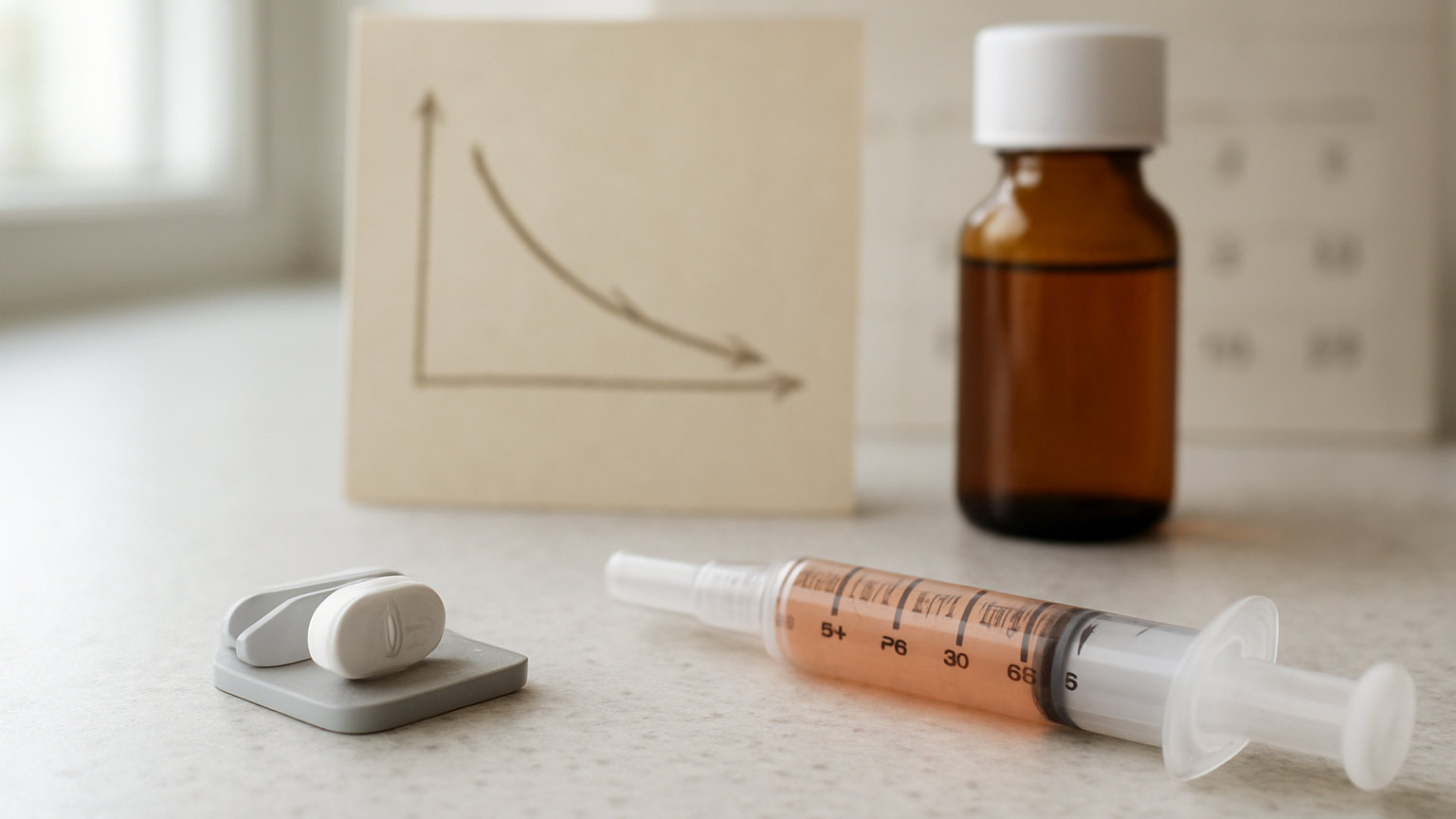
Some people also carry an emergency injection kit and are taught to use it. If you have one, make sure the people around you know where it is and how to give it, and check the expiry.
Tell every dentist, surgeon and hospital team. Do not assume it has carried across from your GP record - our guide to monitoring long-term medicines covers what else should be tracked.
How a reduction works
The principle is stepping down slowly enough for the adrenals to resume production, with time at each step. How slowly depends on the dose, how long you have taken it, and how you respond - and the final stages, at lower doses, are often the slowest because that is where the body's own production has to take over.
Two things commonly happen during a reduction and are worth expecting. The condition being treated may flare as the dose comes down, which is a different problem from withdrawal and is managed differently. And withdrawal symptoms may appear even when the reduction is appropriate.
If a step is difficult, the usual answer is to hold there longer rather than push through. Tell your prescriber rather than adjusting it yourself - our guide to why you cannot just stop some medicines covers the general pattern.
Short courses are different
A short course of a few days - for an asthma flare or a COPD exacerbation - can often be stopped without tapering, because the suppression has not had time to develop. Follow what you were told rather than assuming, since it depends on the dose and on whether you have had repeated courses.
Repeated short courses do accumulate risk, which is one reason frequent rescue pack use should prompt a review of your regular treatment - see our guide to what to do when your asthma gets worse.
Other things to know about long-term steroids
They raise blood sugar, raise blood pressure, increase infection risk, thin the skin, and reduce bone density over time - which is why people on long-term steroids are often prescribed bone protection and have monitoring arranged.
They also increase the risk of stomach ulceration, particularly alongside anti-inflammatory painkillers, so those combinations are avoided where possible. Our guide to naproxen and ibuprofen covers that interaction.
None of this is a reason to stop taking them. It is a reason to be on the lowest dose that controls your condition, for the shortest period that works - and to have that reviewed rather than left running.
The Side Effects section covers more on side effects and safety - Coming Off Opioid Painkillers is closely related to this one.