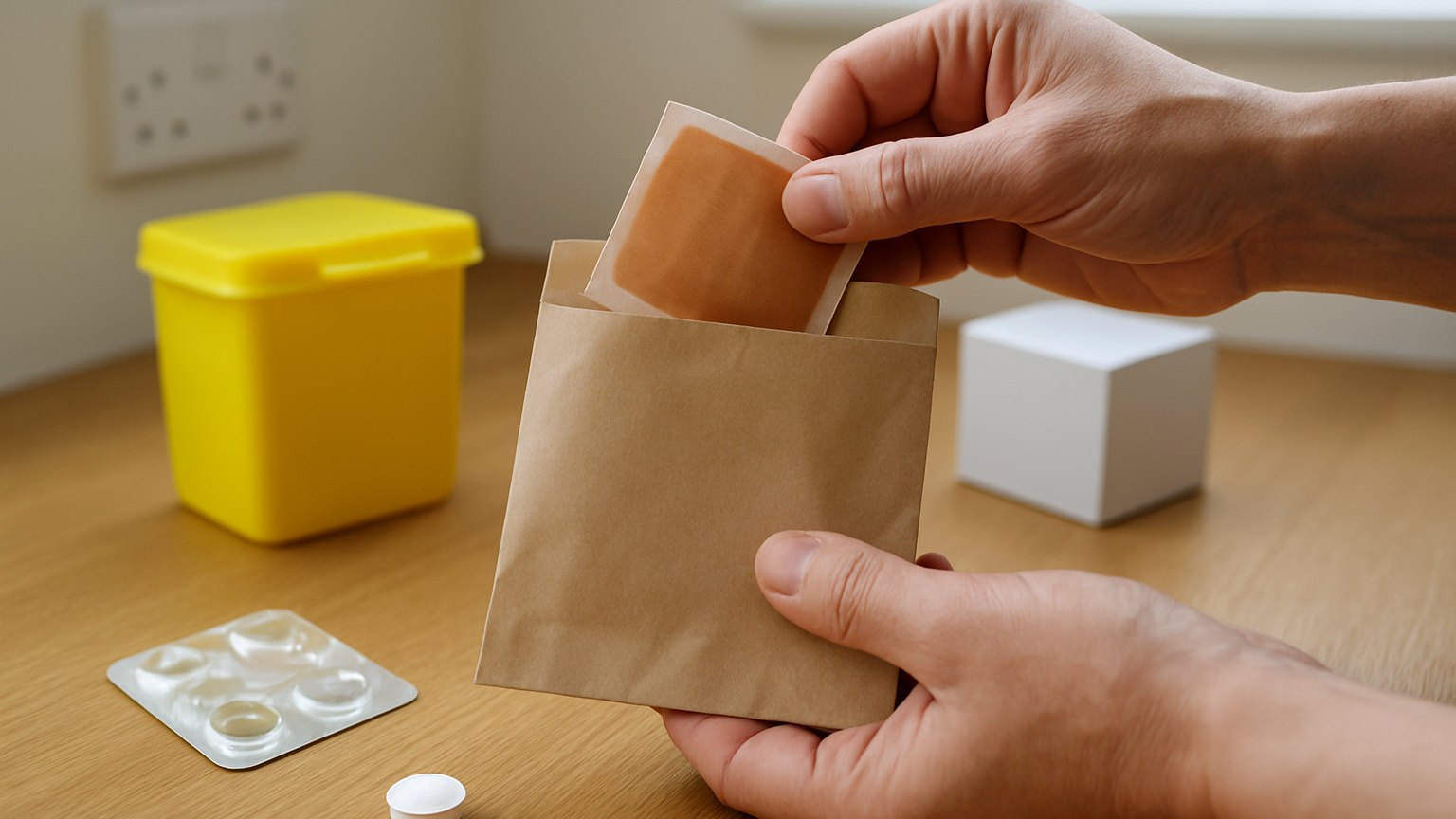
Needles, pen needles, lancets, syringes and anything else with a sharp point must go into a purpose-made sharps bin, never into household or recycling waste. A used needle in a bin bag is a real injury risk to refuse collectors and to anyone else handling it, and it can transmit blood-borne infection. Sharps bins are usually provided free through your GP practice, specialist team or pharmacy, and collection is arranged through your local council or the service that supplied it.
Getting a bin
Where sharps bins come from varies by area, which is the main source of confusion. The usual routes are your GP practice, the specialist team that started your treatment - diabetes, fertility, rheumatology - or your pharmacy, which may dispense one on prescription.
Some local authorities run a clinical waste service that supplies bins and collects them. If you are not sure, ask your pharmacist or ring your council's waste department; both deal with this routinely.
Do not improvise. Drinks bottles, coffee jars and plastic tubs are not acceptable - they can be crushed, they puncture, and they are not recognisable to whoever handles them.
Using it safely
- Assemble the lid properly when you first get it, and check it clicks into place.
- Drop the sharp straight in immediately after use - do not put it down first.
- Do not re-cap needles. Recapping is one of the commonest causes of needlestick injury.
- Do not push things down or reach in to make space.
- Fill only to the marked line, usually around three-quarters. Overfilled bins cannot be closed safely.
- Close the lid fully when it reaches the line - most have a temporary closure for between uses and a permanent one for disposal.
- Keep it upright, out of reach of children and away from heat.
Whole pens and devices with the needle still attached can usually go in, but check the bin size. Pen bodies without needles are not sharps and can often be returned to a pharmacy instead, as our guide to leftover medicines explains.
Getting it collected
Arrangements differ. Many councils collect from home on request, often free for domestic clinical waste. Some areas require you to return the bin to the pharmacy or practice that supplied it. A few have designated drop-off points.
Arrange collection before the bin is completely full rather than after, since there is often a wait. And do not start a second container in the meantime - ask for a replacement bin when you request the collection.
Travelling
Small travel sharps containers exist and are worth having. Airlines and airport security permit needles and pens with documentation - carry a copy of your prescription or repeat list, and keep everything in labelled packaging, as our guide to flying with prescription medicines covers.
Do not leave used sharps in hotel bins. Bring them home in a travel container, or ask a local pharmacy - in many countries pharmacies will accept them.
If someone is injured by a needle
Needlestick injuries are usually low risk but should always be dealt with properly.
- Encourage the wound to bleed gently - do not scrub or suck it.
- Wash thoroughly under running water with soap.
- Cover with a waterproof dressing.
- Seek medical advice the same day - contact 111, your GP, or go to A&E, particularly if the needle was used by someone else or found discarded.
Assessment may include checking your hepatitis B vaccination status and, depending on circumstances, further precautions. Time matters, so do not wait to see how it feels.
If you find a discarded needle in a public place, do not pick it up. Report it to your local council, which has a team for exactly this.
What counts as a sharp
Anything that could puncture skin: needles of any kind, pen needles, lancets, syringes with needles attached, and the sharp fragments of a broken glass ampoule. Auto-injectors that have been fired count, since the needle is exposed.
Things that do not need a sharps bin include empty pen bodies without needles, inhalers, blister packs and tablet bottles. Those go back to a pharmacy or into ordinary recycling as appropriate. If you are unsure about an item, put it in the sharps bin - over-caution costs nothing here.
Who this applies to
More people than expect it. Anyone using insulin or a GLP-1 injectable for diabetes or weight management, blood glucose lancets, injectable treatments for rheumatoid arthritis, multiple sclerosis or osteoporosis, fertility injections, anticoagulant injections, adrenaline auto-injectors after use, and B12 injections given at home.
If you have been given an injectable treatment and nobody mentioned sharps disposal, ask - it is a routine question and the arrangements should have been set up when the treatment started. Our guide to starting insulin covers the other practicalities that tend to be covered quickly at the first appointment.
Clearing Out Medicines After a Death covers a related point, and the Usage section has the rest of these guides.