
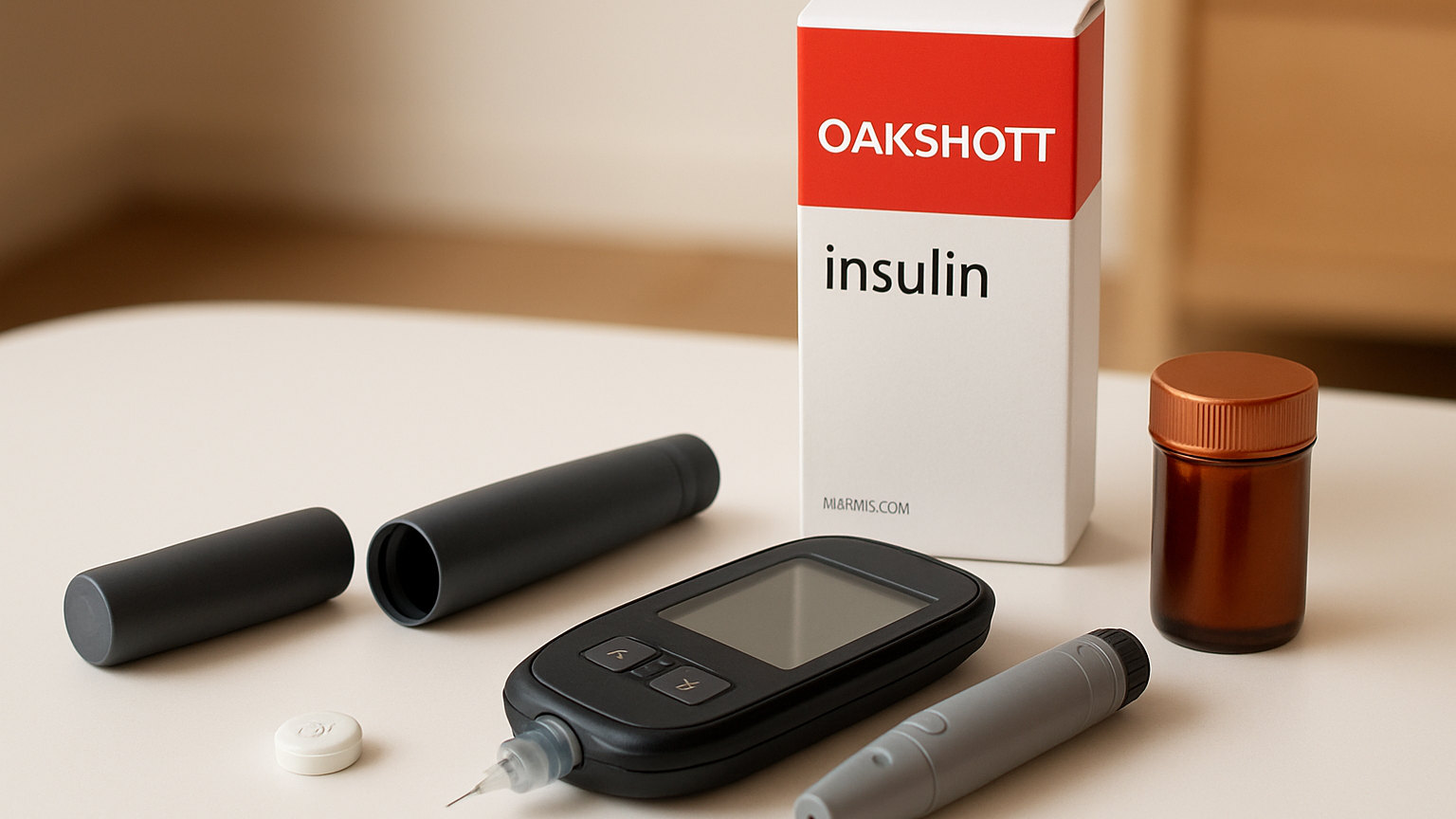
Starting insulin is not a punishment, a last resort, or evidence that you have failed at managing your diabetes. Type 2 diabetes is progressive - the pancreas produces less insulin over time - so a proportion of people need it eventually regardless of what they have done. In type 1 it is needed from diagnosis, because the pancreas produces essentially none. The practical side is more learnable than it looks, and your diabetes team will teach you before you start.
Follow the regimen you were given. Nothing here is a substitute for that, and this guide deliberately contains no doses.
The types, and what each is for
Long-acting or basal insulin provides a steady background level through the day and night, covering the glucose your liver releases between meals. It is usually injected once or twice daily at consistent times. For many people with type 2 diabetes, a basal insulin added to existing tablets is the whole regimen.
Rapid-acting or bolus insulin is taken with meals to deal with the glucose from food. It starts working within minutes and is used in type 1 and in more advanced type 2.
Mixed insulin combines both in one pen, usually taken twice daily. Simpler, but less flexible around meal timing.
Brands within each category are not interchangeable, and switching between them is a prescribing decision. This is one of the medicines where the specific product matters, as our guide to generic and branded medicines explains.
Injecting
Modern pen needles are very short and fine, and most people find the injection far less uncomfortable than they expected. It goes into the fat layer just under the skin, not into muscle.
The usual sites are the abdomen, the outer thighs, the buttocks and the upper arms. Absorption differs slightly between them, so people often keep to one area for a given injection and rotate within it.
Rotate your sites. This is the single most important practical habit. Injecting repeatedly into the same spot causes lipohypertrophy - firm lumpy patches of thickened fat - and insulin absorbed from those areas is erratic and unpredictable. It is a very common and largely invisible cause of blood sugar that will not stabilise. Feel your injection sites regularly, and tell your team if you find lumps.
Use a new needle each time. Reusing blunts the needle, makes injecting more uncomfortable and contributes to site damage.
Hypoglycaemia
Insulin lowers blood sugar regardless of what your level is doing, so it can push you too low. Learn the symptoms - shaking, sweating, hunger, irritability, confusion, palpitations - and always carry something fast-acting to treat it.
Our guide to spotting and treating hypos covers this properly, and it is worth reading before you start rather than after your first one.
Be aware that hypo symptoms can become less noticeable over time, and that alcohol can cause delayed lows hours afterwards, often overnight - see our guide to medicines and alcohol.
Driving
You must inform the DVLA if you are treated with insulin, and there are specific licence requirements around monitoring your blood glucose before and during driving. Your diabetes team will explain what applies to you and to your licence category.
The practical rules are straightforward: check before driving, do not drive if you are low, carry fast-acting carbohydrate in the car, and stop and treat properly if you feel a hypo coming on - then wait before driving again.
Storage and sharps
Unopened insulin lives in the fridge between 2°C and 8°C. Do not let it freeze - frozen insulin should not be used, even once thawed. In-use pens are usually kept at room temperature for a limited period; check the leaflet for yours.
Never leave insulin in a car, and use a cool bag when travelling. Our guides to medicines in hot weather and travelling with medicines cover the details, and insulin always goes in hand luggage.
Used needles go in a sharps bin, never in household waste - see disposing of needles and sharps.
Sick days
Never stop insulin because you are unwell and not eating. Illness raises blood sugar, and stopping insulin in type 1 can lead to diabetic ketoacidosis, which is a medical emergency. Your requirements may go up rather than down.
Your team should give you sick day rules covering more frequent monitoring, ketone testing and when to seek help. Ask for them before you need them - our guide to sick day rules covers the principle.
What to ask before you start
- Which insulin am I on, and is it background, mealtime or mixed?
- What do I do if I miss a dose or inject late?
- How do I recognise and treat a hypo?
- What are my sick day rules?
- Who do I ring, and out of hours?
Most people find the first few weeks the hardest and then settle into it. Diabetes specialist nurses expect questions, and asking early is far better than improvising.
See also Diabetes Tablets Beyond Metformin: A Guide, and the Medicines section for more on how the main families of medicine work.


