Some medicines are designed to be absorbed through the lining of the mouth rather than swallowed. Sublingual means under the tongue, buccal means between the cheek and the gum. Both routes get the drug into the bloodstream quickly and bypass the stomach and liver entirely - which is the whole point, and which is why swallowing one defeats the medicine completely.
Why the route exists
The lining under the tongue is thin and richly supplied with blood vessels, so absorption is fast - minutes rather than the half hour or more a swallowed tablet takes.
It also avoids first-pass metabolism. A swallowed drug goes to the liver before reaching the rest of the body, and some are largely destroyed there. Given under the tongue, the drug enters the circulation directly.
That is why glyceryl trinitrate works in minutes by spray and does nothing useful swallowed, and why some medicines are only available this way.
It is also useful when swallowing is difficult or when someone is vomiting.
How to take a sublingual medicine
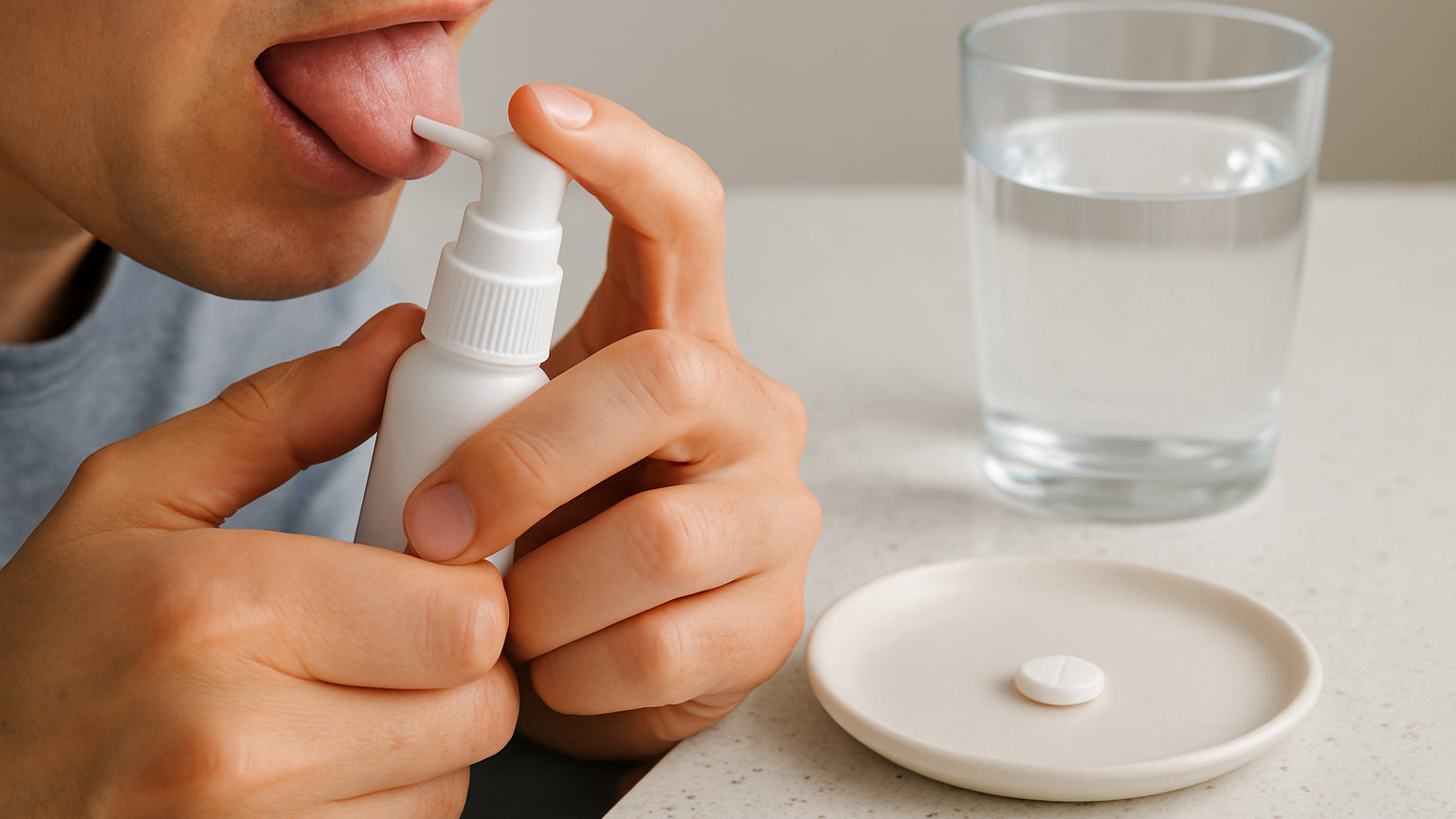
Moisten your mouth first with a sip of water if it is dry - a dry mouth slows absorption considerably, and many people taking these medicines are on something that causes dryness.
Place the tablet under the tongue, towards the base rather than the tip.
Do not chew, suck or swallow it, and do not swallow your saliva for as long as it takes to dissolve.
Do not eat, drink or smoke until it has gone.
Sit down before taking GTN, which can cause a sharp drop in blood pressure.
How to take a buccal medicine
Place it between the upper gum and the inside of the cheek, and leave it there.
Buccal preparations frequently dissolve more slowly than sublingual ones, and some are designed to be held for a considerable time.
Alternate sides with repeated doses, since the mucosa can become sore.
Buccal midazolam for seizures is given into the side of the mouth by someone else and is an exception to all the usual instructions - follow the specific plan you were given.
Common examples
Glyceryl trinitrate - spray or tablets under the tongue for angina. Sit down, and call 999 if the pain has not gone within about five minutes of a second dose. See glyceryl trinitrate.
Buprenorphine - sublingual tablets and films for pain and for opioid substitution treatment. These take several minutes to dissolve and must not be swallowed. See buprenorphine.
Prochlorperazine buccal tablets for nausea and vertigo, useful precisely because they work when swallowing is not possible.
Fentanyl preparations for breakthrough cancer pain - specialist use only, and not interchangeable between products.
Midazolam for prolonged seizures, given by a trained carer.
Rizatriptan wafers are a partial exception - they dissolve on the tongue for convenience but are absorbed from the gut, so they are not truly sublingual. See rizatriptan.
Orodispersible is not the same thing
Worth separating, because the names sound similar.
Orodispersible tablets dissolve on the tongue so they can be taken without water - convenient for people who cannot swallow tablets. The drug is then swallowed in the saliva and absorbed from the gut as normal.
Sublingual tablets are absorbed through the mouth lining and must not be swallowed.
If you are unsure which yours is, ask - the instruction to avoid swallowing is the distinguishing feature.
See trouble swallowing tablets.
Dry mouth is a real problem here
Absorption depends on the tablet dissolving in saliva.
A very long list of medicines reduces saliva - anticholinergics, antidepressants, opioids, diuretics and inhaled antimuscarinics - and the effects are cumulative.
Someone with a dry mouth may get slower, less reliable absorption, and may conclude the medicine has stopped working.
A sip of water beforehand helps. Treating the dry mouth helps more.
Look after your teeth
Medicines dissolving repeatedly in the same part of the mouth affect the teeth nearby.
Regulators have warned about dental decay and tooth loss with sublingual buprenorphine, including in people with no previous dental problems.
After the dose has dissolved, rinse with water and swallow - but wait at least an hour before brushing, since brushing immediately can damage softened enamel.
Tell your dentist which sublingual medicines you take.
Storage and practical points
GTN tablets lose potency once opened and should be discarded after around eight weeks regardless of the printed date. The spray does not have this problem. Keep them in the original glass bottle rather than a pill organiser.
Films and wafers are moisture-sensitive - leave them in the foil until you take them.
Carry as-required sublingual medicines with you rather than leaving them at home.
Report mouth soreness, ulceration or a persistent unpleasant taste, which are treatable and are common reasons people stop.
See how to tell if a medicine has gone off and as-required medicines.
Related reading: Taking Medicines With a Stoma, with more on taking medicines day to day in Usage.